Managing Shared Air in Apartment Buildings
In an apartment building, your neighbors’ cooking, smoking habits, and cleaning products can become your air quality problem. Here is how shared air transfer works and what you can do about it.
Apartment buildings are not collections of isolated air spaces. Air moves between units through shared HVAC systems. It also moves through gaps in shared walls and under entry doors into hallways. Pipe penetrations and electrical outlets in party walls add a smaller pathway. The degree of air sharing varies significantly by building type, construction quality, and HVAC design, but no apartment building provides complete air isolation between units. If a neighbor smokes or cooks strongly spiced food, some fraction of those airborne compounds will migrate toward adjacent units.
Understanding which pathways are significant in your specific building helps direct effort toward the interventions that will reduce neighbor-sourced pollution in your unit. The hallway under the entry door is the most common significant pathway. Shared HVAC is the most variable. Party wall penetrations are real but typically minor compared to the other two.
How Air Moves Between Apartments
The entry door gap is the most significant pathway for most apartment configurations. Hallways act as a mixing zone for air from all the units on the floor. Cooking smells, tobacco smoke, and other emissions that exit one unit into the hallway distribute through the hallway air and enter adjacent units through the gap under their entry doors. This pathway is most pronounced when neighbors open their doors, when hallway exhaust fans create pressure differences, and in buildings with naturally drafty corridor configurations.
Central HVAC systems that recirculate air across multiple units create a direct air mixing pathway. In buildings with true central air handling, air from one unit may be drawn into the return, conditioned, and redistributed to neighboring units through the supply. This is less common in residential buildings than in commercial spaces, but some apartment buildings do operate this way. The more common configuration is individual or floor-level systems that limit cross-unit mixing through the HVAC.
The pressure difference problem
Air moves from higher pressure to lower pressure. In an apartment building, pressure differences between units and hallways are created by HVAC operation, exhaust fans, and wind effects on the building exterior. A unit running a bathroom exhaust fan creates a slight negative pressure relative to the hallway, which draws hallway air under the entry door into the apartment. The inverse happens when the neighbor’s kitchen exhaust runs. Managing these pressure effects is largely impractical for renters, so sealing the primary air infiltration pathway, the gap under the entry door, is the most direct intervention available.
What You Can Control
Sealing the entry door gap with a door draft excluder or automatic door sweep blocks the most direct path for hallway air to reach the unit. A door sweep that presses against the threshold when the door is closed reduces the hallway infiltration pathway by a significant margin. These are available in removable, no-permanent-modification versions and are among the most cost-effective air quality improvements available for apartment renters.
Running a HEPA air purifier with activated carbon continuously handles the fraction of neighbor air that does infiltrate. Activated carbon is particularly relevant for cooking smells and tobacco smoke from neighbors, as these are gaseous compounds that HEPA filtration alone does not capture. A unit with auto mode that responds to infiltration spikes without manual adjustment is more practical in this context than one requiring manual speed changes each time a neighbor’s cooking becomes detectable.
For tobacco smoke specifically, which is the most health-relevant neighbor air quality concern, maintaining positive pressure in your unit relative to the hallway by running a supply fan or keeping the HVAC fan on continuously pushes air out, so hallway air is not drawn in. This is not always practical but is worth understanding as the principle behind why running kitchen or bathroom exhaust fans can sometimes worsen neighbor infiltration.
Recommended Air Purifiers for Shared-Air Apartments
Full specs and comparisons are in the main small homes and apartments guide. For shared-air situations, activated carbon capacity and auto mode responsiveness are the key differentiators.
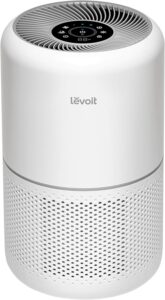
Levoit Core 300S
For a smaller apartment dealing with occasional neighbor odor infiltration, the Core 300S running continuously with the SP version’s auto mode handles typical cooking and odor spikes at the budget price point. Position it near the entry door where hallway infiltration is most direct. The activated carbon layer captures gaseous odor compounds from neighbor cooking and cleaning products. A practical starting point for renters experiencing moderate neighbor air quality issues without high investment.
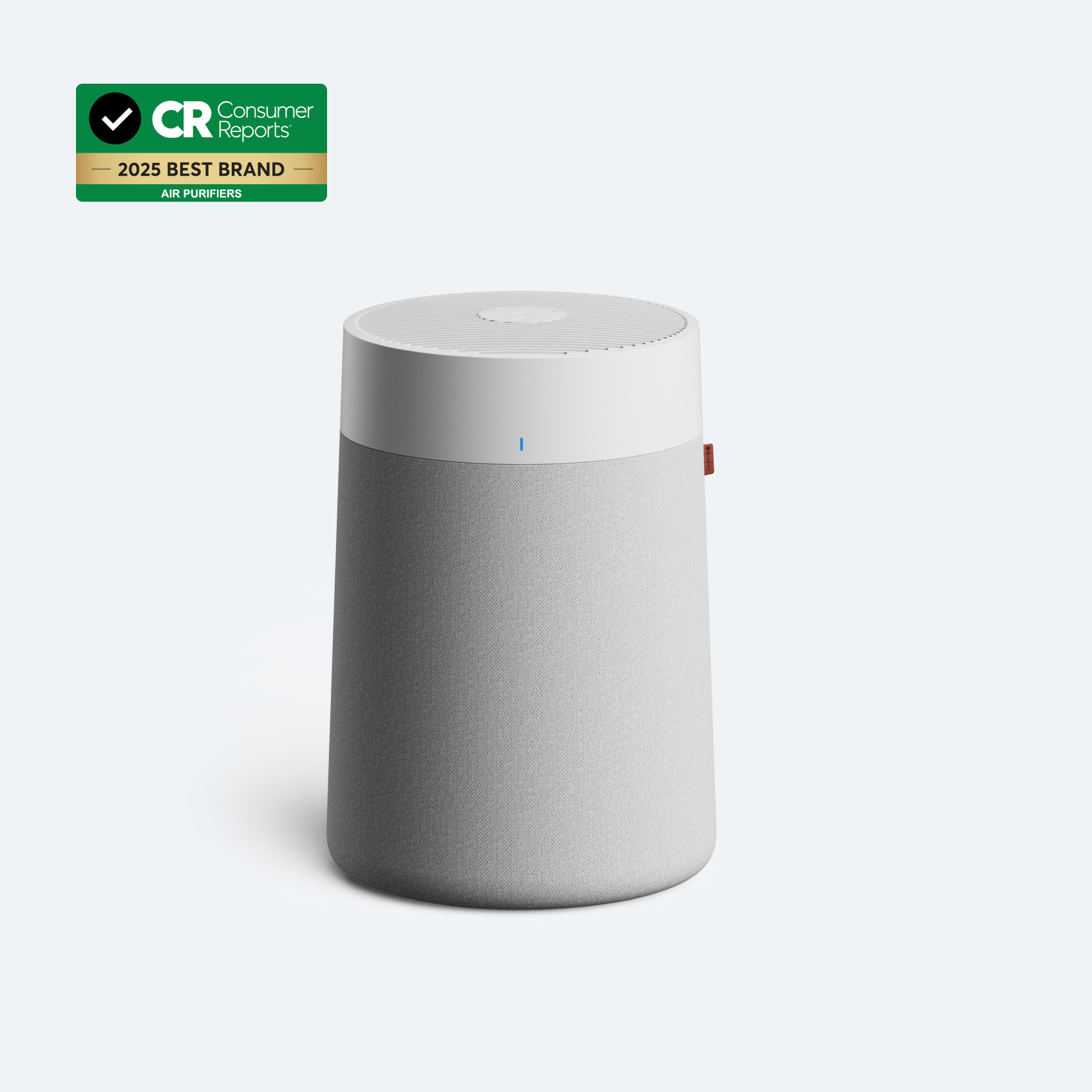
Blueair Blue Pure 311i Max
The Blue Pure 311i Max’s sensor responds quickly to odor and particle infiltration from neighbors without manual intervention. Its 439 sq ft coverage handles most one-bedroom apartments as a single unit, and the auto mode is its strongest feature for shared-air situations, it ramps up when a spike is detected and returns to quiet low when concentrations clear, which happens repeatedly throughout the day in most apartment buildings. Wi-Fi and app control let you check air quality and adjust settings remotely, useful for a unit running continuously in this high-demand context.
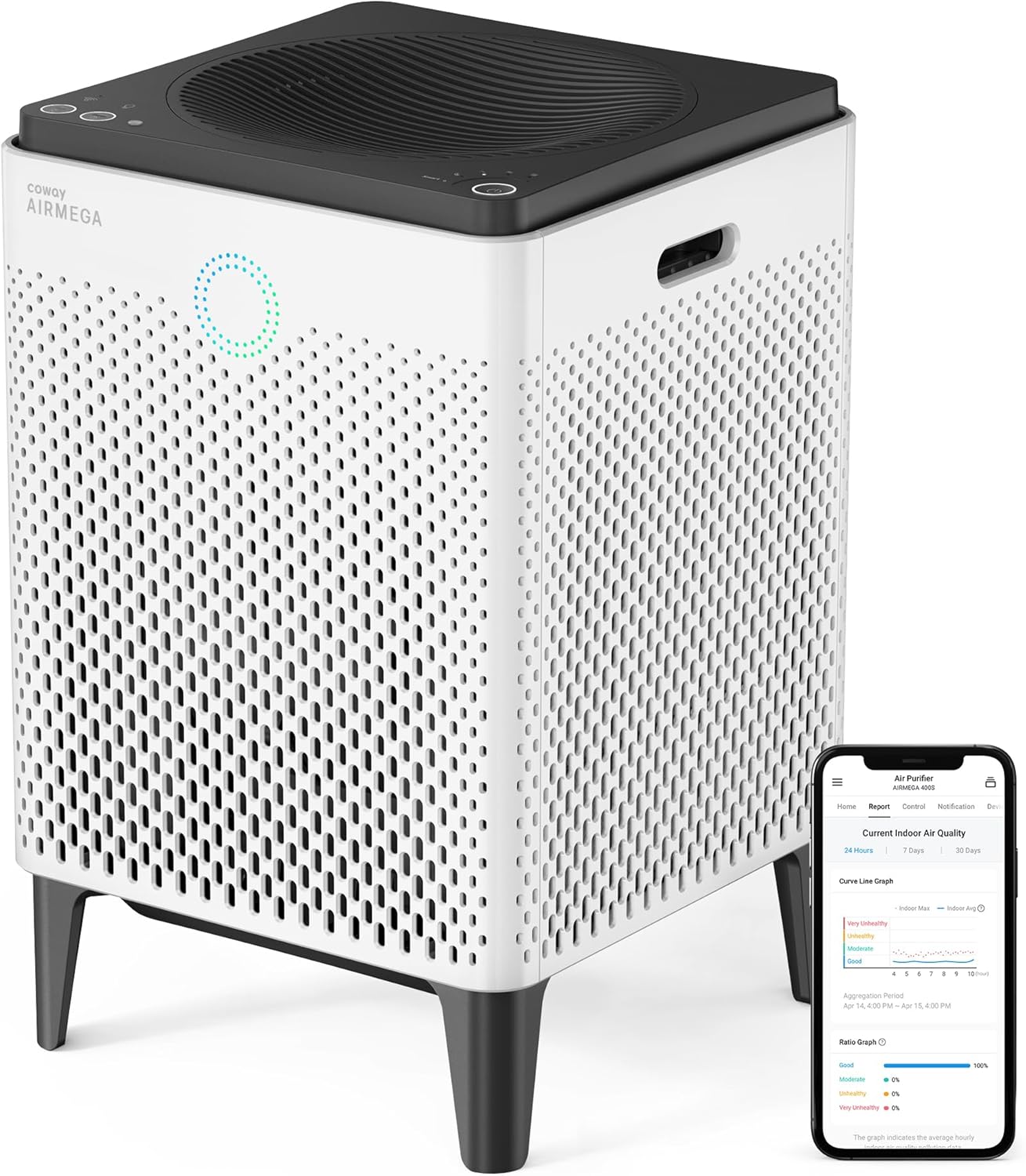
Coway Airmega 400S
For renters facing persistent infiltration from heavy cooking or tobacco smoke, the Airmega 400S has dual HEPA filtration and 1,560 sq ft of coverage, which gives it the headroom to stay ahead of even significant infiltration events from a single centrally placed unit. The real-time display shows exactly when neighbor-sourced pollution enters the space and confirms when it has cleared, which is useful for understanding your building’s specific infiltration patterns and timing.
Frequently Asked Questions
Can I make my landlord do something about a neighbor who smokes in their unit?
If the building has a no-smoking policy, a neighbor who smokes in their unit is violating that policy and a complaint to building management is appropriate. If there is no no-smoking policy, the tenant typically has limited legal recourse unless smoke infiltration constitutes a habitability issue under local law, which varies by jurisdiction. Documenting the infiltration with air quality measurements, requesting building management address gaps in fire doors and party walls, and using air filtration in your unit are the practical parallel tracks while pursuing the issue through building management channels.
Does a HEPA air purifier remove cigarette or cannabis smoke smell from neighbors?
Partially. HEPA filtration captures the particulate fraction of tobacco and cannabis smoke. The gaseous fraction, which carries much of the characteristic smell and some of the health-relevant compounds, requires activated carbon to capture. A purifier with both true HEPA and a substantial activated carbon layer addresses both fractions and produces a noticeable reduction in neighbor smoke infiltration for most apartment configurations. The effectiveness depends on the infiltration rate: severe infiltration through unsealed party walls may overwhelm what filtration can keep pace with.
How do I know if my air quality problem is coming from neighbors or from inside my own unit?
A portable PM2.5 monitor shows real-time particle concentrations. If concentrations spike at consistent times, when a neighbor typically cooks, for example, and you are not doing anything in your own unit at that time, the source is external. If concentrations are generally elevated regardless of your own activity, the source may be internal. The pattern of the spikes is the most useful diagnostic: time-correlated, repeating spikes with external timing are almost always neighbor-sourced. Steady elevated baseline concentrations suggest an internal source such as old carpet, off-gassing furnishings, or inadequate ventilation of your own activities.