Best Air Purifiers for Sleep and Bedrooms (2026)
Noise level matters more in a bedroom than anywhere else. This guide covers the purifiers that clean effectively while staying quiet enough to run overnight, with a pick at each of three price points.
Our Top Picks at a Glance
Sleep is the longest uninterrupted stretch of time most people spend breathing the air in one room. Whatever dust, pet dander or pollen is in the bedroom air at night is the air you breathe until morning, so a bedroom purifier has to keep cleaning all night at a fan speed you can sleep through.
The challenge with bedroom air purifiers is that the qualities that make one effective during the day can work against it at night. A loud fan on high speed cleans air fast, but it also keeps you awake. The right bedroom purifier runs quietly and continuously at a low speed, keeping particle levels consistently low through the night.
What to Look for in a Bedroom Air Purifier
Noise at the lowest fan speed is the spec to check first for bedroom use. Look for the decibel rating on the lowest setting, since the high-setting figure says little about overnight use. The manufacturers rate the picks here at 22 dB (Core 300S), 23 dB (Blue Pure 311i Max) and 25.6 dB (MinusA2) on low. Lower is better for light sleepers, and how much a given level bothers someone varies from person to person.
Coverage area should match your bedroom reasonably closely. A modestly oversized unit runs on lower fan speeds more of the time, which helps with noise, while an undersized unit has to run faster to keep up and gets louder.
Filtration grade is the next spec, and the three picks use different approaches. Levoit rates the Core 300S main filter at 99.97 percent down to 0.3 micron. The Blue Pure 311i Max uses Blueair’s HEPASilent, rated at 99.97 percent down to 0.1 micron; it charges particles electrostatically inside the unit and is not True HEPA. The MinusA2 pairs Rabbit Air’s BioGS HEPA filter with a negative ion stage that has its own control button.
Finally, consider light output. Some purifiers have bright indicator lights or displays that glow at night. A bright LED panel at the foot of the bed can bother light sleepers, so check how each unit handles its display at night. The Core 300S-P lists a Sleep Mode, and the Blue Pure 311i Max has a dedicated Night setting.
Comparison at a Glance
| Model | Tier | Coverage | CADR | Main Filter | Noise (Low) | Price | Link |
|---|---|---|---|---|---|---|---|
| Levoit Core 300S | Budget | 219 sq ft | 141 CFM | True HEPA | 22 dB | ~$150 | Amazon |
| Blueair Blue Pure 311i Max | Mid-Range | 439 sq ft | 283 CFM | HEPASilent | 23 dB | ~$230 | Sylvane Amazon |
| Rabbit Air MinusA2 | Premium | 408 sq ft | 193 CFM | BioGS HEPA | 25.6 dB | ~$600 | Sylvane Amazon |
Why low-speed noise matters more than CADR for bedrooms
CADR is measured at the highest fan speed, and few people sleep with a purifier on high. A unit rated for a larger room than yours can hold the bedroom’s air on a lower fan setting, and the lower settings are the quiet ones. None of the three manufacturers publishes a CADR for the low setting, so coverage headroom is the practical way to plan for quiet overnight running.
Our Picks, Reviewed
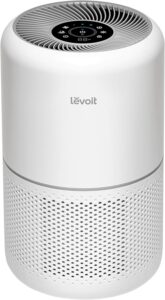
Levoit Core 300S
Best for: Bedrooms up to 220 sq ft, first-time buyers, renters, and light sleepers who need a quiet overnight unit without spending more than necessary.
The Core 300S earns its place in this guide mainly on noise. Levoit rates it at 22 dB on its lowest setting, the quietest of the three picks here.
Coverage is limited to 219 sq ft at 4.8 air changes per hour, which works well for a standard bedroom but falls short in a larger master. The linked listing is the Core 300S-P, which Levoit sells with VeSync app control, schedules and a 1 to 24 hour timer, plus Alexa and Google Assistant support. Levoit also lists a Sleep Mode for overnight use.
Strengths
- 22 dB on low is quiet enough for overnight use
- Sleep Mode listed for overnight use
- App scheduling lets you pre-clean before bedtime
- Strong value at the budget price point
Limitations
- 219 sq ft is tight for larger bedrooms
- No wall-mount option
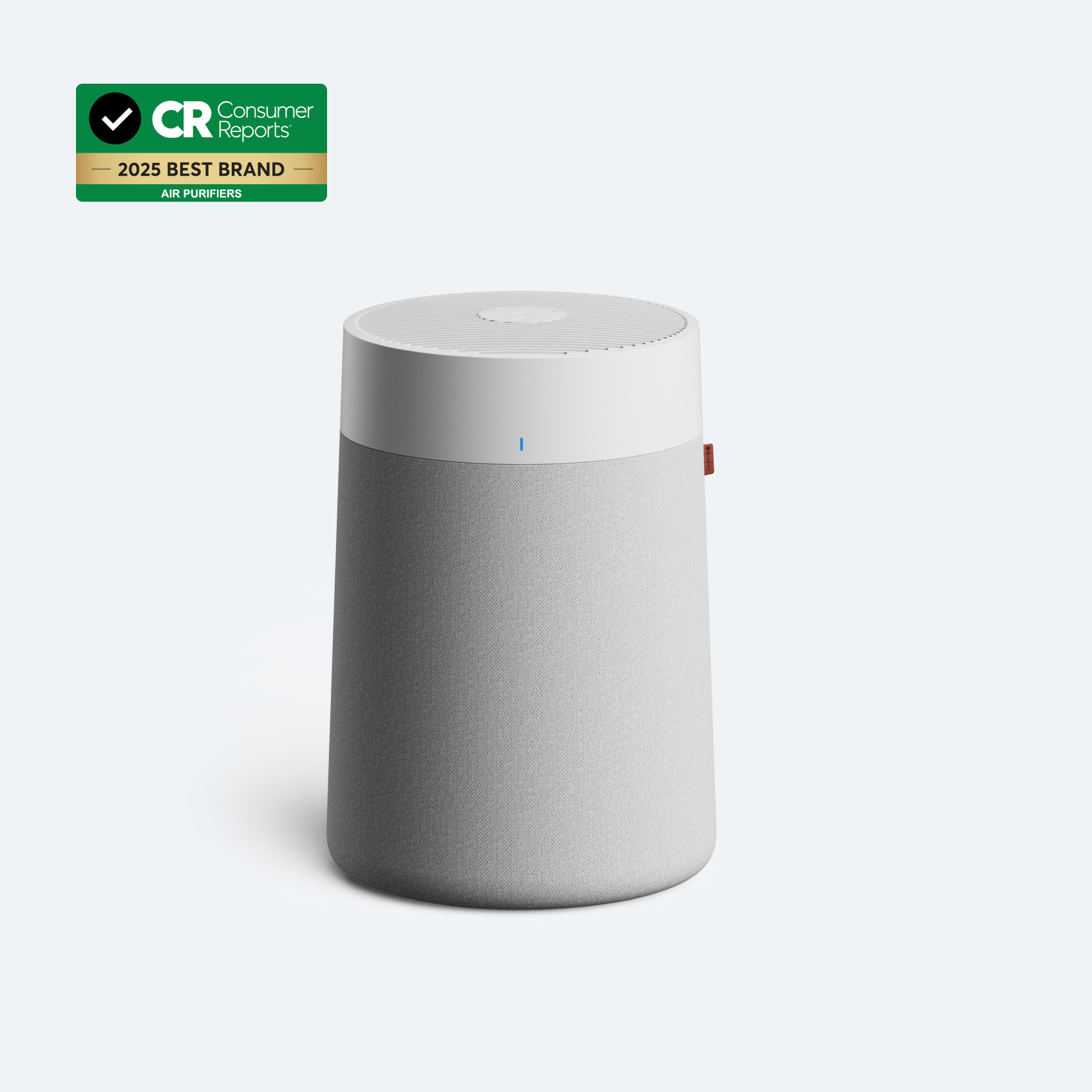
Blueair Blue Pure 311i Max
Best for: Standard to large bedrooms up to 440 sq ft, couples, and anyone who wants app-connected auto-adjustment overnight.
The 311i Max is the mid-range pick for sleep because it solves the two main problems simultaneously: it runs at 23 dB on low and covers a realistic master bedroom at 439 sq ft. Blueair’s HEPASilent combines electrostatic charging with mechanical filtration and is rated at 99.97 percent down to 0.1 micron. The charging happens inside the unit, which Blueair describes as different from an ionizer that releases ions into the room, and Blueair says it tests its ozone emissions.
The Auto mode is particularly useful for sleep. The air-quality sensor adjusts fan speed when readings change, for example when a window is open or the rest of the house stirs up dust, so the fan can stay at a low speed while the air is stable. Wi-Fi connectivity and app control round out the package, letting you check air quality and adjust fan speed remotely.
Strengths
- 23 dB on low is quiet enough for overnight use
- Auto mode adjusts overnight without waking you
- Covers real master bedrooms at 439 sq ft
- Wi-Fi app control with 5 fan speeds, including a dedicated Night mode
Limitations
- Blueair rates the filter for up to 9 months before replacement
- No wall-mount option
- HEPASilent is not True HEPA; it relies partly on electrostatic charging
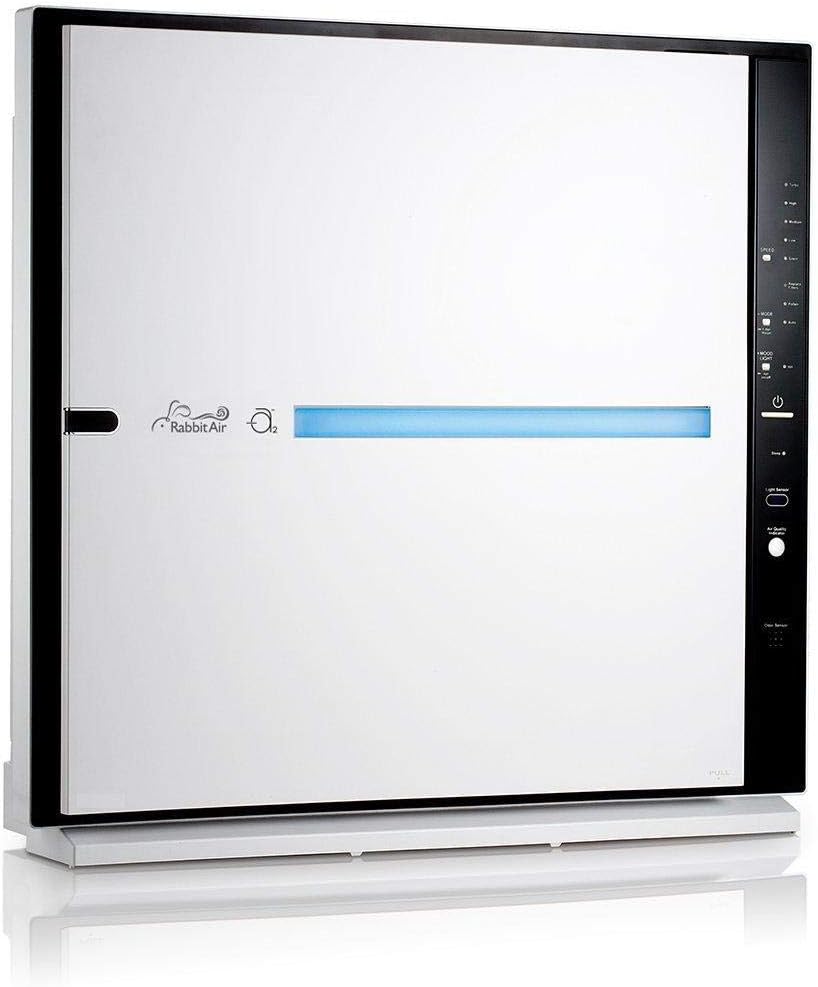
Rabbit Air MinusA2
Best for: Large or allergy-heavy bedrooms where six-stage, customizable filtration matters more than shaving the last few decibels off an already-quiet unit, and buyers who want to wall-mount to keep floor space clear.
The Rabbit Air MinusA2’s lowest-setting noise is rated at 25.6 dB, a few decibels above the other two picks in this guide (22 to 23 dB). It earns its premium position through filtration depth: a six-stage system with a customizable filter layer. Rabbit Air rates coverage at 408 sq ft at 4 air changes per hour (the other two picks are rated at 4.8), or up to 815 sq ft at 2 changes per hour in a larger room.
Rabbit Air sells the customized layer in Pet Allergy, Germ Defense, Odor Remover and Toxin Absorber versions, and the panel can be swapped at the next filter change. A light sensor dims the unit’s own lights to a low sleep lighting when the room goes dark and restores them when light returns (Rabbit Air); fan speed is set separately by the particle and odor sensors. The sixth stage is a negative ion generator with its own ion control button on the panel.
The MinusA2 can also hang on a wall. Rabbit Air includes a wall mount kit in the box and the floor stand comes off for mounting, which frees the floor space a 21-inch-wide unit would otherwise take beside the bed. Rabbit Air publishes a separate wall-mount guide; check it against your wall type before drilling.
Strengths
- Six-stage filtration is the deepest system in this comparison
- Light sensor dims the display when the room goes dark
- Wall mount kit included in the box
- Customizable filter panel for specific bedroom concerns (odor, VOCs, extra allergy protection)
- 815 sq ft coverage available at a lighter turnover rate
Limitations
- Significant upfront cost compared to other picks
- Wall mounting requires some installation effort
- Negative ion stage; switch it off with the ion button if you prefer
- Loudest of the three picks on low, though still comfortably quiet at 25.6 dB
How to Set Up Your Bedroom Air Purifier for Better Sleep
Run the unit through the day as well as at night. A purifier switched on at bedtime starts with whatever dust and dander built up in the room since morning, while one left on low all day leaves the room already filtered when you get into bed.
Position the unit away from the headboard wall and closer to the foot of the bed, or beside the bed at a distance of at least two feet. This keeps the airflow pattern from blowing directly on the sleeper while still circulating the air in the breathing zone effectively.
Close the bedroom door. A purifier is sized for one room, and an open door has it working on air from the hallway and the rest of the house as well.
Use the scheduling or auto features if available. A higher speed in the hour or two before bed, then the lowest speed at bedtime, cleans the air while you are still awake and keeps the fan quiet once you are asleep. The Core 300S-P can run this on a schedule through the VeSync app. The 311i Max and the MinusA2 adjust fan speed from their own air-quality sensors instead.
Frequently Asked Questions
Is it safe to run an air purifier in the bedroom all night?
The detail to check before running any purifier overnight is ozone. EPA notes that ion generators and some electronic air cleaners can produce ozone, which it describes as a lung irritant. Two picks here use charged particles or ions: the Blue Pure 311i Max charges particles inside the unit, and the MinusA2 has a negative ion stage with its own control button. The Core 300S lists no ionizing stage. California allows only certified indoor air cleaners, which must emit less than 0.050 ppm of ozone (California Air Resources Board), so look up any unit that charges particles on CARB’s certified list before you buy.
Where should I put an air purifier in the bedroom?
On the floor or a surface at roughly breathing height, at least two feet from the bed, with clearance on all sides for airflow. Avoid placing it directly behind the headboard, in a corner, or under furniture where airflow is restricted. Beside the dresser or near the foot of the bed on the floor both work well for most bedroom layouts. If wall mounting is an option, the MinusA2 ships with a wall mount kit that takes it off the floor entirely.
Does an air purifier help with snoring or sleep apnea?
Air purifiers reduce airborne particles. They do not address the structural causes of snoring or sleep apnea, and they are no substitute for medical care for sleep apnea. If you snore or have trouble sleeping, talk with a qualified healthcare provider.
What noise level is acceptable for a bedroom?
There is no single cutoff, since sensitivity to noise varies from person to person. On their lowest settings the manufacturers rate the Core 300S at 22 dB, the Blueair 311i Max at 23 dB and the Rabbit Air MinusA2 at 25.6 dB. For a light sleeper, the Core 300S is the quietest of the three on paper, and a unit with coverage to spare can stay on its lowest setting more of the night.
Can one air purifier cover the whole bedroom or do I need multiple units?
One unit is sufficient for most bedrooms with the door closed, as long as the unit’s coverage area matches the room size. The Core 300S covers bedrooms up to about 220 sq ft and the Blueair 311i Max up to 439 sq ft, both at 4.8 air changes per hour. Rabbit Air rates the MinusA2 at 408 sq ft at 4 changes per hour, or up to 815 sq ft at 2. For a bedroom over about 440 sq ft, or one with an attached bathroom or sitting area, the MinusA2 at its lighter turnover rating or two smaller units are the options among these picks.
Quick Buyer Checklist
Four questions to find the right unit for your bedroom
1. How large is your bedroom? Under 220 sq ft, the Core 300S covers it. Between 220 and 440 sq ft, the Blueair 311i Max is the fit. Above that, the MinusA2 reaches 815 sq ft at Rabbit Air’s 2-changes-per-hour rating, or two units can split the room.
2. How sensitive are you to noise? All three picks rate under 26 dB on low. If you want the single quietest option, the Core 300S rates lowest at 22 dB. Choose the Rabbit Air if six-stage, customizable filtration matters more to you than shaving off another decibel or two.
3. Do you have allergies or pets? If yes, look at the filter options. The MinusA2’s customized panel comes in a Pet Allergy version, and Levoit sells an optional Pet Allergy filter for the Core 300S-P.
4. Is floor space a concern? If your bedroom is small or already crowded, the Rabbit Air’s included wall mount kit takes it off the floor. The Core 300S is compact enough to sit on a nightstand if needed.