Managing Shared Air in Apartment Buildings
Against a neighbor’s smoke and cooking odor, a renter controls a door sweep, how long the exhaust fans run, and a purifier with a carbon stage. Neither stops it at the source.
According to the CDC, secondhand smoke travels into an apartment from other units and common areas through doorways, cracks in walls, electrical lines, ventilation systems and plumbing. Cooking smells and cleaning fumes travel with the same air, so they use the same openings.
The same CDC page states that heating, cooling and ventilation systems cannot eliminate secondhand smoke exposure and can spread it through a building, and that cleaning the air cannot get rid of it.
How Air Moves Between Apartments
A hallway can collect air from every unit on its floor. Smoke or cooking odor that leaves one apartment into the corridor can enter the next through the gap under its entry door, more so when a neighbor’s door stands open or an exhaust fan pulls hallway air inward.
Where one central system draws return air from several units and supplies it back to others, air from one apartment can be carried to its neighbors. If your unit has its own air handler or a through-wall unit, that route is smaller, though the gaps around pipes and outlets remain.
Why exhaust fans pull hallway air in
Air moves from higher pressure to lower pressure. In an apartment building, pressure differences between units and hallways are created by HVAC operation, exhaust fans, and wind effects on the building exterior. A unit running a bathroom exhaust fan creates a slight negative pressure relative to the hallway, which draws hallway air under the entry door into the apartment.
What You Can Control
A door draft excluder or an automatic door sweep closes the gap between the door and the threshold, the most direct path for hallway air into the unit. Both come in versions that attach without permanent changes, so they can come off when you move out.
A purifier filters the air that still gets in. HEPA captures smoke particles, but much of the odor in tobacco and cooking smoke is gas, which needs an activated carbon stage. Auto mode helps because neighbor smoke arrives on someone else’s schedule: a unit with a particle sensor raises its fan when the reading climbs, where a manual unit waits for you to notice.
Run exhaust fans while you cook or shower and for a short while after, then switch them off; left on for hours, they keep pulling hallway air under the door. Holding the unit at higher pressure than the hallway would push air out instead, but that takes a supply of outside air few renters can add. Our home ventilation and exhaust fan guide explains what each kind of fan is for and how much exhaust each room needs.
Recommended Air Purifiers for Shared-Air Apartments
For neighbor smoke and cooking odor, compare the carbon stage and whether the unit has auto mode. The main small homes and apartments guide has the full specs.
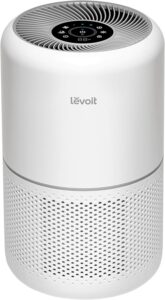
Levoit Core 300S
Levoit rates the Core 300S for one room of up to 219 sq ft at 4.8 air changes an hour, and its filter carries an activated carbon layer for odor gases. Levoit does not list an auto mode for this model, so turn the fan up when a neighbor’s cooking or smoke reaches you; the VeSync app makes that a quick change. Put it in the room nearest the entry door, where hallway air arrives.
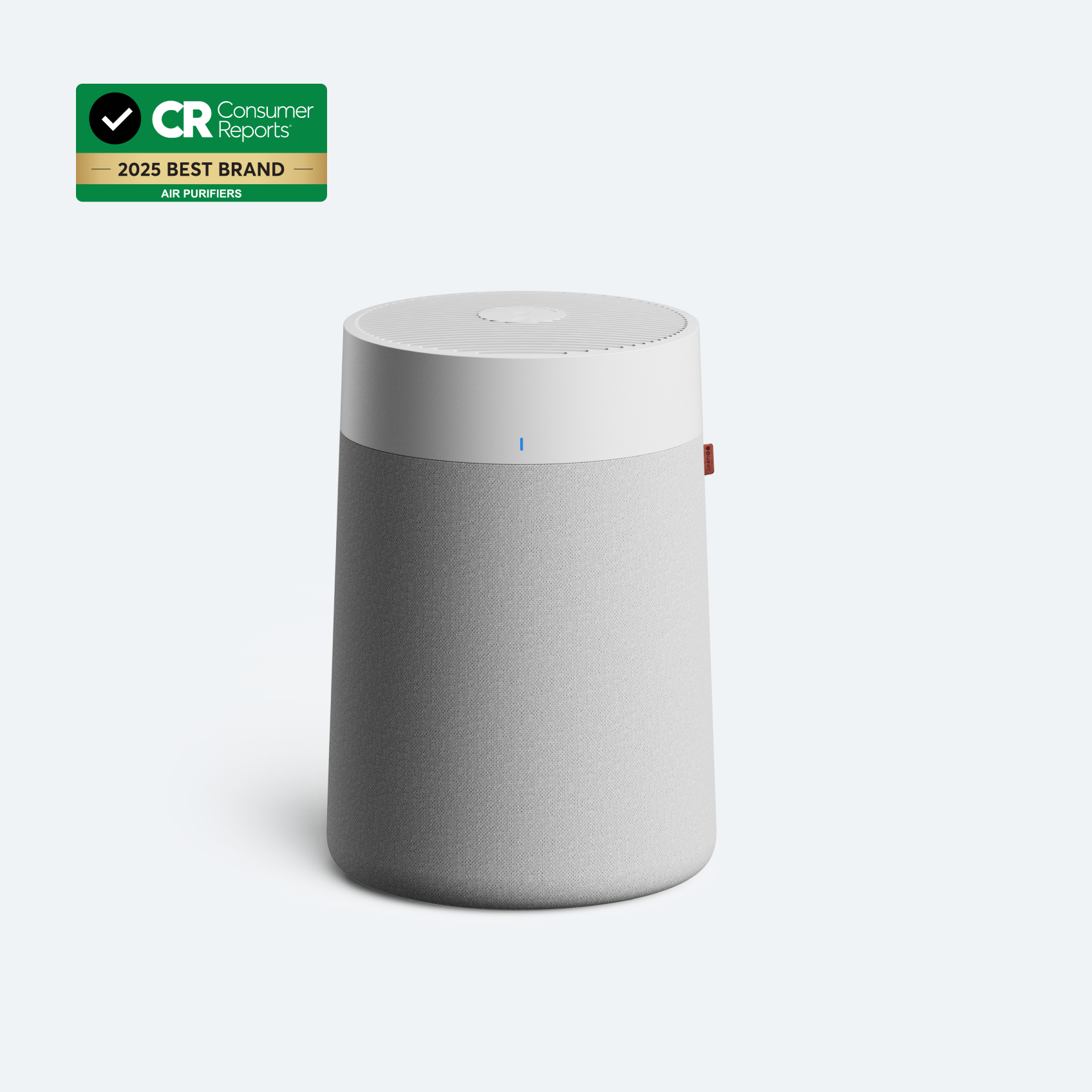
Blueair Blue Pure 311i Max
The Blue Pure 311i Max’s air-quality sensor drives its auto mode, so the fan rises when infiltration pushes the particle reading up and drops back once it clears. Blueair rates it for 439 sq ft at 4.8 air changes an hour, and its default Particle & Carbon filter adds carbon for odor. The Wi-Fi app shows the reading while you are out.
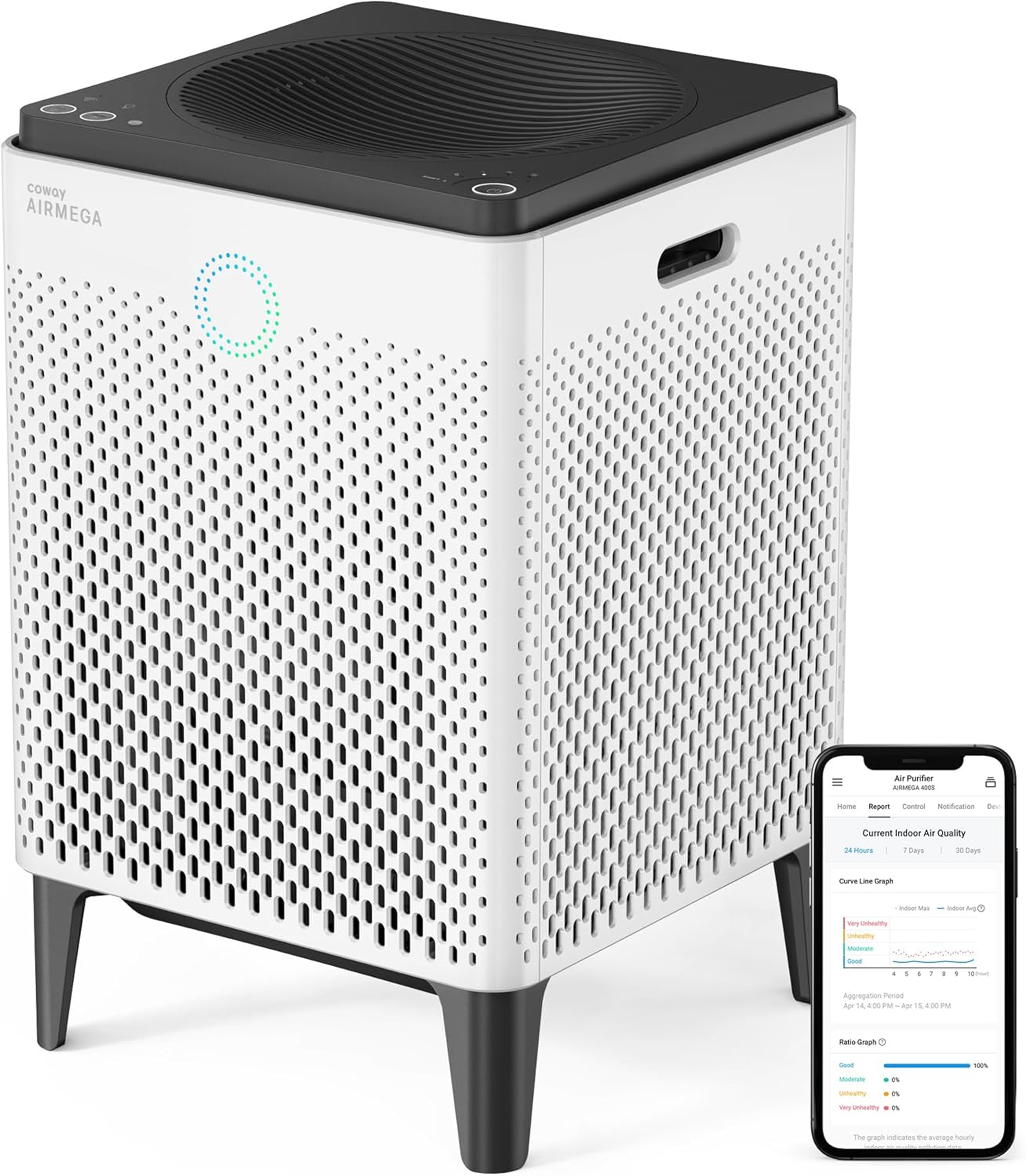
Coway Airmega 400S
When neighbor smoke is heavy or the living area is large, the Airmega 400S pairs a Max2 filter (activated carbon plus HEPA) with a 328 CFM smoke CADR, which covers about 510 sq ft at 4.8 air changes an hour with 8 ft ceilings; Coway’s own 1,560 sq ft figure is at 2 air changes an hour and implies about 416 CFM, more than that smoke CADR, so the CADR-based 510 is the safer figure. Auto Mode raises the fan when its sensor reading climbs, and the colored indicator and app show when that happens, which helps you see when neighbor smoke arrives.
Frequently Asked Questions
Can I make my landlord do something about a neighbor who smokes in their unit?
If the building’s no-smoking policy covers individual units, a complaint to building management under that policy is the first step. Without such a policy, a tenant’s options depend on local law, which in some places treats heavy smoke infiltration as a habitability problem; a local tenant-rights office can say what applies. Meanwhile, keep a record of when the smoke arrives, ask management to seal gaps at entry doors and shared walls, and filter the air in your unit.
Does a HEPA air purifier remove cigarette or cannabis smoke smell from neighbors?
Partly. HEPA captures the particles in tobacco and cannabis smoke, but much of the smell is in the gas phase, which needs activated carbon, and a carbon stage saturates over time. A purifier with both reduces what reaches your rooms without removing it, as the CDC states that cleaning the air cannot get rid of secondhand smoke. When infiltration is heavy, sealing gaps and raising the problem with management often do more than a larger purifier.
How do I know if my air quality problem is coming from neighbors or from inside my own unit?
A portable PM2.5 monitor logs particle levels through the day. Spikes that repeat at times when nothing is happening in your own unit, such as a neighbor’s usual dinner hour, point to an outside source; spikes that line up with your own cooking, candles or cleaning point inside. A PM2.5 monitor does not read gases, so an odor with no particle spike can still come from either side.