Sleeping with an Air Purifier Running
What to check before running a purifier overnight, and three picks rated under 26 dB on their lowest setting.
Before running a purifier overnight, check whether it has an ionizing or ozone-producing stage and whether that stage can be switched off; EPA notes that ion generators and some electronic air cleaners can produce ozone. The three picks below are rated 22 to 25.6 dB on their lowest settings.
Is It Safe to Run an Air Purifier All Night?
A HEPA filter holds the particles it catches in the filter medium until the filter is replaced, so a unit that only filters has no ozone-producing stage.
EPA notes that ion generators and some electronic air cleaners can produce ozone, which it describes as a lung irritant (EPA). Some HEPA purifiers add an ionizer feature, so it is worth checking whether yours has one and whether it can be switched off for overnight use. Of the three purifiers below, the Core 300S has a three-stage filter stack with no ionizing stage listed by Levoit. The Blue Pure 311i Max charges particles electrostatically inside the unit, which Blueair describes as different from an ionizer that releases ions into the room, and Blueair says it tests its ozone emissions. The MinusA2 includes a negative ion generator, and its control panel has a separate ion control button (Rabbit Air).
Why run it overnight
A purifier switched off at bedtime misses the longest stretch you spend in the room.
Practical Setup for Overnight Use
Placement affects comfort. A unit at the head of the bed and aimed toward the sleeper can blow a draft some people notice, so a spot a few feet away, beside the bed or at its foot, keeps the airflow off you. Leave clearance around the intake and the outlet. The Rabbit Air MinusA2 ships with a wall mount kit, which keeps it off the floor.
Indicator lights can bother light sleepers, since an LED that goes unnoticed during the day is easy to see in a dark bedroom. Levoit lists a Sleep Mode for the Core 300S but does not say whether it dims the display; the MinusA2’s light sensor dims its lights when the room goes dark. For a unit with no such setting, a small piece of electrical tape over the indicator works.
For overnight running, pick the fan speed by noise. A higher speed moves more air but is louder, so one option is a higher speed while you get ready for bed and the lowest speed once you turn in. The Core 300S’s VeSync app adds schedules and a 1 to 24 hour timer that can automate the switch, while the 311i Max and the MinusA2 adjust fan speed from their own air-quality sensors.
What to Expect When You Start Using One Overnight
EPA’s guide to air cleaners reports that studies of portable HEPA air cleaners have found improvements in some allergy and asthma symptoms, while cautioning that the improvements are not always major and do not appear in every symptom (EPA). There is no reliable timeline, so the fair test is consistent overnight use, with bedding and humidity handled alongside the purifier. If symptoms or sleep problems persist, a physician can help sort out the cause.
Recommended Air Purifiers for Overnight Bedroom Use
Full specs and comparisons are in the main sleep and bedroom air guide.
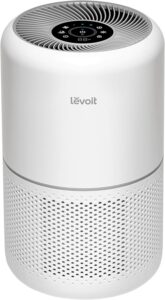
Levoit Core 300S
Levoit lists a Sleep Mode for overnight use and rates the Core 300S at 22 dB on low, the quietest of the three picks here. At 8.7 by 8.7 by 14.2 inches, it fits on most nightstands. The VeSync app adds schedules and a 1 to 24 hour timer, so the pre-sleep high speed and overnight low speed can run on a schedule.
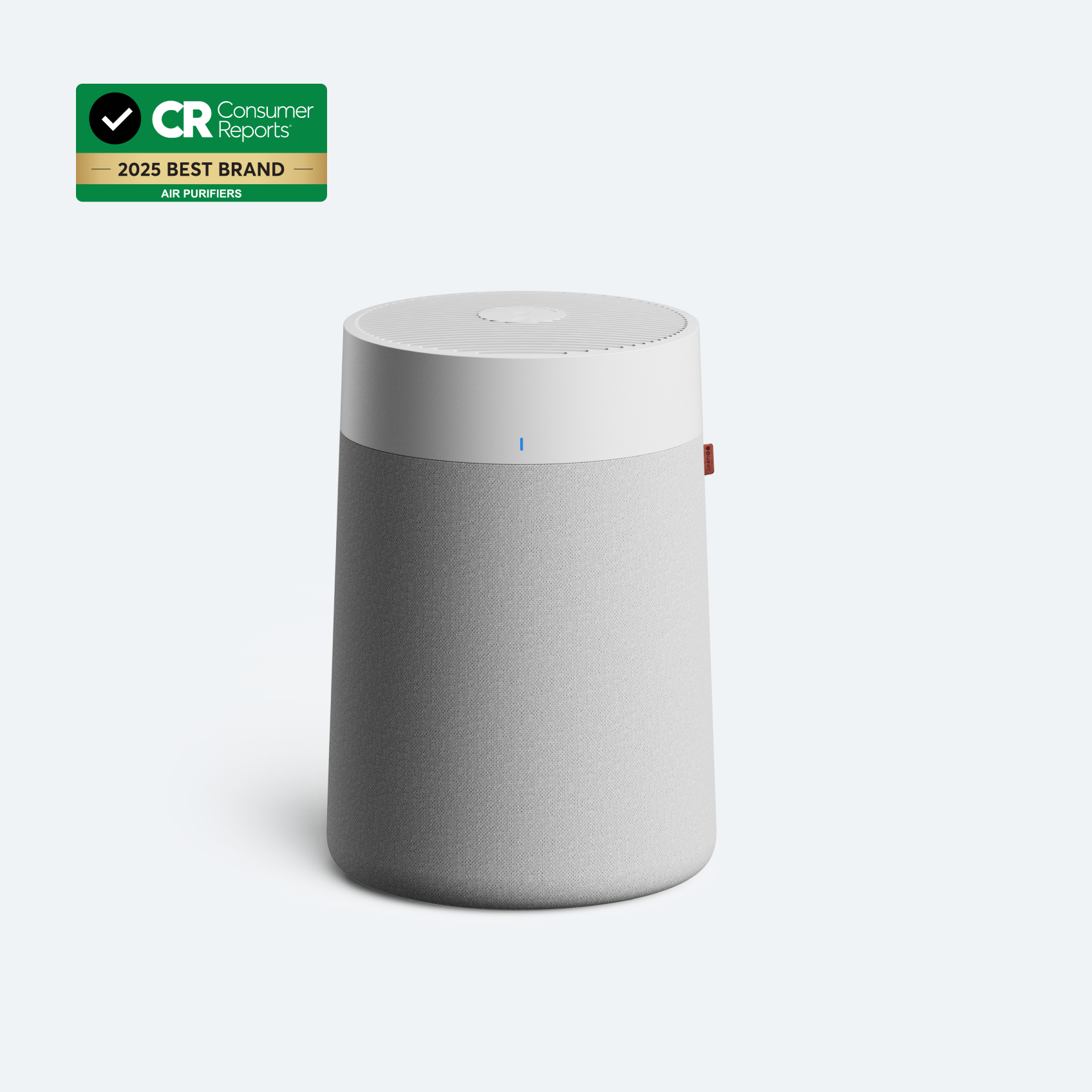
Blueair Blue Pure 311i Max
The Blue Pure 311i Max runs at 23 dB on its lowest setting and covers up to 439 sq ft, about twice the Core 300S’s 219, so it suits a bedroom too big for the Levoit. Its auto mode sets the fan speed from a built-in air-quality sensor, the Wi-Fi app changes settings without getting out of bed, and Night is one of its five fan speeds.
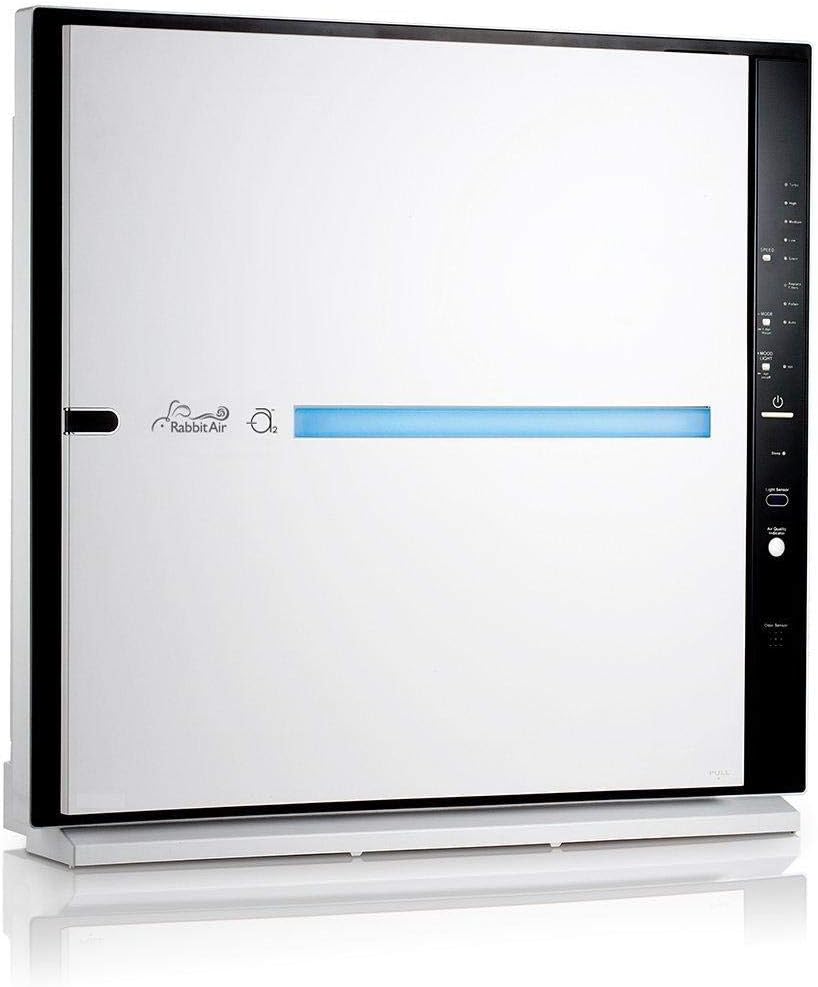
Rabbit Air MinusA2
The MinusA2’s lowest-setting noise is rated at 25.6 dB, a few decibels above this page’s other picks (22 to 23 dB). Rabbit Air rates it for 408 sq ft at 4 air changes per hour (up to 815 sq ft at 2); at the 4.8 air changes per hour behind the other two picks’ ratings, that works out to about 340 sq ft. A wall mount kit is in the box, and a light sensor dims the unit’s lights when the room goes dark. This version, the SPA-780A, has no app control, so speed changes are made at the unit itself. Its sixth stage is a negative ion generator with its own ion control button on the panel, so decide on that setting before running it overnight.
Frequently Asked Questions
Should I keep the bedroom door open or closed when running a purifier overnight?
A closed door is better for filtration. A purifier’s coverage rating assumes one room, and a closed door keeps it working on that room’s air instead of air from the rest of the house. A purifier recirculates the room’s own air and does not bring in outdoor air, so if a closed bedroom feels stuffy by morning, ventilation is a separate fix, covered in Why Your Bedroom Feels Stuffy at Night.
Does running the purifier all night significantly increase my electricity bill?
No. Levoit rates the Core 300S at 23 W, and eight hours at that rating uses about 0.18 kilowatt-hours, a few cents at typical US electricity rates, so energy cost should not decide which unit you buy.
Can children and infants sleep with a HEPA air purifier running?
The main safety concern with air cleaners is ozone, which EPA describes as a lung irritant and which ion generators and some electronic air cleaners can produce (EPA). The safety section above covers which picks ionize or charge particles; only the Core 300S lists neither, and the MinusA2’s ion stage can be switched off. For an infant’s room, compare the lowest-setting ratings above: 22 dB for the Core 300S, 23 for the 311i Max, 25.6 for the MinusA2. If your child has a respiratory condition, ask their pediatrician before choosing a unit.