Best Air Purifiers for Wildfire Smoke (2026)
Wildfire smoke carries fine PM2.5 particles and gaseous VOCs that standard air purifiers are not built to handle. These three picks run from a compact bedroom unit to a large-room HyperHEPA system with a dedicated gas filter.
This guide discusses indoor air quality during smoke and wildfire events. It is not medical advice and does not cover acute respiratory emergencies. If you experience difficulty breathing, chest pain, persistent cough, or other respiratory symptoms during a smoke event, contact a medical provider or emergency services. Air purifiers reduce some smoke-borne particulates indoors but are not a substitute for evacuation when local authorities recommend it. Public-health agencies including the EPA and CDC publish guidance on smoke exposure. ClearAirLiving.com earns commissions on qualifying purchases through affiliate links. See our affiliate disclosure for details.
If you live anywhere that sees wildfire smoke, even occasionally, the air purifier you already own may not be the right tool. Standard HEPA purifiers capture particles effectively, but wildfire smoke is not just particles. It carries a mixture of fine particulate matter (PM2.5), gases, and volatile organic compounds that require both high-efficiency particle filtration and substantial activated carbon to address.
Each purifier in this guide pairs True HEPA or HyperHEPA particle filtration with activated carbon. Two publish a CADR you can size against; the third, the IQAir, publishes airflow and a coverage rating instead. The picks run from the budget tier to the premium tier.
What to Look for in a Wildfire Smoke Purifier
Wildfire smoke filtration requires two things working together. The HEPA filter handles particulate matter, the particles measured as PM2.5 that cause the visible haze. The activated carbon layer handles the gaseous compounds, the chemicals that produce the smell and that HEPA cannot capture. A purifier with a strong HEPA filter but a thin carbon coating will remove particles while letting the gases through. A purifier with good carbon but a low CADR will not move enough air to keep pace with infiltration during an active event.
| Spec | What to Look For | Why It Matters |
|---|---|---|
| Smoke CADR | Enough for 4 to 5 air changes per hour in your room (formula below) | Determines how fast PM2.5 is cleared; use the smoke-specific CADR, not dust or pollen |
| Activated carbon | Dedicated carbon layer or bed, not coated foam | Absorbs smoke gases and VOCs that HEPA cannot capture |
| Carbon weight | More carbon holds more before it saturates; few manufacturers publish the weight | Carbon stops removing gases once it is saturated, while the HEPA stage keeps working |
| Filter seal | Gasket-sealed filter housing, no air bypass | Unsealed housings allow unfiltered air to reach the room |
Smoke CADR vs. dust CADR
AHAM publishes three separate CADR ratings for every certified purifier: smoke, dust, and pollen. The smoke figure is often the lowest of the three. Honeywell rates the HPA5200B at 250 for dust and 226 for smoke, for example. When evaluating a purifier for wildfire smoke, use the smoke-specific CADR where the manufacturer publishes one. Levoit publishes one overall CADR for the Core 300 series.
The Three Best Air Purifiers for Wildfire Smoke
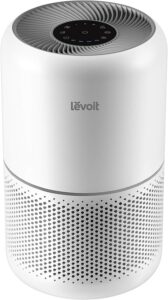
Levoit Core 300P
The Core 300P is the starting point for one room. Levoit rates it at a CADR of 143 CFM, which works out to about 5.4 air changes per hour in a 200 square foot bedroom with 8-foot ceilings, and the bedroom is where most people spend the longest single stretch of the day. Its three-stage filter pairs True HEPA with a high-efficiency activated carbon layer for smoke odor. It is sized for a bedroom, not a large living room, and costs a fraction of the premium pick.
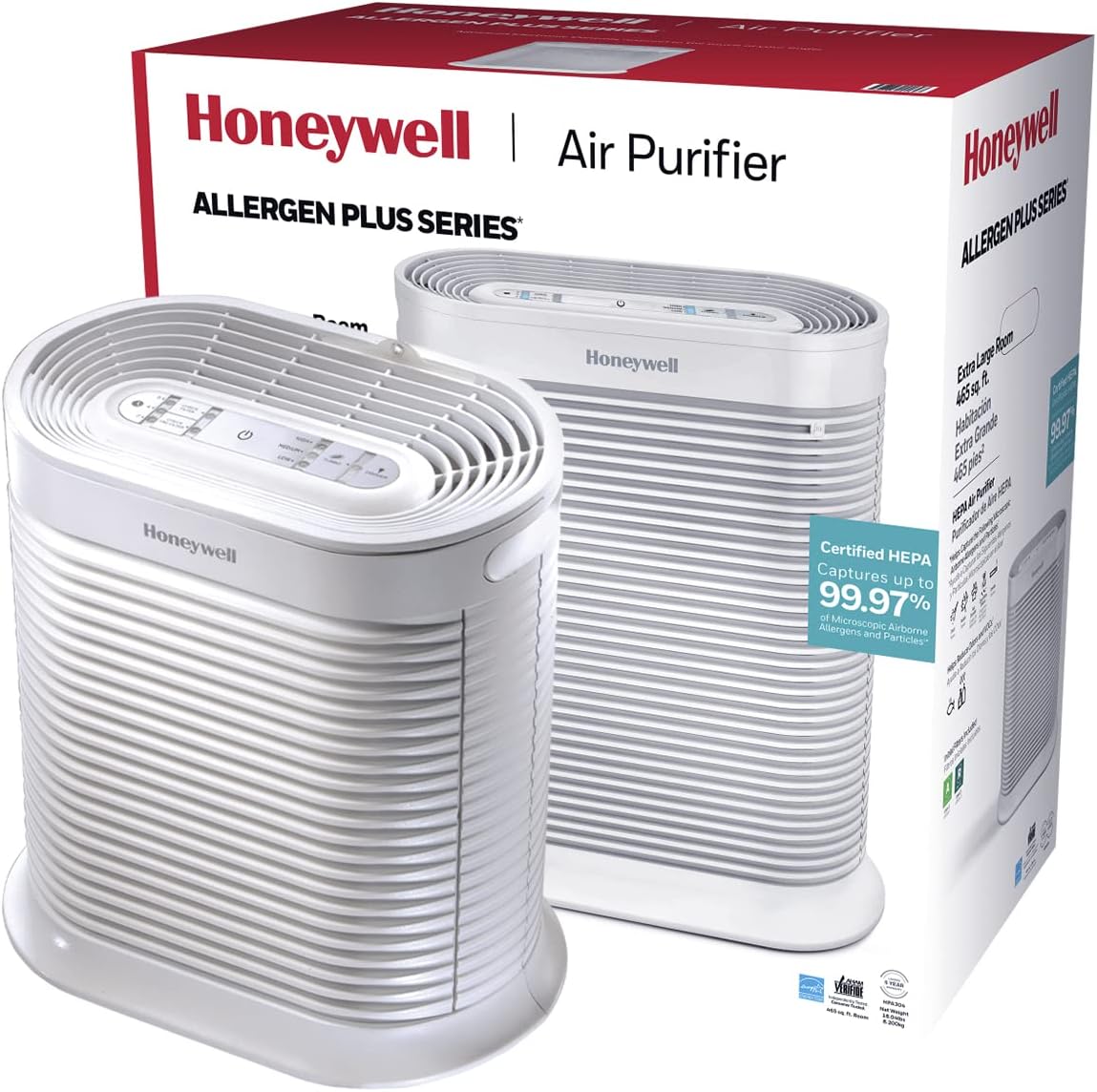
Honeywell HPA300
Honeywell rates the HPA300 at a tobacco-smoke CADR of 300, roughly double the Core 300P’s overall CADR, and at 465 sq ft at 4.8 air changes per hour. That makes it the pick for the main living area while the budget unit covers the bedroom. Its carbon sits in a pre-filter in front of the True HEPA filter; there is no dedicated carbon bed. Honeywell publishes no noise rating; Tom’s Guide measured about 60 dB on Turbo, the price of running it flat out when AQI is above 150.
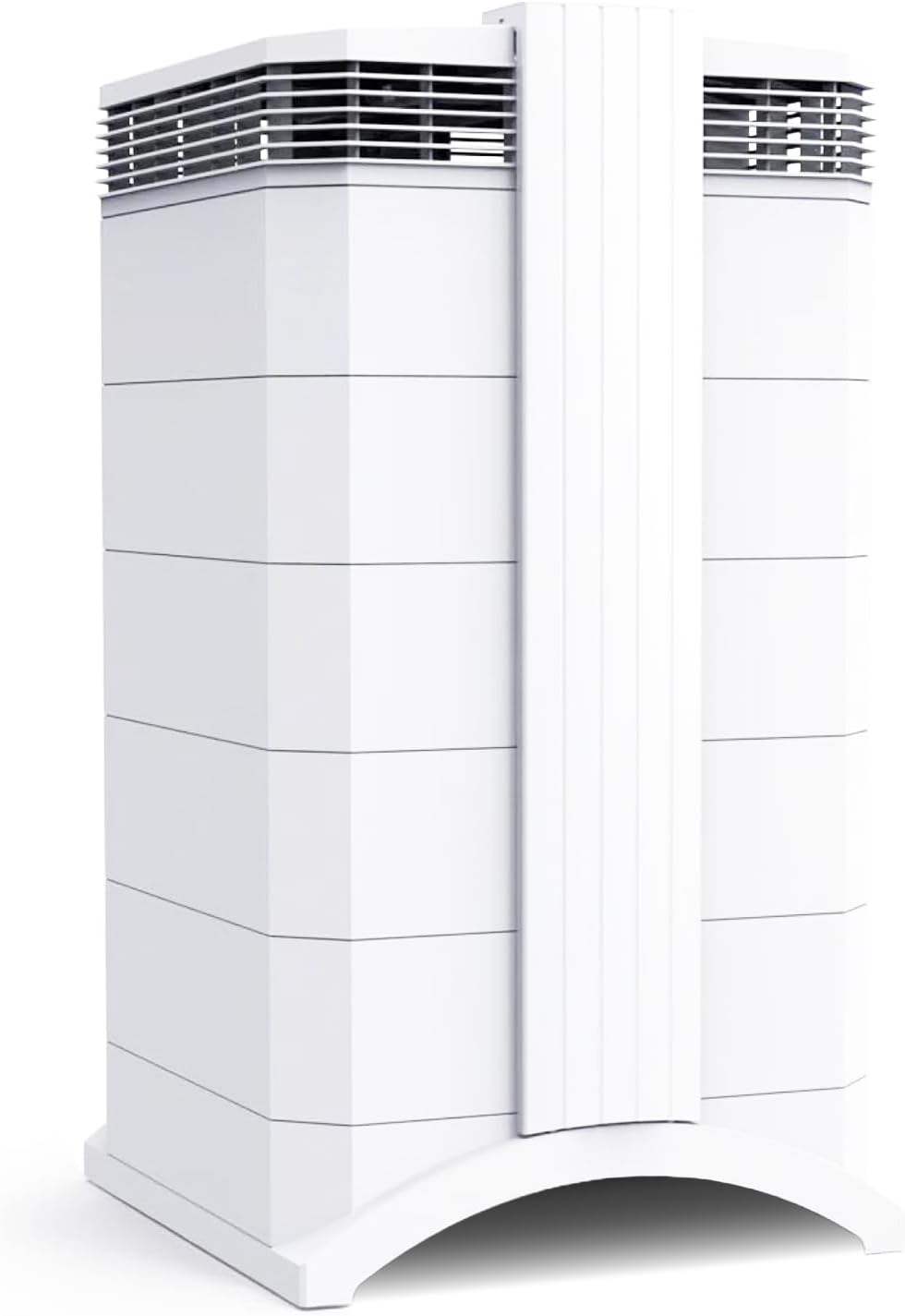
IQAir HealthPro Plus XE
IQAir rates the HyperHEPA filter at 99.97 percent at 0.3 microns and 99.5 percent down to 0.003 microns, a hundred times smaller than the 0.3-micron point where standard HEPA is rated. Its V5-Cell gas and odor filter combines granulated activated carbon with impregnated alumina, a dedicated gas stage the other two picks do not have. IQAir rates it for up to 1,125 sq ft, the largest coverage of the three, and lists 27 dB on the lowest of six speeds. IQAir does not publish a CADR, so size it by that coverage figure. It suits households in regions where smoke events last for weeks.
How to Size a Purifier for Wildfire Smoke
Coverage figures depend on the air-change rate behind them. Levoit lists the Core 300P at 1,066 sq ft at one air change per hour and 222 sq ft at 4.8. This guide sizes for four to five air changes per hour (ACH) during smoke events, so check which basis a box figure uses before comparing it to your room.
The sizing formula works like this: multiply your room’s square footage by the ceiling height (usually 8 feet), multiply by your target ACH, then divide by 60 to get the required CADR in cubic feet per minute. A 200 square foot bedroom at 4 ACH needs a CADR of at least 107. A 400 square foot living room at 5 ACH needs 267. The Core 300P, at 143, covers the bedroom. The HPA300, at 300, covers the living room.
CADR is measured at the highest fan speed, so a purifier running on a lower setting delivers less than its rating. If you expect to run it on a quieter setting most of the time, buy a unit with a CADR above the figure the formula gives.
When to Start Running the Purifier
Turn filtration on before smoke is visible or smellable indoors. By the time you can detect it inside, indoor PM2.5 is already elevated and the purifier is working to bring it back down.
Monitor your local AQI through AirNow.gov or a similar service. When outdoor AQI rises past 100 into the “unhealthy for sensitive groups” range (101 to 150), close windows, switch HVAC to recirculation mode if your system supports it, and start running your purifier. At AQI 150 and above, the purifier should be running on high continuously. Starting early keeps indoor concentrations low from the outset.
Carbon Filter Saturation During Extended Events
Activated carbon has a finite capacity. Manufacturer replacement intervals for the picks here range from about every three months for the HPA300’s carbon pre-filter to about 24 months for the IQAir’s V5-Cell, and those intervals assume ordinary use; running on high through heavy smoke uses up capacity faster. The clearest sign of saturation is persistent smoke odor indoors while the purifier is running. At that point, the carbon has absorbed all it can and is no longer removing gases from the air, even though the HEPA component continues capturing particles.
If you live in a region with predictable fire seasons, keep a spare carbon filter on hand before smoke arrives, so a saturated filter can be swapped the same day.
This guide discusses indoor air quality during smoke and wildfire events. It is not medical advice and does not cover acute respiratory emergencies. If you experience difficulty breathing, chest pain, persistent cough, or other respiratory symptoms during a smoke event, contact a medical provider or emergency services. Air purifiers reduce some smoke-borne particulates indoors but are not a substitute for evacuation when local authorities recommend it. ClearAirLiving.com earns commissions on qualifying purchases through affiliate links. See our affiliate disclosure for details.
Frequently Asked Questions
Can a HEPA air purifier remove wildfire smoke smell?
HEPA filters capture smoke particles but not the gaseous compounds that produce the smell. To address smoke odor, you need a purifier with a dedicated activated carbon filter. The more carbon a filter holds, the longer it absorbs smoke gases before saturating. Among the picks in this guide, the IQAir XE has a dedicated V5-Cell gas filter, the Core 300P has a high-efficiency activated carbon layer in its main filter, and the HPA300 carries its carbon in a pre-filter.
How many air purifiers do I need during a wildfire smoke event?
Plan on one purifier per room you want to protect. Prioritize two rooms: the bedroom, where you spend the night, and the main living area. When AQI passes 200 into the very unhealthy range, close off unoccupied rooms and spend time in fewer spaces. A two-unit setup with the Core 300P in the bedroom and the HPA300 in the living room costs well under a single premium unit.
Should I buy an air purifier before or during wildfire season?
Before. Buying ahead means the purifier and a spare filter set are already in the house when AQI climbs, instead of depending on delivery during a smoke event. If you live in a region with a predictable fire season, buy in early spring. Run the unit outside smoke season too, so it handles everyday dust and pollen instead of sitting in a closet.