Managing Allergies in the Bedroom
A whole night in one closed room makes the bedroom the first place to cut allergens. Start with the bedding, then deal with what stays in the air.
AAFA notes that the bedroom usually has more dust mites than anywhere else in the home, and that they live deep in mattresses, pillows and down-filled bedding, feeding on the skin flakes people shed every day. Vacuuming misses many of them there, so the mattress comes first.
Pollen and Pet Dander
Pollen can come in on hair and clothing and end up on the pillow, so a shower before bed helps keep it off the bedding. For pets, AAAAI advises keeping the animal out of the bedroom and other rooms where you spend a lot of time.
Steps for the Bed and the Room
Zippered allergen-barrier covers for the mattress and pillows have pores too small for dust mites and their waste to pass through, according to AAFA, and AAAAI recommends encasing mattresses, box springs and pillows. A standard mattress protector is a different product, so buy one sold as a dust mite or allergen barrier.
Wash sheets, pillowcases and blankets every week in water of at least 130°F and dry them in a hot dryer, the routine both AAAAI and AAFA give for dust mites. AAFA notes that the 130°F wash is what kills the mites.
AAFA advises holding indoor humidity at 30 to 50 percent, and a dehumidifier or air conditioner brings a damp bedroom down into that range. Keeping the door closed during the day limits the dust, pollen and dander that drift in from the rest of the house, and it leaves the purifier a smaller volume of air to clean.
Using Air Filtration in the Bedroom
A HEPA purifier handles the share of allergen that is in the air, which encasements and washing do not touch, so it works alongside the bedding steps. EPA’s guide to air cleaners reports that studies of portable HEPA air cleaners have found improvements in some allergy and asthma symptoms, though not always major ones and not in every symptom.
For a bedroom unit, check the noise rating on the lowest fan speed first, since that is the setting it will spend the most hours on. The three picks below are rated or measured at 22 to 28 dB on low.
Recommended Air Purifiers for Bedroom Allergies
Full specs and side-by-side comparisons are in the main allergies guide.
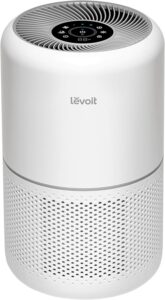
Levoit Core 300S
The Core 300S covers bedrooms up to 219 sq ft at 4.8 air changes per hour and runs at 22 dB on its lowest setting, the quietest low setting of the three picks here. Its main filter is rated 99.97 percent at 0.3 micron. Levoit lists a Sleep Mode for overnight use, and the VeSync app adds schedules and a 1 to 24 hour timer.
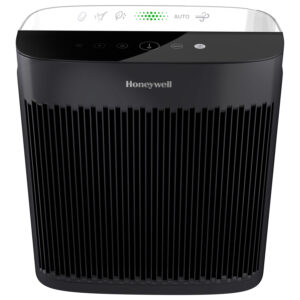
Honeywell HPA5200B
The HPA5200B covers up to 360 sq ft at 4.8 air changes per hour with a smoke CADR of 226 and a dust CADR of 250, which suits a bedroom larger than the Core 300S’s 219 sq ft rating. An air quality sensor drives an auto mode that adjusts the cleaning level on its own. Honeywell publishes no noise rating; an independent measurement by Breathe Quality puts it at about 28 dB on low, 1 dB louder than the IQAir and 6 dB louder than the Core 300S. It is a better fit for people who already sleep with background noise such as a fan, where the purifier’s sound blends in, than for light sleepers who need near-silence.
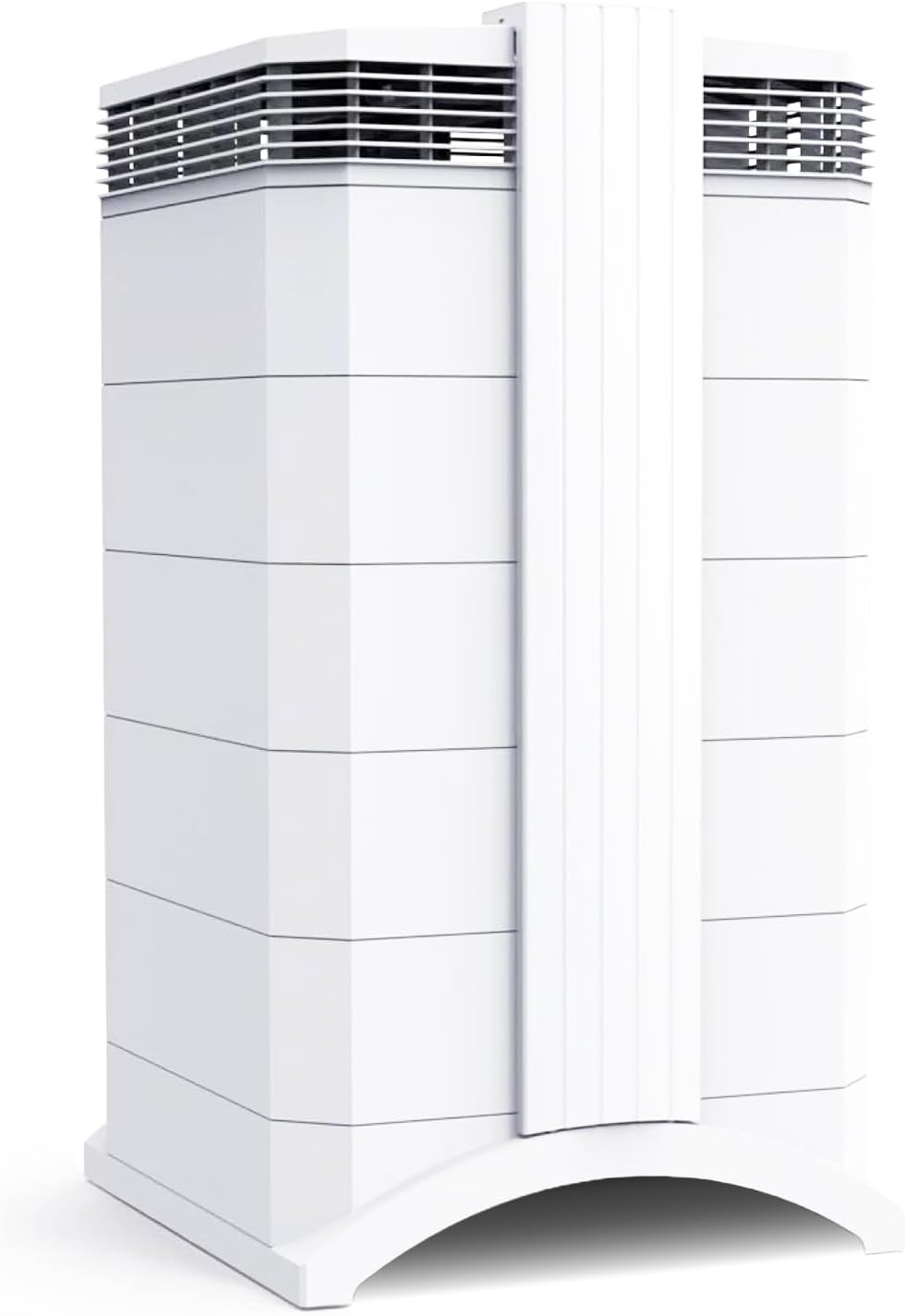
IQAir HealthPro Plus XE
The IQAir carries the finest filter rating of the three: its HyperHEPA filter is rated 99.5 percent efficient down to 0.003 microns, well below the 0.3 micron point used for standard HEPA ratings. Its rated coverage of up to 1,125 sq ft is far more than a standard bedroom needs, so it can stay on its lower speeds; the lowest of its six runs at 27 dB.
Frequently Asked Questions
Should I run the air purifier while I sleep or just before bed?
Run it through the night on low. Thirty to sixty minutes on a higher speed before bed clears the room first, and a purifier only filters while it runs.
Is a HEPA purifier enough, or do I also need allergen-proof bedding encasements?
Use both. Encasements keep the allergen inside the mattress and pillows, and the purifier handles what reaches the air from the rest of the room.
Does the purifier need to be right next to the bed?
No. Keeping it in the same room matters most. A spot a few feet from the bed, beside it or at the foot on the floor, still draws from the air around the bed. Avoid pointing the outlet at the pillow, where the draft can bother a sleeper.