Protecting Your Home from Wildfire Smoke
Smoke reaches indoor air through gaps around windows and doors, exhaust vents and HVAC fresh-air intake. A purifier’s smoke CADR and its activated carbon stage decide how much of it comes back out.
Wildfire smoke is mostly fine particulate matter (PM2.5) plus gases, and during a smoke event it keeps leaking in for as long as outdoor air stays bad. A purifier sized for dust and pet dander in an ordinary week can fall behind over a multi-day event when outdoor AQI sits in the unhealthy range. The EPA’s guidance for these events is to set up a cleaner air room: one closed room with a portable air cleaner running on its highest setting.
Two specifications matter most for smoke. The first is the smoke CADR, which AHAM rates separately from dust and pollen; the EPA’s sizing rule is a tobacco-smoke CADR of at least two-thirds of the room’s area in square feet, so a 300 sq ft living room needs at least 200. The second is the activated carbon stage. HEPA filtration captures the smoke particles, and activated carbon adsorbs the gases that carry the smell. A purifier with only a thin carbon layer will keep removing particles after its carbon is used up, and the room will still smell of smoke.
How Smoke Enters the Home
Homes are not airtight. Smoke infiltrates through gaps around windows and doors, through exhaust fans that are not running, through HVAC systems that draw outdoor air, and through every opening of an exterior door. Tighter, well-weatherstripped houses let smoke in more slowly than drafty older ones, and none keeps it out completely.
An HVAC system with a fresh-air intake pulls outdoor smoke straight into the house. The EPA’s instruction is to turn off the fresh-air option or close the intake and run the system in recirculation mode. Do this at the start of a smoke event, before the purifiers go on, since every minute the intake stays open adds smoke the purifiers then have to remove.
When to start running the purifier during a smoke event
Use the outdoor AQI as the trigger, and check it on AirNow.gov. When it reaches Orange (101 to 150), close the windows and set the HVAC to recirculate. Then start the purifier on high. At Red (151 to 200) and above, keep it running continuously, and anyone in a sensitive group should spend as much time as possible in the filtered room.
How to Use a Purifier Effectively During a Smoke Event
The EPA’s guidance is to run the air cleaner continuously on its highest fan setting during a smoke event. The low speed that suits everyday use moves a fraction of the air, and smoke keeps leaking in the whole time. With one purifier, put it in one closed room, usually the bedroom, since one unit spread across an open floor plan falls behind in every room. The EPA suggests a room large enough for the household, and a bedroom with an attached bathroom works well.
Sealing gaps proactively helps the purifier keep pace. Draft excluders at the doors and weatherstripping on the windows slow the rate smoke leaks in, so the purifier’s CADR goes further. In the cleaner air room, a towel or draft excluder under the door helps, as long as nothing makes it hard to leave the room in an emergency.
Filters wear out faster during smoke events. The manufacturer intervals for the picks below run from about every three months for the HPA300’s carbon pre-filter to about 24 months for the IQAir’s V5-Cell gas filter, and those intervals assume ordinary use. The EPA’s rule is to change a filter when it looks dirty or starts to smell. Persistent smoke odor indoors with the purifier on high is the clearest sign the carbon is used up. If you live where smoke events are common, buy a spare filter set before the season starts.
Recommended Air Purifiers for Wildfire Smoke
The main smoke and wildfire pollution guide has full specs and comparisons.
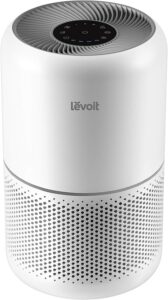
Levoit Core 300P
The Core 300P is the budget pick for a single room. Levoit rates it for 222 sq ft at 4.8 air changes per hour, with an overall CADR of 143 CFM (Levoit does not publish a separate smoke figure), which fits a bedroom or home office used as the cleaner air room. Its three-stage filter pairs True HEPA with a high-efficiency activated carbon layer for smoke odor. In a large open-plan space it will not keep up.
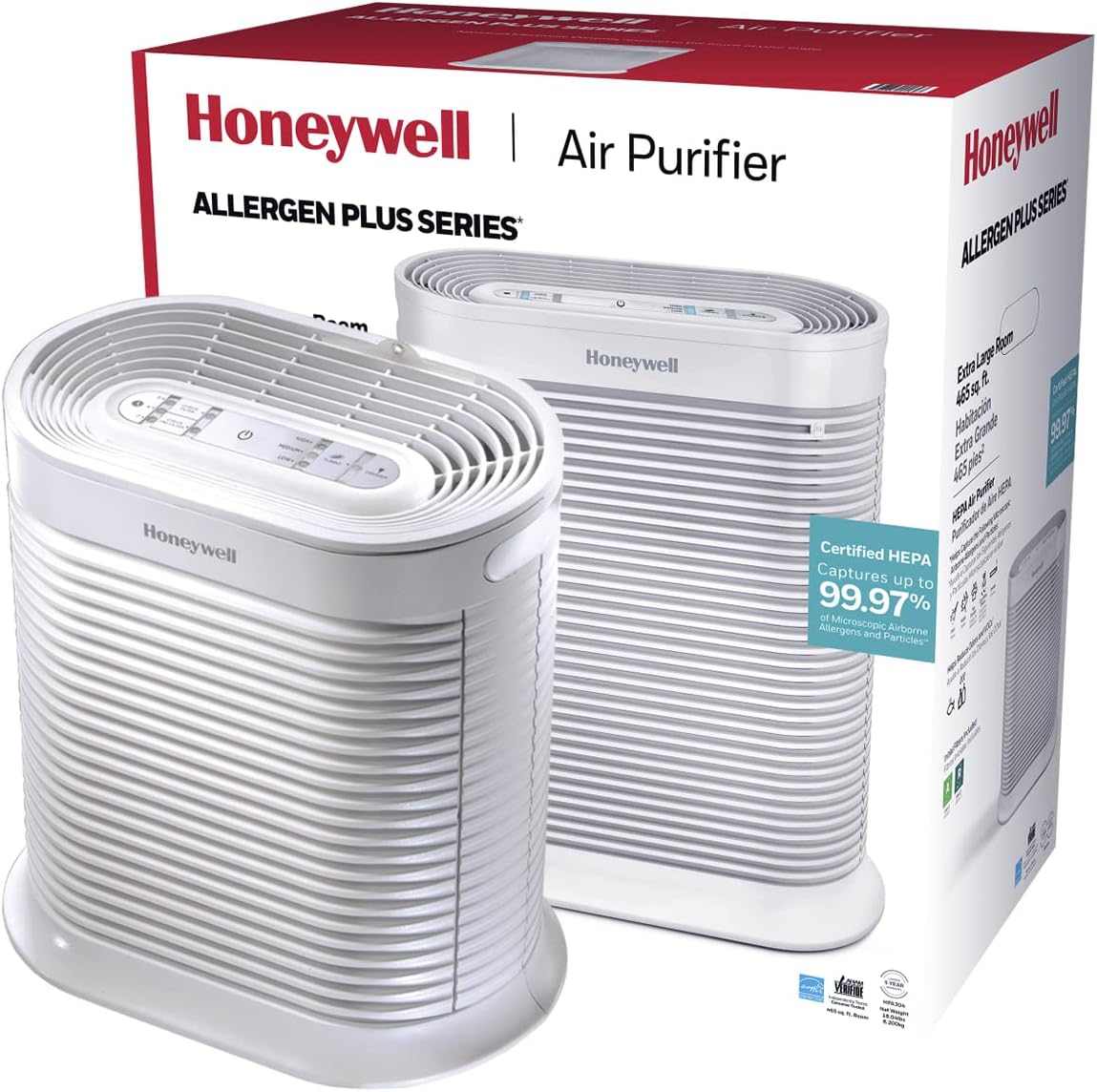
Honeywell HPA300
Honeywell rates the HPA300 at a tobacco-smoke CADR of 300, the highest of the three picks here, and at 465 sq ft at 4.8 air changes per hour. By the EPA’s two-thirds rule, that CADR covers a room up to 450 sq ft, so it is the pick for the main living area while a smaller unit covers the bedroom. Its carbon sits in a pre-filter in front of the True HEPA filter, with no separate carbon bed. Honeywell publishes no noise rating; Tom’s Guide measured about 41 dB on low and about 60 dB on Turbo.
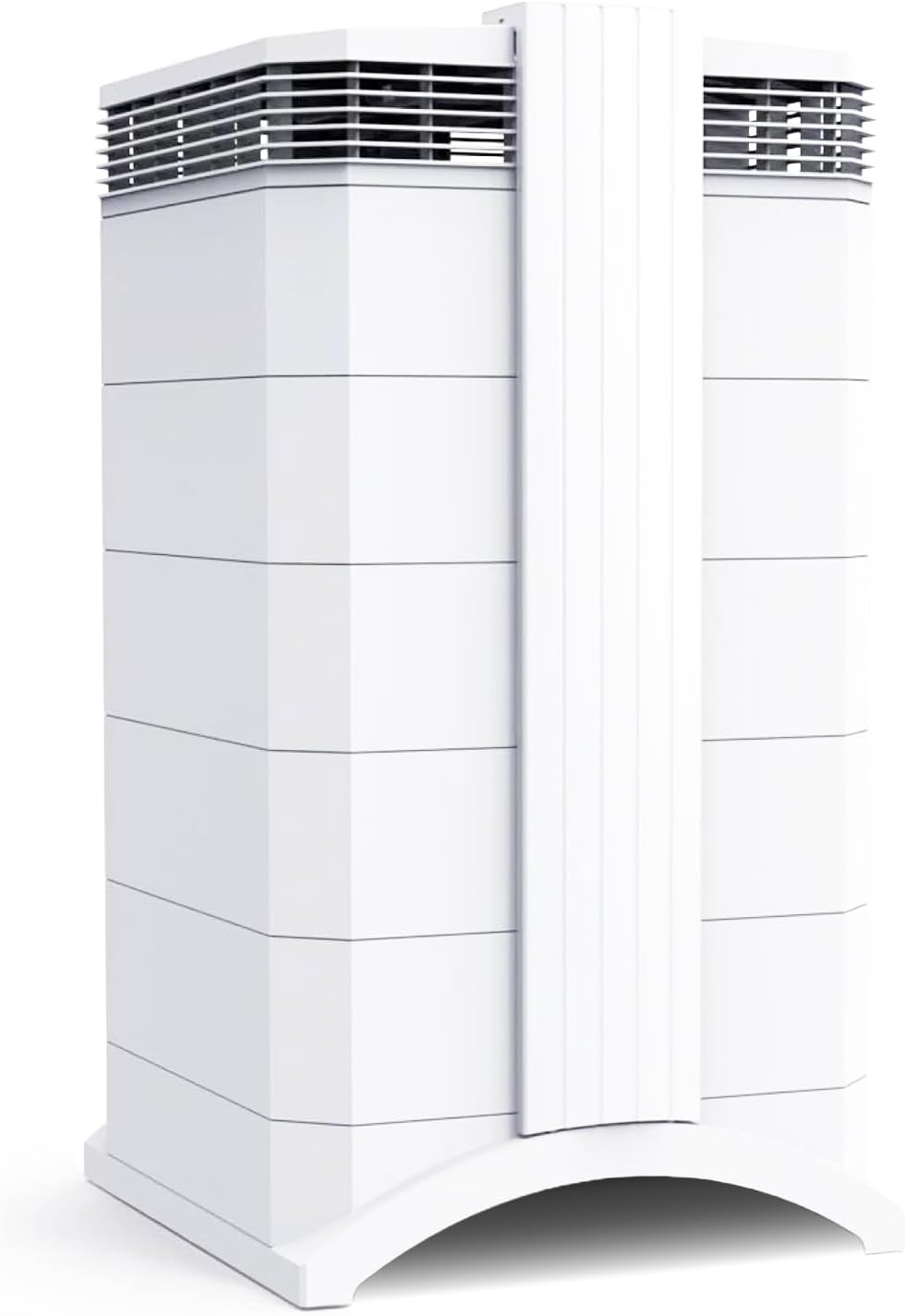
IQAir HealthPro Plus XE
The IQAir has the strongest filtration of the three picks. IQAir rates its HyperHEPA filter at 99.97 percent at 0.3 microns and 99.5 percent down to 0.003 microns, and its V5-Cell gas and odor filter combines granulated activated carbon with impregnated alumina, a dedicated gas stage the other two picks do not have. It is rated for up to 1,125 sq ft and runs at 27 dB on its lowest speed. IQAir does not publish a CADR, so size it by that coverage figure.
Frequently Asked Questions
At what AQI level should I start running my air purifier on high?
Start when outdoor AQI reaches the Orange range, which begins at 101 and is the level AirNow labels unhealthy for sensitive groups. Close up the house and run the purifier on high. At 151 and above (Red), run it continuously on its highest setting, whether or not you can smell smoke indoors.
How long does wildfire smoke stay in a home after outdoor air clears?
Particles that settled on carpet, upholstery and other surfaces during the event can be stirred back into the air by foot traffic and cleaning after the outdoor air clears. Keep the purifier running while you clean up: vacuum with a HEPA vacuum and wipe hard surfaces with a damp cloth. If the room still smells of smoke once the outdoor AQI is back to Green, the carbon stage is likely used up and due for replacement.
Is a DIY Corsi-Rosenthal box comparable to a commercial purifier for smoke?
For particles, it can be. In EPA laboratory research, a Corsi-Rosenthal box built from a box fan and MERV-13 filters reached a wildfire-smoke CADR of about 400, at a fraction of the price of the commercial picks here. The EPA notes drawbacks: more noise and heat from the fan motor, and filters that need replacing more often during smoke. A MERV-13 filter does not include an activated carbon stage, so it will not remove smoke odor. If you build one, the EPA recommends a 2012 or newer box fan with a UL or ETL safety marking.