Protecting Your Home from Wildfire Smoke
Wildfire smoke penetrates homes faster than most people expect, through gaps, HVAC systems, and every time a door opens. High CADR and real activated carbon are the two specifications that actually matter during a smoke event.
Wildfire smoke is a different problem from the everyday air quality concerns that most air purifiers are optimized for. The particulates are finer, the concentrations can be orders of magnitude higher during an active event, and the urgency is real, extended exposure to smoke at elevated AQI levels has documented short-term and long-term health effects. An air purifier that handles dust and pet dander adequately may not be adequate during a multi-day smoke event when outdoor AQI reaches the unhealthy or hazardous range.
The two specifications that separate smoke-capable purifiers from general-purpose ones are CADR for smoke specifically, which is rated separately from dust and pollen in third-party testing, and the weight and quality of activated carbon in the filter. Fine smoke particulates are captured by HEPA filtration, but the gaseous compounds in smoke, the ones that produce the characteristic smell and carry many of the chemicals of concern, require activated carbon. Many budget purifiers include a thin carbon layer adequate for light odor control but insufficient during sustained smoke exposure.
How Smoke Enters the Home
Homes are not airtight. Smoke infiltrates through gaps around windows and doors, through exhaust fans that are not running, through HVAC systems that draw outdoor air, and through every opening of an exterior door. Newer construction with better insulation and weatherstripping infiltrates more slowly than older homes, but no home eliminates smoke entry entirely during a significant wildfire event in the surrounding area.
The HVAC system deserves particular attention. Systems that draw fresh air from outside will actively pull smoke into the home during a smoke event unless switched to recirculation mode. Many modern thermostats have a recirculation or indoor air recirculation setting that prevents outdoor air intake, switching to this mode during smoke events is one of the most immediately impactful steps you can take before deploying portable purifiers.
When to start running the purifier during a smoke event
Do not wait until you can smell smoke indoors. By the time smoke smell is detectable inside, particle concentrations are already elevated. Check local AQI through AirNow.gov or a similar service. When outdoor AQI reaches the Orange range (101-150), that is the trigger to close windows, switch HVAC to recirculation, and run your air purifier on high. At Red (151-200) and above, the purifier should be running continuously and everyone in sensitive health categories should minimize time in unfiltered spaces of the home.
How to Use a Purifier Effectively During a Smoke Event
During active smoke events, run the purifier on the highest speed you can tolerate for noise rather than the low speed appropriate for everyday use. The goal is maximum air exchanges per hour while indoor concentrations are being driven up continuously by infiltrating smoke. Once indoor AQI has come down to a reasonable level, you can reduce speed to maintain it. If you have one purifier and multiple rooms, prioritize the bedroom and the room where people spend the most time rather than trying to cover the whole home inadequately.
Sealing gaps proactively helps the purifier keep pace. Door draft excluders, window weatherstripping, and covering exhaust vents that are not in use reduce the rate at which outdoor smoke infiltrates, which reduces how hard the purifier has to work to maintain clean indoor air. This is especially relevant for older homes where infiltration rates are higher.
Filter replacement frequency increases significantly during smoke events. A filter that lasts six months under normal use can saturate in days during sustained exposure to heavy smoke. Keep a spare filter on hand before wildfire season if you live in a smoke-prone region. Running a saturated filter is worse than no filter in some cases, as it can restrict airflow without adequate particle capture.
Recommended Air Purifiers for Wildfire Smoke
For full specs and comparisons, see the main smoke and wildfire pollution guide.
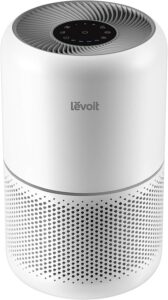
Levoit Core 300P
The Core 300P covers up to 219 sq ft and is the starting point for smoke protection in a single room, a bedroom or a home office that you want to designate as your clean air refuge during a smoke event. Its HEPA filtration captures fine smoke particulates effectively. The activated carbon layer is thicker than the standard Core 300, which provides better gaseous smoke compound capture than many budget competitors at this price. Best deployed in a sealed, smaller room during active events rather than trying to cover a larger open-plan space.
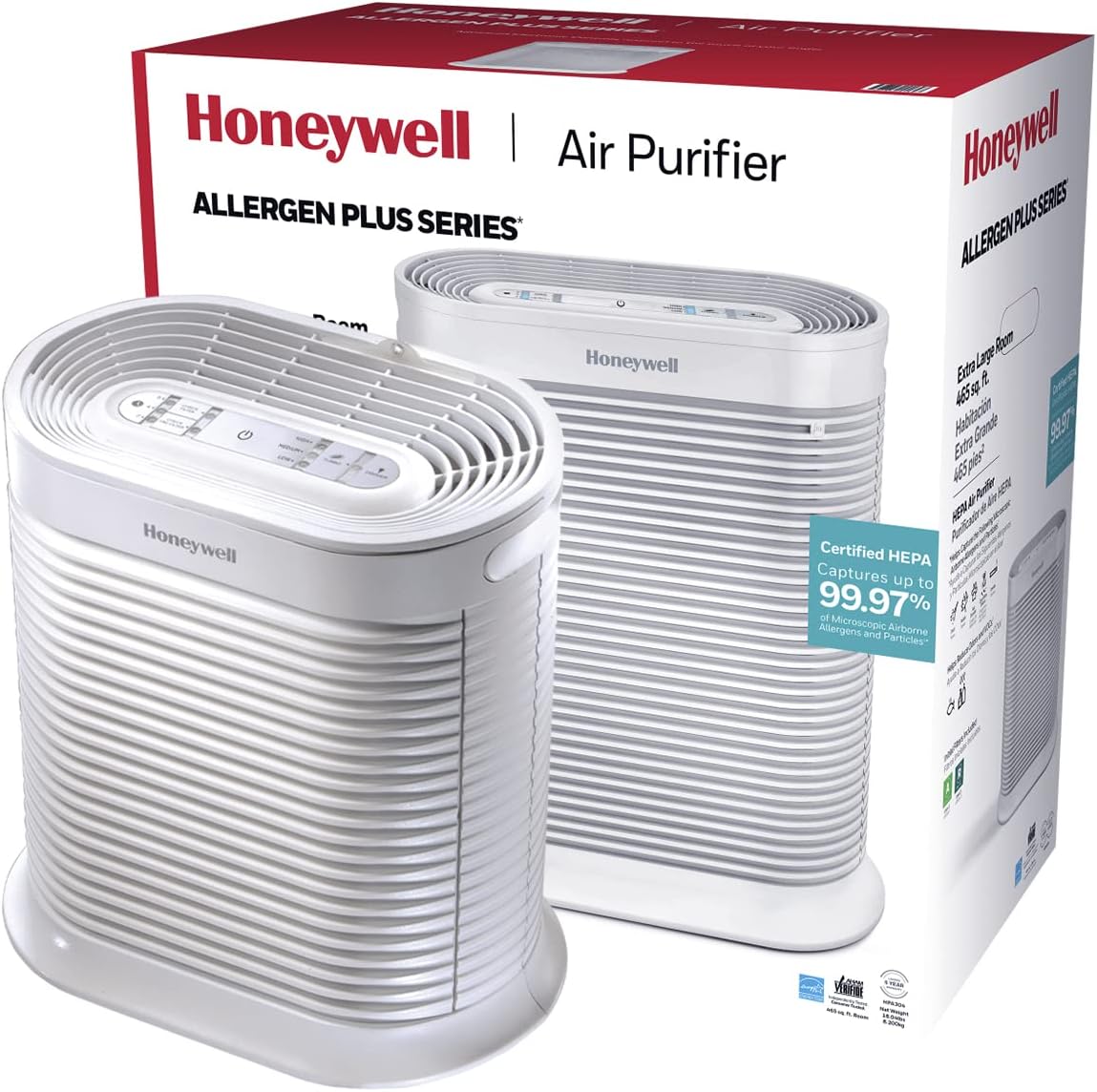
Honeywell HPA300
The HPA300 is among the most tested and validated air purifiers for smoke performance, with a smoke CADR of 300 that covers rooms up to 465 sq ft. During a smoke event it can turn over the air in a standard living room several times per hour on its highest setting. The four pre-filter options include a carbon pre-filter specifically for smoke and odors. The HPA304 is the same unit in white if the black version is unavailable, performance is identical. A strong mid-range choice for people in fire-prone regions who want reliable smoke protection for their main living area.
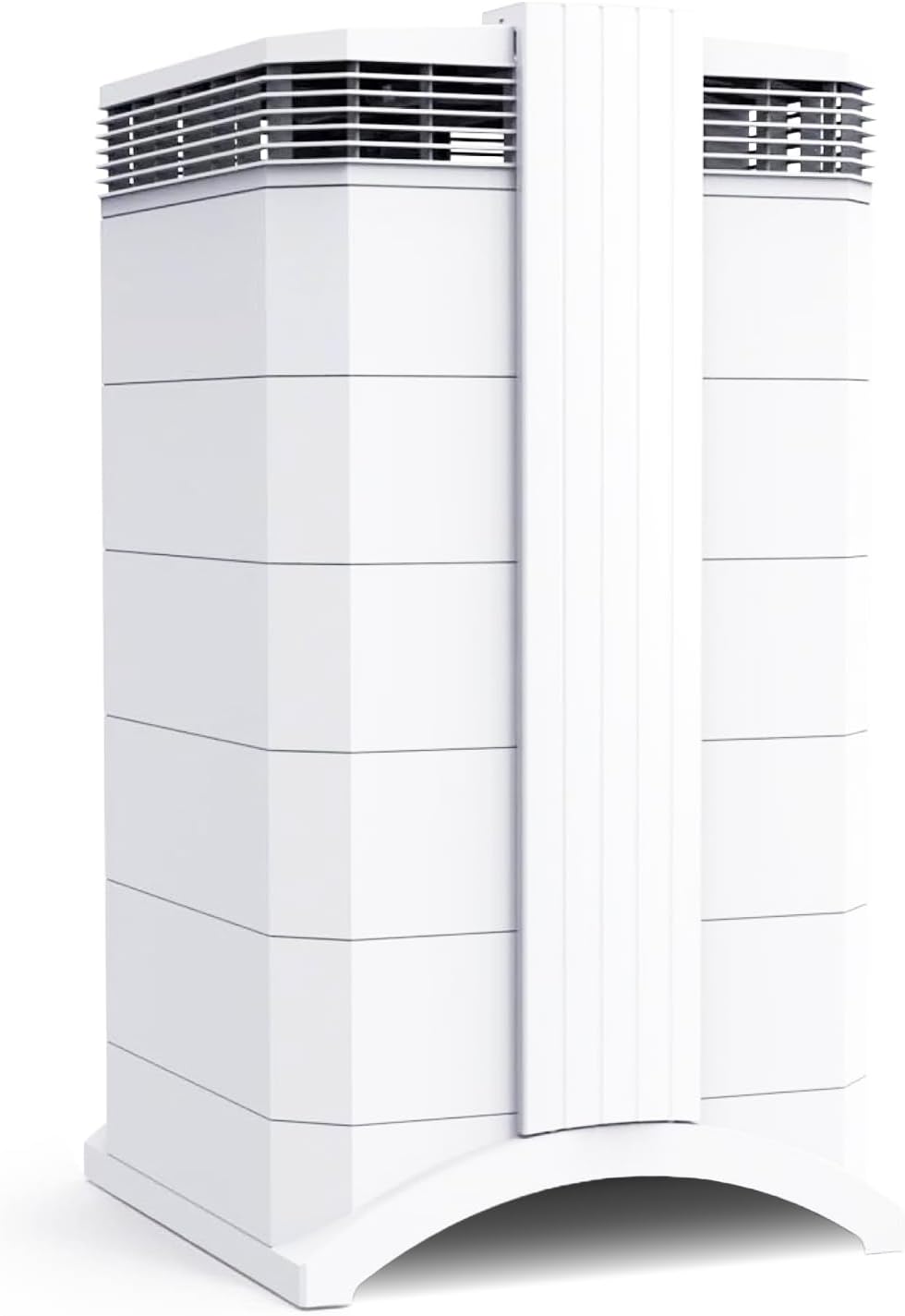
IQAir HealthPro Plus XE
The IQAir is the most capable residential air purifier for wildfire smoke. Its HyperHEPA filtration captures particles down to 0.003 microns, which covers the ultrafine particle fraction of wildfire smoke that standard HEPA filters allow through at reduced efficiency. The substantial activated carbon and potassium permanganate media in the GasDefence filter addresses a wider range of gaseous smoke compounds than standard carbon filters. For households with asthma sufferers, people with cardiovascular conditions, or anyone for whom extended smoke exposure poses serious health risk, the IQAir is the unit that provides the most complete protection.
Frequently Asked Questions
At what AQI level should I start running my air purifier on high?
The EPA recommends taking action when outdoor AQI reaches the Orange range, which begins at 101. At this level, people in sensitive groups including those with asthma, heart disease, children, and older adults should already be limiting outdoor exposure. Running your purifier on high when outdoor AQI reaches 101 and keeping windows closed prevents indoor concentrations from reaching levels that affect healthy adults as well. At AQI 151 and above, the purifier should run continuously on high regardless of indoor smell.
How long does wildfire smoke stay in a home after outdoor air clears?
Smoke particles that have settled onto soft furnishings, carpet, and walls can re-aerosolize for days after outdoor air quality improves, particularly when those surfaces are disturbed by foot traffic or cleaning. Running the purifier for at least 24 to 48 hours after outdoor AQI returns to good levels allows the unit to capture the re-suspended particles from indoor surfaces. Vacuuming with a HEPA vacuum and wiping hard surfaces with a damp cloth after a smoke event speeds up the clearance of settled particles.
Is a DIY Corsi-Rosenthal box comparable to a commercial purifier for smoke?
A properly constructed Corsi-Rosenthal box using MERV-13 filters and a box fan can deliver meaningful smoke particle reduction at a much lower cost than a commercial purifier, and it is a legitimate option during a smoke event when commercial units are unavailable or too expensive. The tradeoffs are that it does not address gaseous smoke compounds the way activated carbon does, it is louder than most commercial units at equivalent airflow, and the performance is less consistent than tested commercial units. It is a useful emergency option rather than a permanent replacement.