Managing Dust Allergies in the Home
The allergen in household dust comes from dust mites, and the bedroom usually holds the most of them.
When someone says they are allergic to dust, they usually react to dust mite waste proteins. Dust mites are microscopic arachnids that live in soft furnishings and feed on shed human skin cells, and their waste and body fragments are the allergens. These particles can return to the air when they are disturbed.
Mites live deep in the stuffing of mattresses and sofas, according to AAFA, which also notes that vacuuming alone will not remove all of them. A room can look clean and still hold mites.
Where Dust Mites Concentrate
AAFA says the bedroom usually has the most mites, and that they live in bedding and carpeting as well as in upholstered furniture and stuffed toys. Mites feed on shed skin, and a bed supplies plenty of it.
Upholstered sofas and armchairs and carpet are on the same AAFA list, so a living room can add to exposure as well. Stuffed toys kept in a bedroom are on it too.
Keep relative humidity between 30 and 50 percent
EPA recommends keeping indoor relative humidity below 60 percent, ideally between 30 and 50 percent (EPA guidance), and AAFA says mites favor humidity above 50 percent and suggests a dehumidifier or air conditioner to hold it in that range. EPA notes that a humidity meter is inexpensive and sold at many hardware stores, so checking the room before and after a change is simple.
Surface Control Strategies That Work
AAFA recommends zippered allergen-barrier covers for mattresses and pillows, made of material with pores too small for mites and their waste to pass through, and AAAAI lists box springs as well. The cover goes over the existing mattress, so the mattress itself does not need to be replaced.
AAFA and AAAAI both advise washing bedding weekly in water of at least 130 degrees Fahrenheit, and AAAAI adds drying it on a hot setting. Check the care labels first, since not every fabric tolerates that temperature.
EPA and AAFA both recommend a HEPA-filter vacuum for carpet and fabric-covered furniture, and AAFA says to use it weekly to limit mites and their waste returning to the air. EPA advises people with asthma or allergies to leave the room while it is vacuumed. AAAAI recommends removing wall-to-wall carpet where possible, with throw rugs that are cleaned regularly as an easier alternative.
How Air Filtration Fits In
A true HEPA purifier filters the air that passes through it, which is the part of the problem that surface cleaning does not reach. EPA’s guide to air cleaners reports that studies of portable HEPA air cleaners have found improvements in some allergy and asthma symptoms, while noting that the improvements are not always major and do not appear in every symptom. A purifier works best alongside the surface steps above.
The bedroom is the first room to place a unit, since AAFA says it usually has the most mites. A quiet model can run continuously overnight, and a unit in the living room covers the upholstered furniture there. Match the unit to the room using the coverage figures in the cards below.
Recommended Air Purifiers for Dust Allergies
Full specs and comparisons are in the main allergies guide. These three options cover a range of room sizes and budgets.
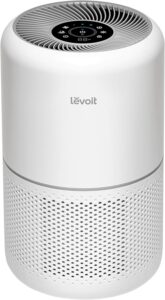
Levoit Core 300S
The Core 300S covers up to 219 sq ft at 4.8 air changes per hour and runs at 22 dB on its lowest setting, which makes it practical for continuous overnight use in a bedroom. True HEPA filtration captures dust mite allergen particles and the fine debris that carries them. Levoit lists a Sleep Mode for overnight use, and the VeSync app adds schedules and a 1 to 24 hour timer.
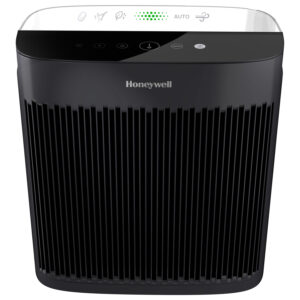
Honeywell HPA5200B
The HPA5200B covers up to 360 sq ft at 4.8 air changes per hour and carries a dust CADR of 250. For a larger bedroom or a living room where a sofa and armchair are the primary dust mite sources, its higher coverage and air exchange rate mean more complete particle capture across the full room volume compared to the Core 300S, and a true HEPA filter paired with an activated carbon pre-filter handles both the dust mite allergen particles and everyday odors. An air quality sensor drives an auto mode that adjusts the cleaning level on its own. Honeywell publishes no noise rating; an independent measurement by Breathe Quality puts it at about 28 dB on low.
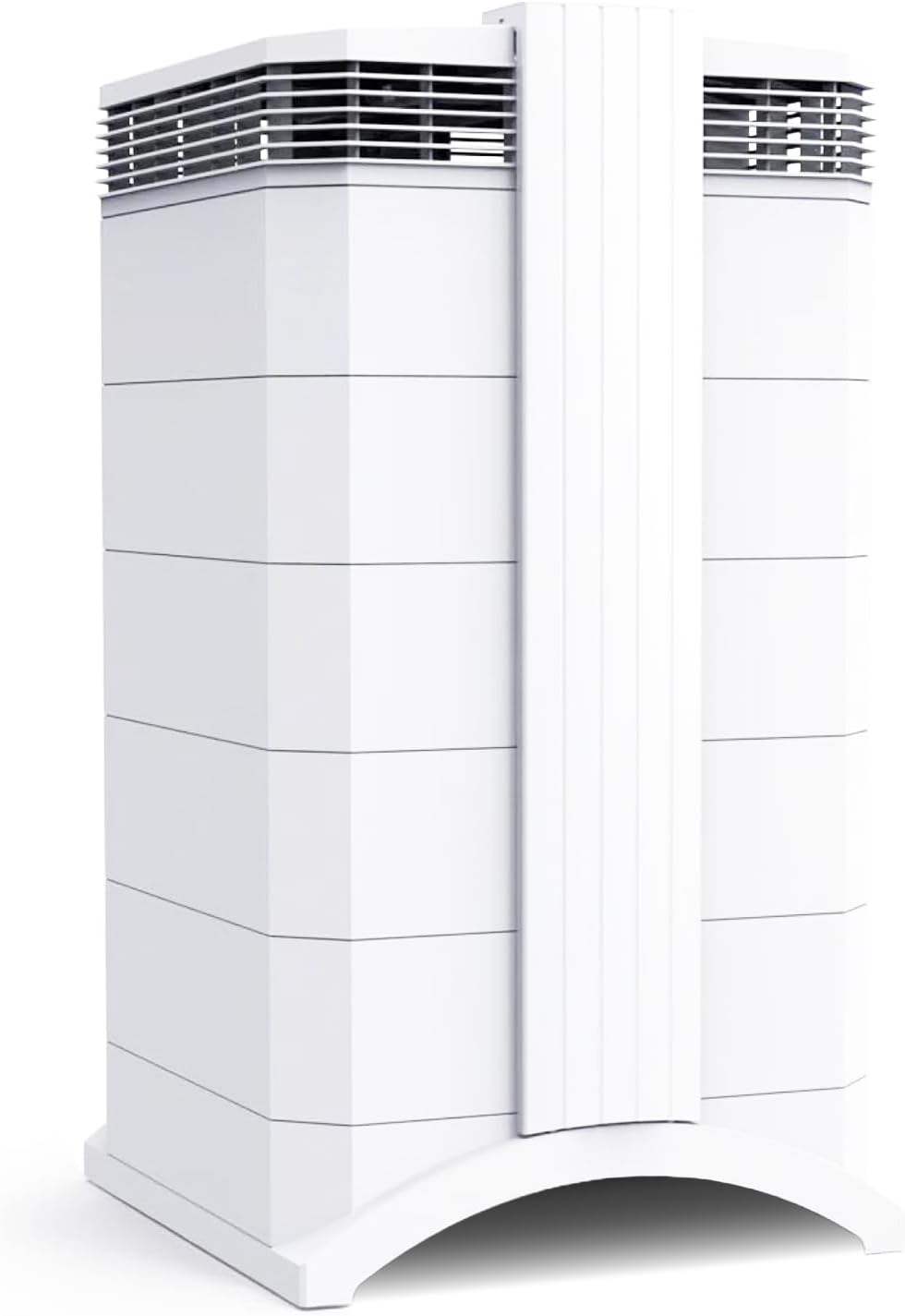
IQAir HealthPro Plus XE
The IQAir has the highest filtration level in this guide: HyperHEPA filtration captures particles down to 0.003 microns, well below the 0.3 micron threshold of standard HEPA. That rating matters most for much finer particles such as smoke. Its rated coverage of up to 1,125 sq ft is far more than a standard bedroom needs, so it can run on its lower speeds, and the lowest of its six runs at 27 dB.
Frequently Asked Questions
Does vacuuming make dust allergies worse before it makes them better?
It can, temporarily. Vacuuming disturbs settled particles, and AAFA notes that a HEPA-filter vacuum helps limit mites and their waste returning to the air. EPA advises people with asthma or allergies to leave the room while it is vacuumed, so a practical approach is to vacuum when you can stay out of the room for a while afterward.
Can I reduce dust mite allergen without replacing my mattress?
Yes. A zippered allergen-barrier cover goes over the existing mattress and pillows, so a new mattress is not needed. AAFA describes these covers as made of material with pores too small for mites and their waste to pass through. Combined with weekly hot washing and a HEPA air purifier in the bedroom, the cover deals with the bed directly and requires no new furniture.
How is dust allergy different from seasonal pollen allergy?
Dust mites live indoors, so a dust mite allergy can last all year. Pollen allergy follows an outdoor season that depends on the plants involved. Some people have both, which makes it harder to tell which allergen is behind symptoms at a given time without testing.