Managing Allergies in the Bedroom
The bedroom is where allergy symptoms tend to be felt most acutely because it is where you spend the most continuous time breathing in one place. Improving bedroom air quality often produces a more noticeable result than improvements elsewhere in the home.
Waking up congested, sneezing through the morning, or dealing with itchy eyes before the day has started are common experiences for allergy sufferers, and the bedroom is usually the primary source. The connection between bedroom air quality and morning symptoms is direct: eight hours in an enclosed space with elevated allergen levels is a long and consistent exposure window, and the body’s inflammatory response to that exposure often peaks in the hours just after waking.
The bedroom accumulates allergens in ways that other rooms do not. Mattresses and pillows collect dust mites and their waste products over months and years. Bedding traps pollen brought in on hair and clothing. Carpeting holds allergens close to floor level, where disturbed particles become airborne during movement. Even rooms where the door stays closed develop allergen accumulation over time through normal air circulation and transfer from clothing and skin.
The Primary Allergen Sources in a Bedroom
Dust mites are the most significant allergen source in most bedrooms. They thrive in the warm, humid environment of mattresses and pillows, feeding on shed skin cells, and their waste proteins are among the most potent triggers for allergic rhinitis and asthma. A mattress that has been in use for several years contains a substantial dust mite population regardless of how clean the bedroom appears visually. Standard mattress covers that are not specifically allergen-rated allow mite proteins to pass through into the breathing zone.
Pollen is the second major contributor for seasonal allergy sufferers. It is carried indoors on hair, skin, and clothing throughout the day, and when you get into bed, that pollen transfers directly to pillows and bedding. Showering before bed is one of the most effective single steps a seasonal allergy sufferer can take, because it removes the day’s pollen load before it has a chance to contaminate the sleeping surface.
Pet dander in the bedroom deserves mention even in households that enforce a no-pets-in-bedroom policy. Dander travels on clothing, through air circulation, and under doors, and tends to accumulate in bedding and carpet over time regardless of whether the animal is ever present in the room. The allergen levels in a bedroom where pets are excluded are often meaningfully lower than rooms where they sleep, but they are rarely zero.
Why bedroom allergen levels affect daytime symptoms
Overnight allergen exposure primes the immune system’s inflammatory response, which does not reset cleanly at the moment you wake up. Consistent exposure to high bedroom allergen levels throughout the sleep period means the immune system arrives at morning already activated, which makes daytime symptom thresholds lower. Reducing bedroom allergen levels tends to improve not just morning symptoms but the overall severity of allergy symptoms throughout the day.
Surface-Level Steps That Make a Difference
Allergen-proof mattress and pillow encasements are the highest-impact single purchase for bedroom allergy management. These covers are woven tightly enough that dust mite proteins cannot pass through, effectively sealing the existing mite population inside the mattress while preventing new accumulation on the sleeping surface. They are distinct from standard mattress protectors, which do not block allergens at the required particle size. Look for encasements rated to block particles of 10 microns or smaller.
Washing bedding weekly in hot water at 130 degrees Fahrenheit or above kills dust mites and removes their waste proteins, as well as the pollen and pet dander that accumulate during the week. Washing at lower temperatures removes some allergens but does not kill mites effectively. Drying on a high heat setting adds a second kill step that compensates if the wash temperature was not quite high enough.
Keeping the bedroom door closed during the day reduces how much pollen, pet dander, and dust from the rest of the house enters the room during daily activity. Combined with a running air purifier, a closed bedroom becomes a controlled environment with lower allergen concentrations than the rest of the home.
Using Air Filtration in the Bedroom
A HEPA air purifier running continuously in the bedroom addresses the airborne fraction of allergens that surface cleaning cannot reach. Dust mite proteins, pollen fragments, and pet dander particles that become airborne during sleep movement and breathing are captured by the filter before they are inhaled again. The key for bedroom use is continuous, quiet operation rather than intermittent high-speed bursts. A unit running on low overnight maintains consistently lower particle levels throughout the sleep period.
Noise level at the lowest fan speed is the most important specification for bedroom placement. A purifier that runs at 35 dB on low may be adequate for daytime use but becomes noticeable in a quiet bedroom. Units at or below 25 dB on their lowest setting are effectively inaudible for most people in a normal sleeping environment. All three picks below meet this standard.
Recommended Air Purifiers for Bedroom Allergies
For full specs and side-by-side comparisons, see the main allergies guide. These three options are particularly well suited to continuous overnight operation in the bedroom.
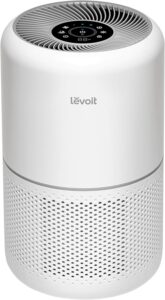
Levoit Core 300S
The Core 300S covers bedrooms up to 219 sq ft and runs at 24 dB on its lowest setting, quiet enough for overnight use for most people. True HEPA filtration captures dust mite proteins, pollen, and pet dander in the size range that drives allergic response. The sleep mode dims the indicator light automatically when the room darkens, removing the one common complaint about small purifiers used in bedrooms. For the SP version, scheduling lets you run the unit on a higher speed before bedtime and drop to quiet low automatically once you are asleep.
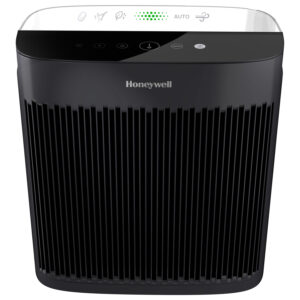
Honeywell HPA200
The HPA200 covers up to 310 sq ft with a strong CADR rating that makes it well suited to larger bedrooms where the Core 300S would have to work harder to maintain clean air. The tradeoff for bedroom use is noise: at 35 dB on its lowest setting it is noticeably louder than the Core 300S or IQAir. It is a better fit for people who already sleep with background noise such as a fan, where the purifier’s sound blends in, than for light sleepers who need near-silence. During the day as a daytime bedroom unit, the noise level is a non-issue.
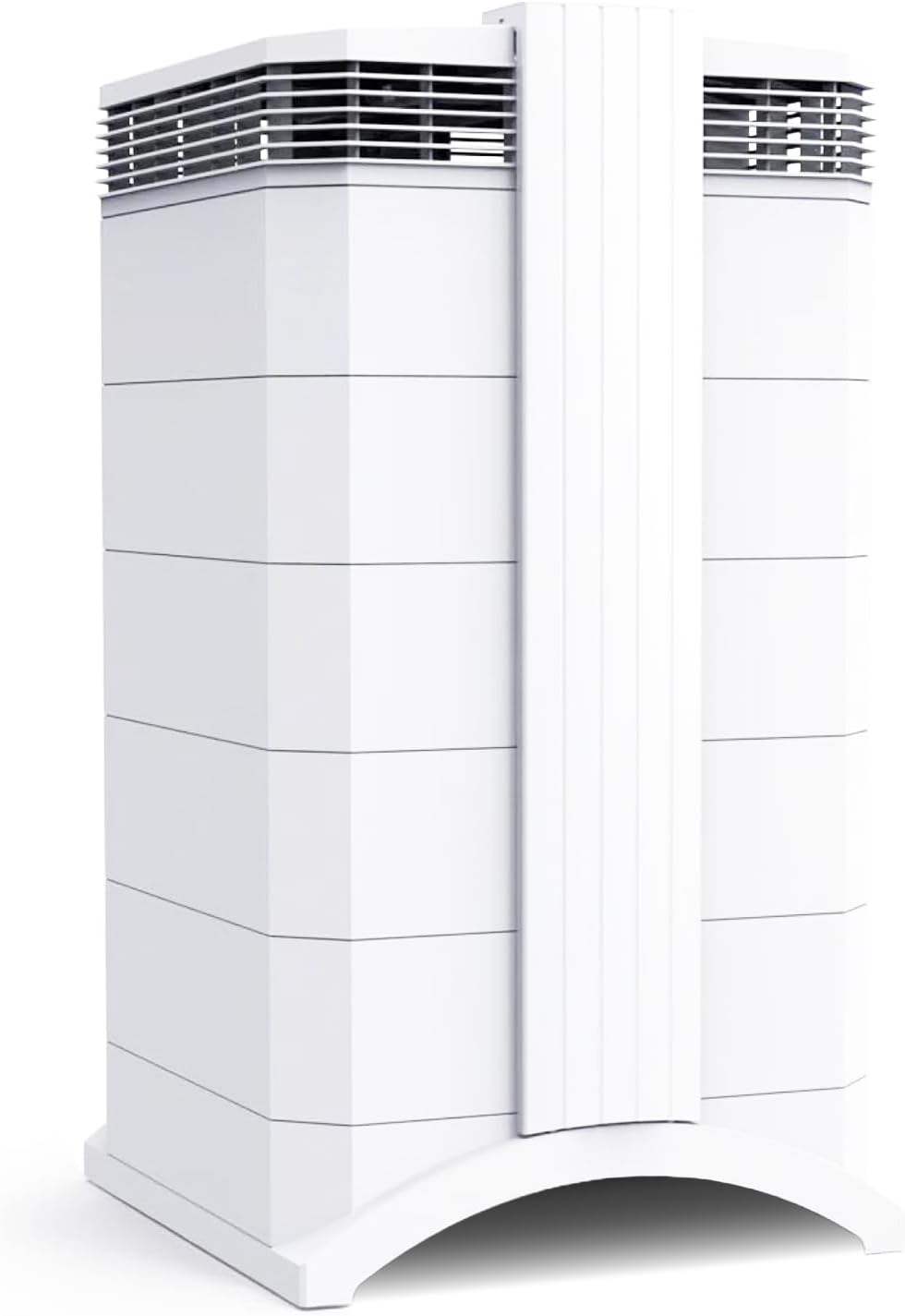
IQAir HealthPro Plus XE
The IQAir is the strongest bedroom option for anyone with asthma, diagnosed severe allergies, or a medical reason to keep indoor air as clean as possible. Its HyperHEPA filtration captures particles down to 0.003 microns, reaching the ultrafine size range where standard HEPA performance drops off. At 17 dB on its lowest setting it is quieter than the Core 300S, and its 1,125 sq ft coverage means it runs on a very low fan speed in a standard bedroom, keeping noise and energy use minimal while maintaining thorough air cleaning. The independent third-party certification of its specs is meaningful in a category where performance claims are often self-reported.
Frequently Asked Questions
Should I run the air purifier while I sleep or just before bed?
Continuously through the night is significantly more effective than running it only before bed. Dust mite proteins, pollen, and other allergens become airborne throughout the night as you move in your sleep, turn over, and breathe. Running the unit on low speed during sleep catches those particles as they become airborne rather than allowing them to accumulate and be inhaled. A pre-sleep run on a higher speed for thirty to sixty minutes before bed is a useful addition to clear any particles that accumulated during the day, but it does not replace overnight operation.
Is a HEPA purifier enough, or do I also need allergen-proof bedding encasements?
Both address different parts of the problem and work better together than either alone. Encasements block the allergens that are embedded in the mattress and pillow from becoming airborne in the first place. A HEPA purifier captures allergens that do become airborne from all sources in the room. People who use both encasements and a running HEPA purifier typically experience better symptom relief than those who use either approach on its own, because each handles the portion the other cannot reach.
Does the purifier need to be right next to the bed?
Not necessarily. Placing it within the same room is what matters most. A unit positioned a few feet from the bed on a nightstand or on the floor nearby draws in air from the breathing zone effectively. Placing it directly at the head of the bed and pointing airflow toward the sleeper can cause discomfort from the draft. A few feet away at the side of the bed, or at the foot of the bed on the floor, are both practical positions that clean the air in the breathing zone without creating airflow on the sleeper’s face.