Why Allergy Symptoms Get Worse at Night
Nasal congestion from allergies is typically worst at night and in the early morning. Bedroom allergens, sleeping position and the body’s daily clock all play a part, and most of them can be changed.
A 2004 review in the Journal of Allergy and Clinical Immunology describes nasal congestion in allergic rhinitis as following a daily rhythm, worst at night and in the early morning, and identifies congestion as the main reason rhinitis disturbs sleep.
Why Nights Are Worse
Dust mites live in mattresses, pillows and bedcovers, and turning over in bed disturbs the allergen they leave behind. You spend seven or eight hours in one room with your face close to those sources, usually with the door and windows shut.
Lying flat changes how the nose drains, and congestion can feel worse. Raising the head of the bed slightly, or using an extra pillow to keep the head above the chest, is a common first adjustment.
A 2018 review in the same journal describes marked day-night changes in allergy symptoms and laboratory markers, and links them to the circadian clock, which regulates allergic reactions by time of day. The same allergen exposure can therefore produce stronger symptoms at night than it would in the afternoon.
Pollen and an Open Window
An open bedroom window lets outdoor pollen in all night, and the pollen settles on bedding and the floor. During your pollen season, keep the bedroom window closed overnight and into the morning, and check the local pollen count before opening it.
What Collects in the Bed
The mattress and pillows are the main dust mite habitat in a bedroom. The EPA notes that dust mites feed on skin flakes and live in mattresses, pillows and bedcovers, and that their body parts and droppings trigger symptoms in people allergic to them. Its recommended steps start with the bed: dust-proof covers on pillows and mattresses, and bedding washed in hot water once a week and dried completely.
Pollen carried indoors on hair and clothing during the day transfers to pillowcases and bedding when you get into bed. A shower before bed rinses it off before it reaches the pillow.
Pet dander reaches the bedroom even in homes where pets are kept out of it. It travels on clothing and on air moving under doors, and it builds up in bedding and carpet. Levels are usually lower than in a room where a pet sleeps, so a closed door helps. Regular bedding washes reduce what builds up, and a purifier handles what reaches the air.
What a Purifier Does Overnight
A HEPA air purifier running continuously in the bedroom captures the airborne fraction of allergens that encasements and surface cleaning cannot address. Each air change sends room air through the filter, which keeps the airborne level lower through the night. The purifier reaches only what is in the air, so it works alongside covers and washing.
Pick on noise at the lowest fan speed, since a unit that is loud on low tends to get switched off before morning. The three picks below are rated or measured at 22 to 28 dB on their lowest setting.
Recommended Air Purifiers for Nighttime Allergy Symptoms
For full comparisons and detailed specs, see the main allergies guide.
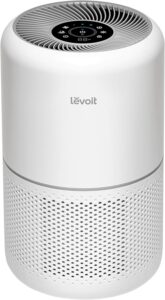
Levoit Core 300S
The Core 300S is the quietest of the three picks, at 22 dB on its lowest setting. Levoit rates it for 219 sq ft at 4.8 air changes per hour, with a CADR of 141 CFM. Levoit sells it as the Core 300S-P, whose VeSync app schedules can run it on high before bedtime and drop it to low once you are asleep.
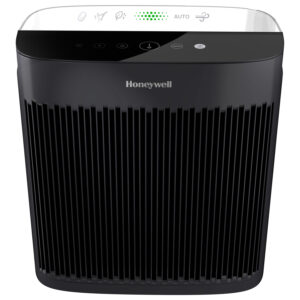
Honeywell HPA5200B
Honeywell rates the HPA5200B for 360 sq ft at 4.8 air changes per hour, with a smoke CADR of 226, a dust CADR of 250 and a pollen CADR of 260 (AHAM Verifide). That makes it the pick for a larger bedroom, where the Core 300S’s 219 sq ft rating falls short. An air quality sensor drives an auto mode that adjusts the cleaning level on its own. Honeywell publishes no noise rating; an independent measurement by Breathe Quality puts it at about 28 dB on low, a touch louder than the other two picks. It suits people who already sleep with background noise such as a fan better than light sleepers.
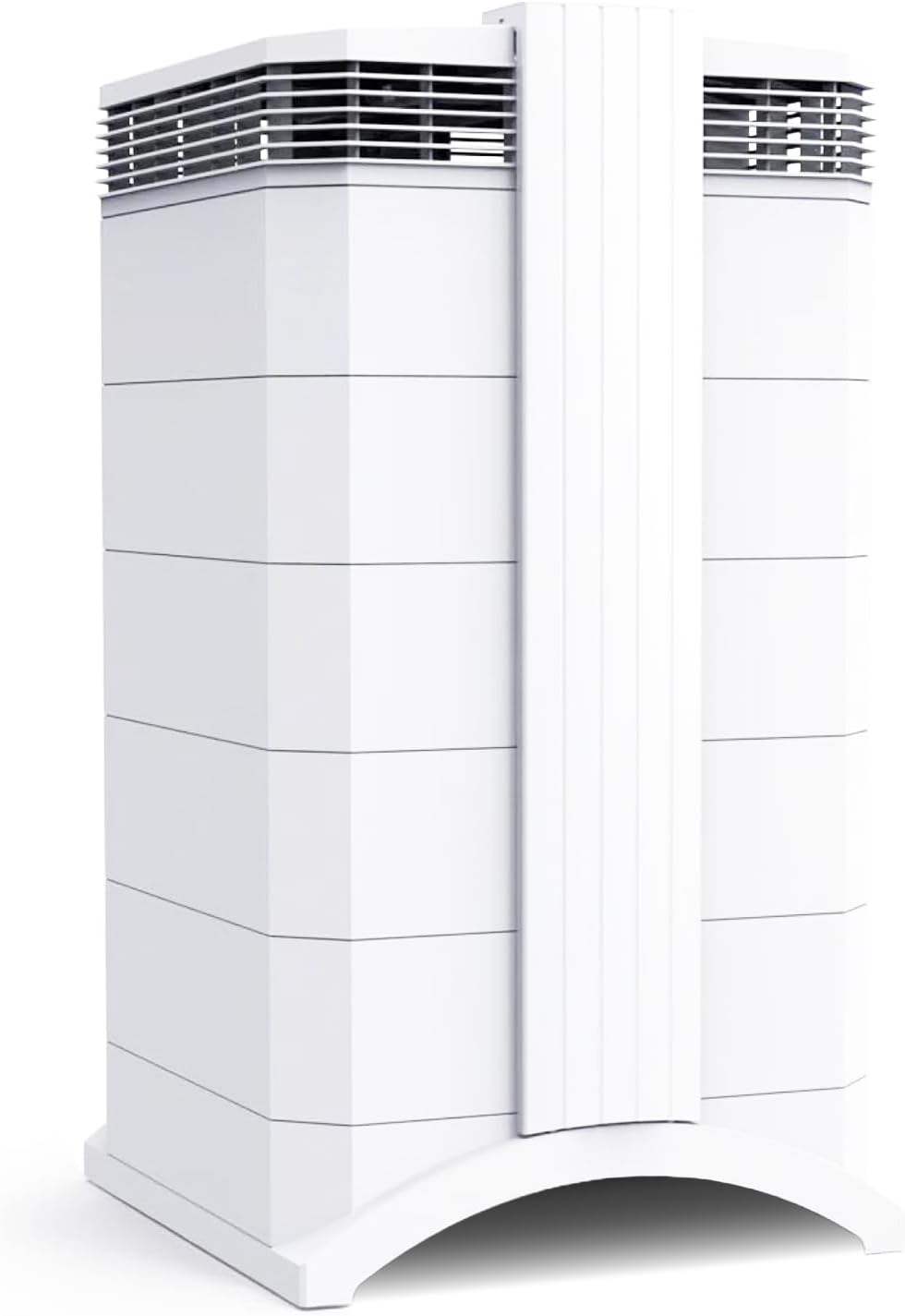
IQAir HealthPro Plus XE
The IQAir carries the finest filter rating of the three. IQAir rates its HyperHEPA filter at 99.97 percent at 0.3 microns and 99.5 percent down to 0.003 microns. Its rated coverage of up to 1,125 sq ft is far more than a bedroom needs, so it can stay on its lower speeds overnight; the lowest of its six runs at 27 dB. IQAir does not publish a CADR.
Frequently Asked Questions
Why are my allergy symptoms worse in the morning than at bedtime?
By morning you have spent a full night close to the dust mite allergen in your bedding, lying flat. If a window was open, pollen has been coming in all night too, and the body-clock effect described above can make the same exposure produce stronger symptoms at that hour.
Does running the air purifier all night help, or is it enough to run it before bed?
Run it all night. A purifier switched off at bedtime stops filtering for the hours you spend closest to the bedding. Running it on high before bed and on low overnight keeps it filtering through both stretches.
Should I also treat daytime allergies differently if my nighttime symptoms are the main problem?
Daytime exposure carries into the night: pollen collected on hair and clothes ends up on the pillow, and dander tracked through the house reaches the bedroom. A purifier in the main living area, windows kept shut on high-pollen days, and a shower before bed all cut what you bring to bed. For advice on medication timing, ask a healthcare provider.