Quiet Air Purifier Solutions for Better Sleep
In a bedroom, check two numbers: the rated coverage against the room, then the noise at the lowest fan speed, since a unit that is loud on low gets switched off.
Manufacturers do not all report noise the same way: some lead with the top-speed figure, and the distance behind a number is not always stated. For a bedroom, use the decibel figure at the lowest fan speed. The comparisons below use the lowest-speed figure each manufacturer publishes.
What 20, 30 and 40 dB Mean in a Bedroom
The decibel scale is logarithmic, so a 10 dB difference is a tenfold change in sound intensity. The World Health Organization’s Guidelines for Community Noise set 30 dB as the guideline for continuous background noise inside bedrooms. Against that line, 20 dB sits well below it, 30 dB sits at it, and a unit at 40 dB is noticeably audible in a quiet bedroom.
All three picks on this page are rated below the WHO line on their lowest setting: 22 dB for the Levoit Core 300S, 23 dB for the Blue Pure 311i Max and 25.6 dB for the Rabbit Air MinusA2. Room size can matter more than that spread. A purifier rated for more floor area than the bedroom, such as the 311i Max at 439 sq ft (at 4.8 air changes per hour) or the MinusA2 at 408 sq ft (at 4), can reach the room’s air changes on a lower fan setting, and on every unit here the lower settings are the quieter ones.
Display Lights and Fan Behavior at Night
Check how the display behaves in the dark. Status lights and air-quality rings that help during the day can light up a dark bedroom, and a sleep mode that turns them off or dims them saves putting tape over the display.
Auto mode adjusts fan speed to the particle level the sensor reads, speeding up when the reading rises and dropping back when it falls.
Scheduling, available on smart models like the Levoit Core 300S-P, lets you set a higher speed for the hour before bed and step down to the quietest setting for the night, with no manual change.
Recommended Quiet Air Purifiers for the Bedroom
The full comparison is in the main sleep and bedroom air guide, along with filter costs.
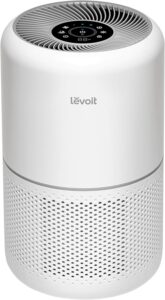
Levoit Core 300S
The Core 300S runs at 22 dB on its lowest setting, the lowest figure of the three. Levoit rates it for rooms up to 219 sq ft at 4.8 air changes per hour and lists a Sleep Mode for overnight use. The VeSync app adds schedules and a 1 to 24 hour timer, so it can run on high before bed and step down on a schedule.
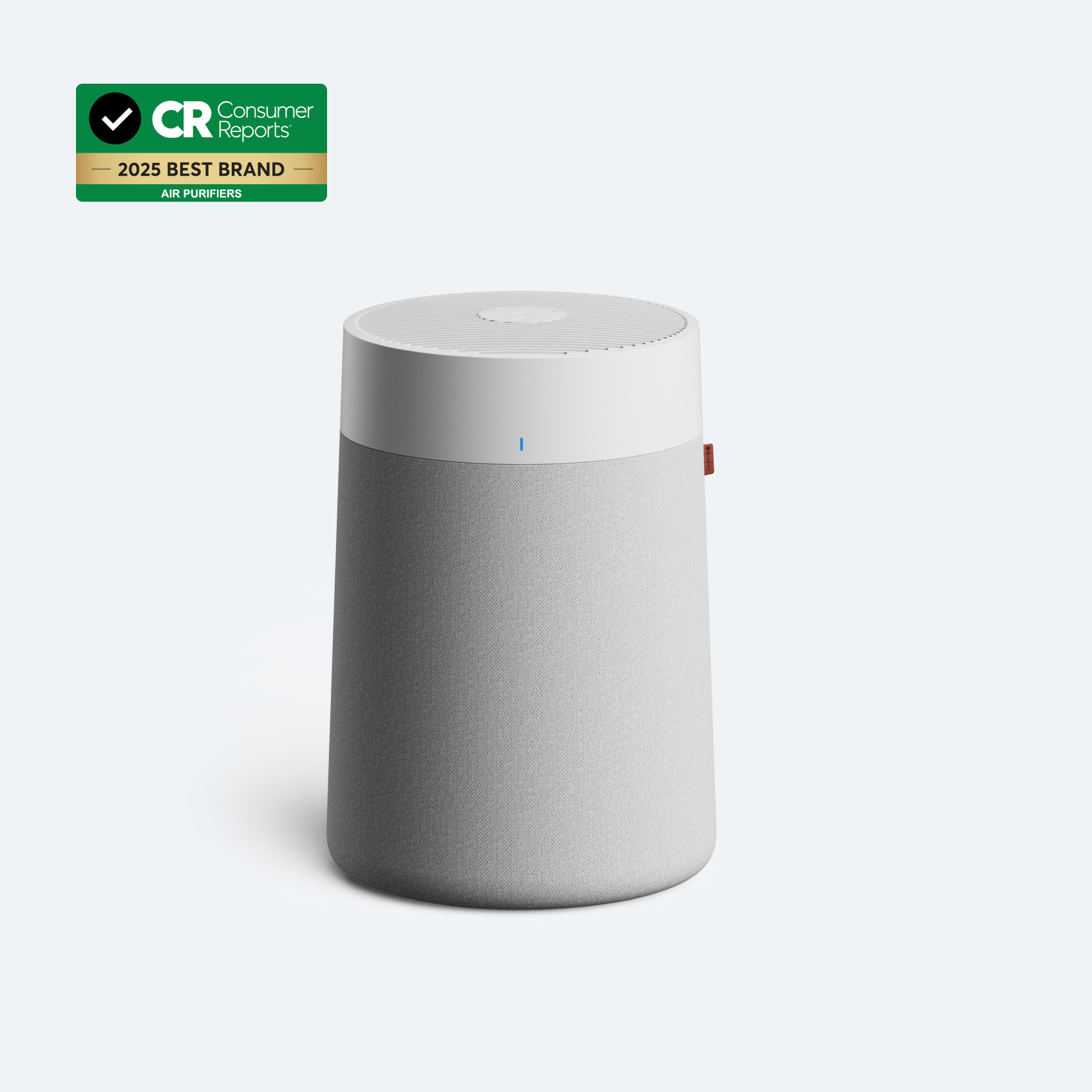
Blueair Blue Pure 311i Max
The Blue Pure 311i Max is rated for 439 sq ft at 23 dB on its lowest setting, one decibel above the Core 300S. Its air-quality sensor drives an Auto mode, and the Wi-Fi app offers 5 fan speeds including a Night mode. In a bedroom larger than the Core 300S’s 219 sq ft rating, the 311i Max has the headroom to stay on a low setting through the night.
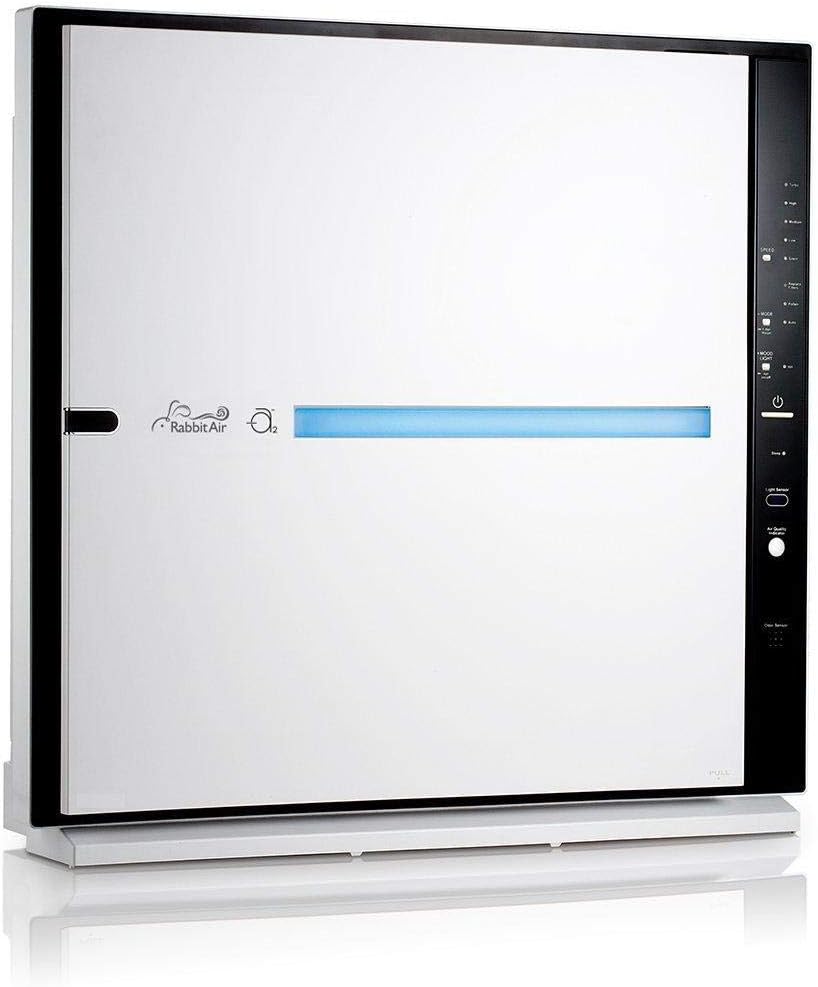
Rabbit Air MinusA2
The MinusA2 is rated at 25.6 dB on its lowest setting, the highest of the three picks but still below the WHO bedroom guideline. Its 408 sq ft rating (up to 815 sq ft at a lighter turnover) leaves headroom in a typical bedroom. The case for it is the six-stage filter stack and the option to wall-mount it, which keeps floor space clear and lifts the unit away from the bed.
Frequently Asked Questions
Is white noise from an air purifier helpful or harmful for sleep?
It depends on the person. Some people find the steady sound of a fan on low masks intermittent noise such as traffic or voices; others sleep better in near-silence and do best with a unit rated in the low 20s on its lowest setting. None of the three picks exceeds the WHO bedroom guideline on its lowest setting.
How close to the bed should the purifier be placed?
Close enough to clean the air in the breathing zone effectively, but not so close that airflow from the intake or outlet is directed toward the sleeper’s face. A distance of two to four feet from the head of the bed, positioned off to the side, is a practical starting point. A wall-mounted unit like the Rabbit Air MinusA2 can sit at head height on the wall with airflow directed along the room, away from the bed.
Does a quieter purifier mean less effective filtration?
Not if the unit is sized for the room. Rated coverage tells you whether a unit can reach the room’s air changes on a low setting: one rated for more than the room’s area can, while one rated for less has to run faster and louder. Compare the rated coverage with the room before comparing decibels.