Managing Congestion That Gets Worse at Night
If you wake up congested, start with the bed: encasements and a hot weekly wash deal with the dust mite allergen in the bedding, and a quiet purifier handles what reaches the air. Colds and sinus conditions cause night congestion too, so persistent symptoms are a question for a physician.
Congestion that is worse at night and eases during the day, or that clears when you sleep away from home, suggests something in the bedroom, such as dust mites in the bedding or pet dander. Telling an allergy pattern apart from an illness or a structural cause is a question for a physician.
What Changes at Night
Raise the head of the bed a few inches, or add a pillow to lift the head slightly above the chest. It is a common first adjustment when congestion feels worse lying flat.
Dust mite allergen in pillows and mattresses is a common trigger of allergic rhinitis, and AAFA lists a stuffy nose among the most common and troublesome symptoms of dust mite allergy.
EPA advises keeping indoor relative humidity below 60 percent, ideally between 30 and 50 percent (EPA guidance), and AAFA gives the same 30 to 50 percent range for dust mite control, noting that mites favor humidity above 50 percent. A hygrometer shows which way the room needs to go: if it runs dry, a small humidifier on a hygrometer-controlled outlet can hold it in range overnight, and if it runs humid, a dehumidifier or air conditioner brings it down. A purifier does not change humidity, so the two work as a pair.
When to Suspect a Structural Cause
Congestion that improves when you sleep away from home, or worsens with the seasons or around pets, fits an allergen pattern. Congestion that stays the same everywhere, comes with facial pain or pressure, or lasts year-round without seasonal change may have a structural or chronic sinus cause. Any of these warrants evaluation by a physician.
Reducing Allergen-Driven Nighttime Congestion
Allergen-proof encasements for mattresses and pillows are a standard dust mite control step, recommended by AAAAI and AAFA. They place a barrier between the mite population in the filling and the breathing zone of the sleeper without requiring replacement of the bedding itself. Both groups also advise washing bedding weekly in hot water, at 130°F or higher, which together with the encasements reduces the allergen load at the most direct exposure point.
A continuously running HEPA air purifier captures airborne allergen particles before they are inhaled. EPA’s guide to air cleaners reports that studies of portable HEPA air cleaners have found improvements in some allergy and asthma symptoms, while cautioning that the improvements are not always major and do not appear in every symptom (EPA).
Recommended Air Purifiers for Nighttime Congestion
Full comparisons are in the main sleep and bedroom air guide. These three are rated at 22 to 25.6 dB on their lowest setting.
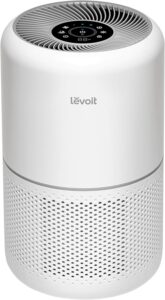
Levoit Core 300S
Rated for bedrooms up to 219 sq ft, the Core 300S runs at 22 dB on its lowest setting. Levoit lists a Sleep Mode for overnight use, and the VeSync app adds schedules and a 1 to 24 hour timer. Paired with mattress and pillow encasements, it is the lowest-cost way to start of the three.
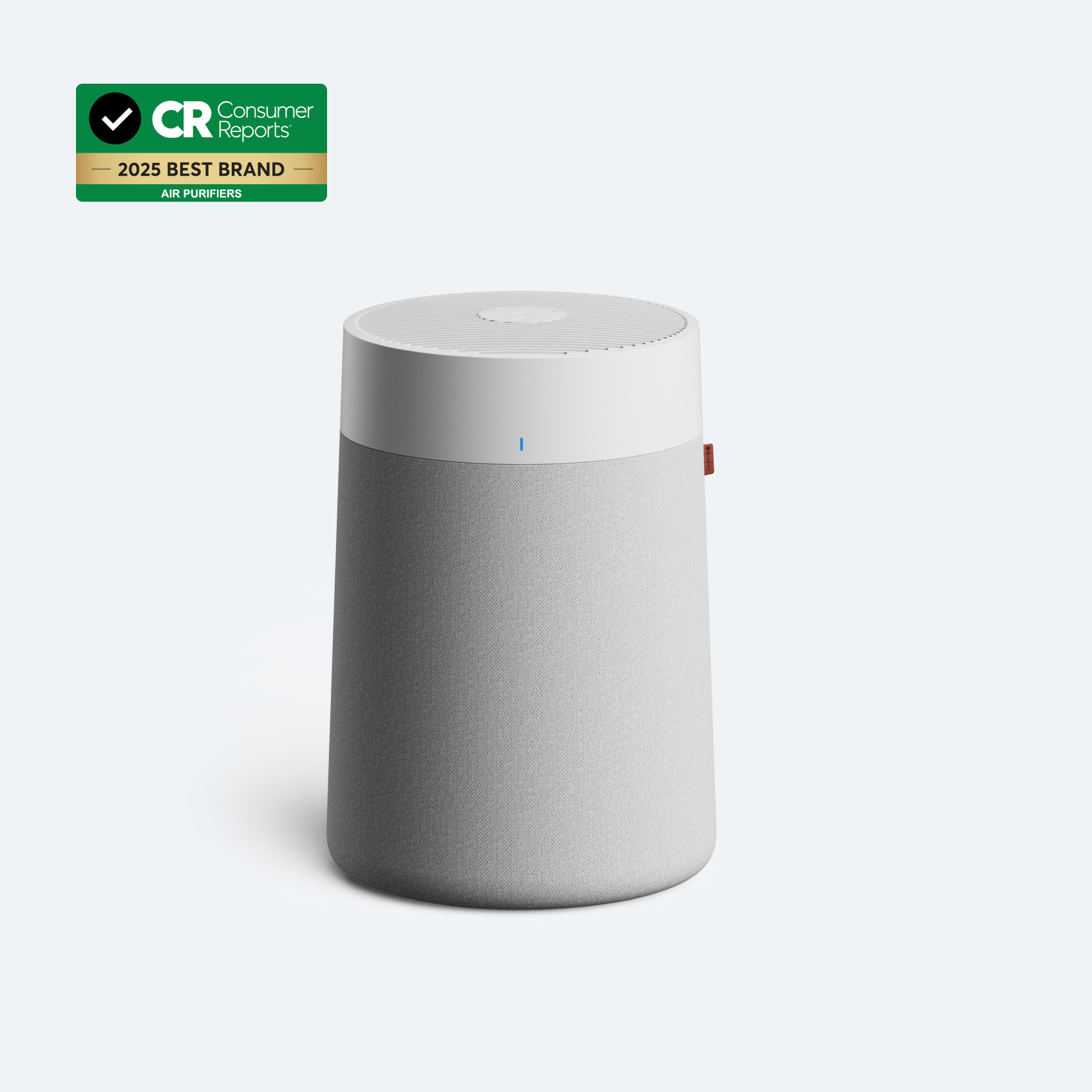
Blueair Blue Pure 311i Max
The Blue Pure 311i Max covers larger bedrooms up to 439 sq ft at 23 dB on low and uses Auto mode, driven by its integrated air-quality sensor, to respond to allergen spikes during the night. Its 439 sq ft rating at 4.8 air changes per hour is the largest of the three on a comparable basis (the MinusA2’s 815 sq ft figure is at 2 changes per hour), so in a standard bedroom it can stay on a lower fan setting.
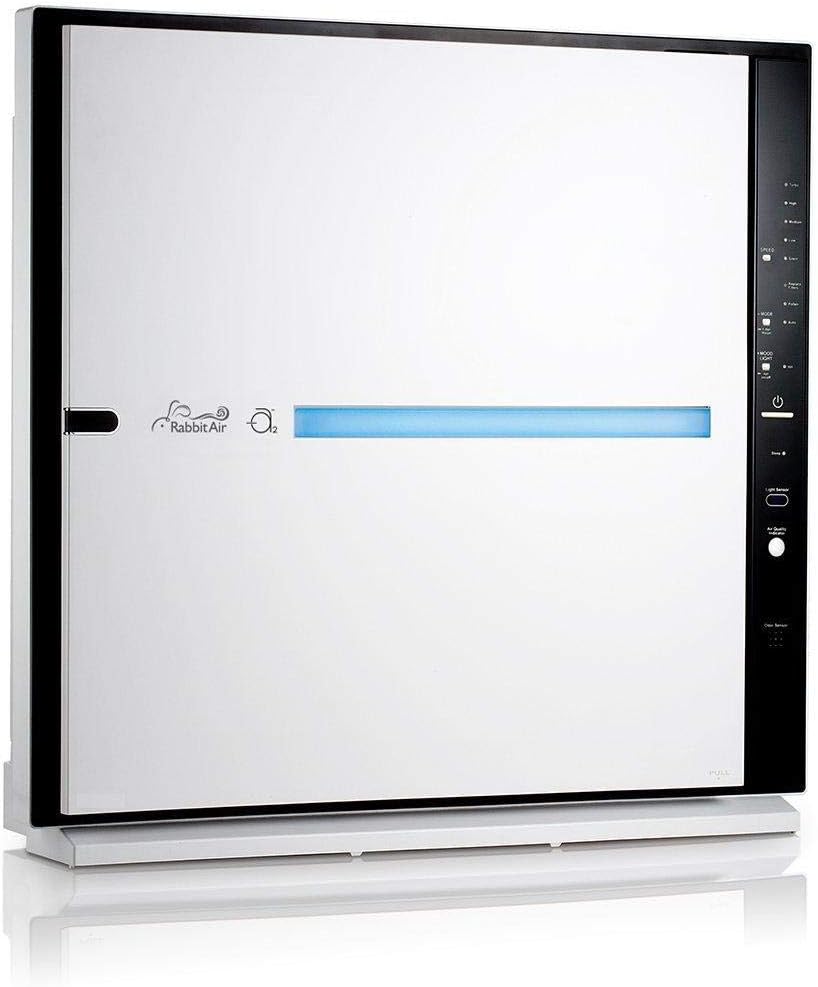
Rabbit Air MinusA2
The case for the MinusA2 is its six-stage filter stack. Its lowest setting is rated at 25.6 dB, a few decibels above the other two picks (22 and 23 dB). Rated coverage of 408 sq ft (up to 815 sq ft at a lighter turnover) still allows very low-speed overnight running in a standard bedroom. The six-stage filtration, including the customizable panel, can be configured with the Pet Allergy or Germ Defense filter option. The unit can also be wall-mounted, which keeps floor space clear.
Frequently Asked Questions
Will an air purifier help with snoring caused by congestion?
MedlinePlus lists a stuffy nose from allergies among the causes of snoring (MedlinePlus). If your snoring comes from allergy-driven congestion, reducing airborne allergen with a HEPA purifier may help, though EPA notes that symptom improvements from portable air cleaners are not always major. Structural snoring from airway anatomy or sleep apnea has different causes and requires different interventions. An air purifier is worth trying alongside raising the head of the bed and encasements if the snoring tracks with the seasons or pet exposure, or gets worse in the bedroom specifically.
How quickly does HEPA filtration improve nighttime congestion?
There is no reliable timeline, and the EPA finding above applies: the improvements studies found were not always major. Running the purifier continuously and pairing it with mattress and pillow encasements and humidity control addresses the main sources together. If congestion persists, it is worth asking a physician.
Is dry air or allergens more likely to be causing my nighttime congestion?
It can be either, or both. A hygrometer reading below 30 percent points to dry air, which a humidifier addresses. Congestion that tracks the seasons or pets, or eases when you sleep away from home, points to allergens, which a HEPA purifier and the bedding steps address. Persistent congestion is a question for a physician.