Sleeping with an Air Purifier Running
What to check before running a purifier overnight, and three picks rated under 26 dB on their lowest setting.
The main safety question for running an air purifier overnight is ozone. A filter-only unit has no ozone-producing stage, while some units that ionize or charge particles can produce it, as the EPA notes in the section below. Sleep is also the longest stretch most people spend in one room, so the bedroom unit runs for many hours at a time.
Is It Safe to Run an Air Purifier All Night?
A HEPA filter captures particles mechanically and holds them in the filter medium until the filter is replaced. A unit that only filters has no ozone-producing stage. The units to check are the ones that add an ionizing or ozone-producing function.
The category to be aware of is ionizing air purifiers and ozone generators. EPA notes that ion generators and some electronic air cleaners can produce ozone, which it describes as a lung irritant (EPA). Some HEPA purifiers add an ionizer feature, so it is worth checking whether yours has one and whether it can be switched off for overnight use. Of the three purifiers below, the Core 300S has a three-stage filter stack with no ionizing stage listed by Levoit. The Blue Pure 311i Max charges particles electrostatically inside the unit, which Blueair describes as different from an ionizer that releases ions into the room, and Blueair says it tests its ozone emissions. The MinusA2 includes a negative ion generator, and its control panel has a separate ion control button (Rabbit Air).
Why run it overnight
Most people spend more consecutive hours in the bedroom than in any other room of the home, so a bedroom purifier that is switched off at night misses most of the time you spend there. Left on, it keeps filtering the room’s air for that whole stretch.
Practical Setup for Overnight Use
Placement affects comfort. A unit at the head of the bed and aimed toward the sleeper can blow a draft some people notice, so a spot a few feet away, beside the bed or at its foot, keeps the airflow off you. Leave clearance around the intake and the outlet. The Rabbit Air MinusA2 ships with a wall mount kit, which keeps it off the floor.
Indicator lights can bother light sleepers, since an LED that goes unnoticed during the day is easy to see in a dark bedroom. Levoit lists a Sleep Mode for the Core 300S, and the MinusA2’s light sensor dims its lights when the room goes dark. For a unit with no such setting, a small piece of electrical tape over the indicator works.
For overnight running, pick the fan speed by noise. A higher speed moves more air but is louder, so one option is a higher speed while you get ready for bed and the lowest speed once you turn in. The Core 300S-P’s VeSync app adds schedules and a 1 to 24 hour timer that can automate the switch, while the 311i Max and the MinusA2 adjust fan speed from their own air-quality sensors.
What to Expect When You Start Using One Overnight
EPA’s guide to air cleaners reports that studies of portable HEPA air cleaners have found improvements in some allergy and asthma symptoms, while cautioning that the improvements are not always major and do not appear in every symptom (EPA). There is no reliable timeline, so the fair test is consistent overnight use, with bedding and humidity handled alongside the purifier. If symptoms or sleep problems persist, a physician can help sort out the cause.
Recommended Air Purifiers for Overnight Bedroom Use
Full specs and comparisons are in the main sleep and bedroom air guide.
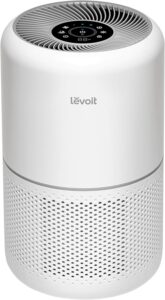
Levoit Core 300S
Levoit lists a Sleep Mode for overnight use and rates the Core 300S at 22 dB on low, the quietest of the three picks here. At 8.7 by 8.7 by 14.2 inches, it fits on most nightstands. The VeSync app adds schedules and a 1 to 24 hour timer, so the pre-sleep high speed and overnight low speed can run on a schedule.
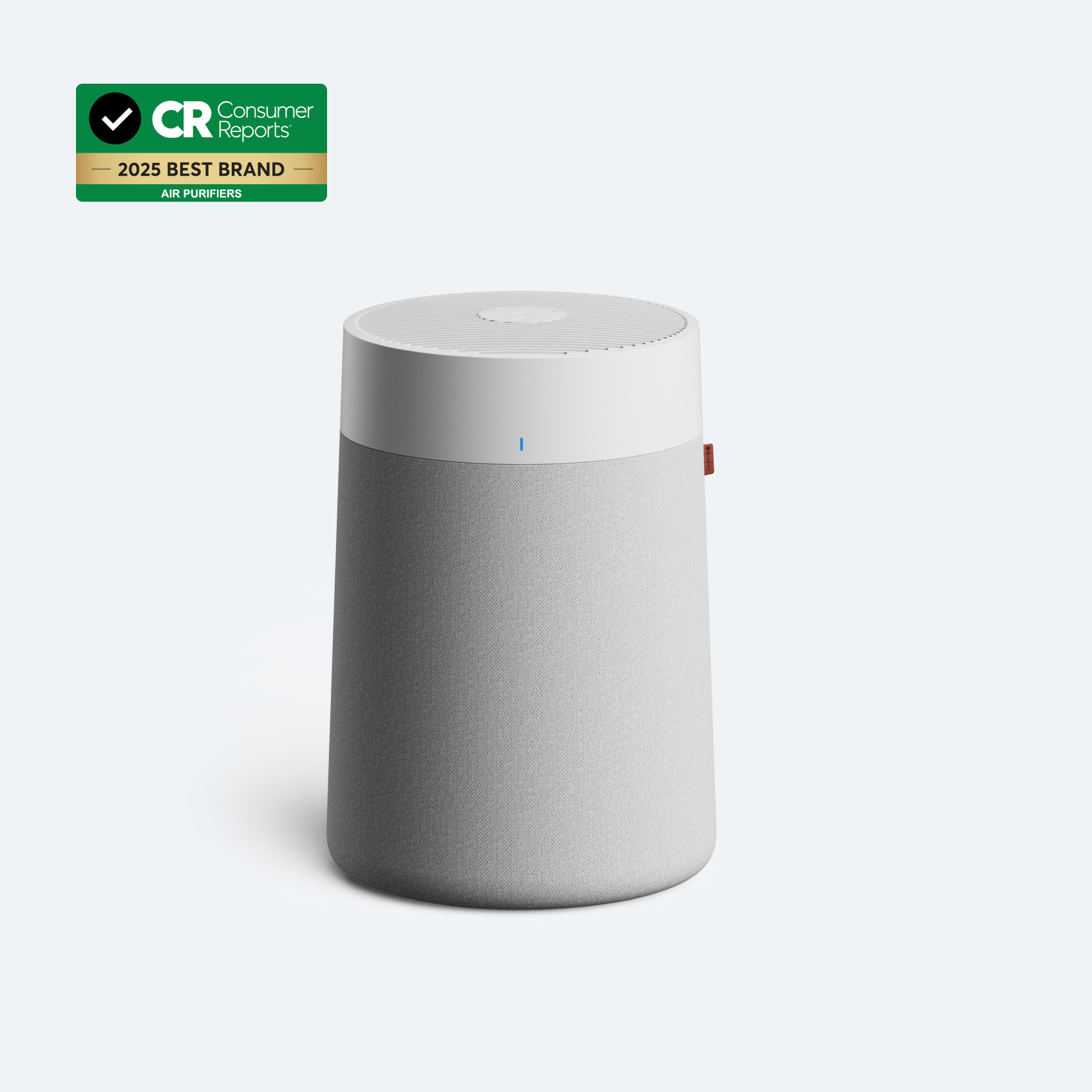
Blueair Blue Pure 311i Max
The Blue Pure 311i Max runs at 23 dB on its lowest setting and covers up to 439 sq ft, making it a strong fit for larger bedrooms where the Core 300S would need to run at a noisier higher speed to maintain adequate air turnover. Auto mode, driven by its integrated air-quality sensor, adjusts fan speed overnight in response to detected particle changes without any manual intervention. Wi-Fi and app control mean adjustments can be made without touching the unit in a dark bedroom, and the Night setting is there for overnight running.
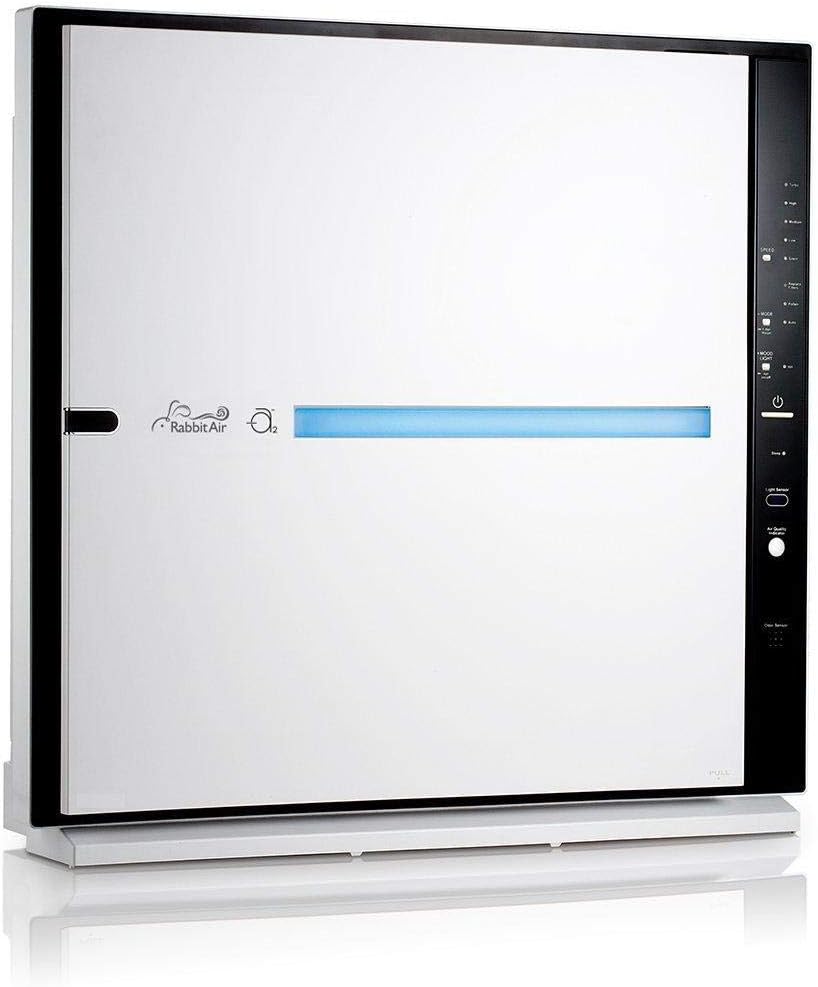
Rabbit Air MinusA2
The MinusA2’s lowest-setting noise is rated at 25.6 dB, a few decibels above this page’s other picks (22 to 23 dB). Rabbit Air rates it for 408 sq ft at 4 air changes per hour (up to 815 sq ft at 2), so in a bedroom smaller than that it can run on a low setting. A wall mount kit is in the box, and a light sensor dims the unit’s lights when the room goes dark. The SPA-780A has no app control, so speed changes are made at the unit itself. Its sixth stage is a negative ion generator with its own ion control button on the panel, so decide on that setting before running it overnight.
Frequently Asked Questions
Should I keep the bedroom door open or closed when running a purifier overnight?
A closed door is better for filtration. A purifier’s coverage rating assumes one room, and a closed door keeps it working on that room’s air instead of air from the rest of the house. A purifier recirculates the room’s own air and does not bring in outdoor air, so if a closed bedroom feels stuffy by morning, ventilation is a separate fix, covered in Why Your Bedroom Feels Stuffy at Night.
Does running the purifier all night significantly increase my electricity bill?
No. Purifiers draw little power at low speed. The Core 300S is rated at 23 W, and a full eight hours at 23 W uses about 0.18 kilowatt-hours, which costs a few cents at typical US electricity rates. Running overnight every night adds a small amount to the electricity bill, so energy cost should not decide which unit you buy.
Can children and infants sleep with a HEPA air purifier running?
The main safety concern with air cleaners is ozone, which EPA describes as a lung irritant and which ion generators and some electronic air cleaners can produce (EPA). A filter-only HEPA unit has no ozone-producing stage; for a unit with an ionizer function, check whether that function can be turned off. The main practical consideration for infant rooms is noise level, since a quieter unit is less likely to disturb light sleep. If your child has a respiratory condition, ask their pediatrician before choosing a unit.