Why Your Bedroom Feels Stuffy at Night
A stuffy bedroom is not just uncomfortable, it disrupts sleep quality and concentrates the allergens and CO2 that accumulate in a closed room overnight. Here is what causes it and how to fix it.
The feeling of a stuffy bedroom at night is one of the most common sleep complaints, and it has identifiable causes that go beyond temperature. A room that feels stale, heavy, or hard to breathe in by the early morning hours is typically experiencing a combination of elevated CO2 from breathing, accumulated moisture from respiration and body heat, rising particulate levels from bedding disturbance, and reduced air circulation. Each of these factors builds progressively through the night in a closed bedroom.
The good news is that the causes are addressable without opening windows, which introduces noise, outdoor allergens, and security concerns, and without significant renovation. The right combination of ventilation management and air filtration can meaningfully improve how a bedroom feels by morning.
What Actually Makes a Bedroom Feel Stuffy
Carbon dioxide is the primary driver of the heavy, stale feeling in a closed bedroom by morning. Two people sleeping in a sealed room exhale enough CO2 over eight hours to raise the room’s concentration noticeably above outdoor levels. Elevated CO2 does not reach dangerous levels in a typical bedroom, but it does produce the subjective feeling of stuffiness and can affect sleep quality and morning alertness. This is the one factor that air filtration alone cannot address, as HEPA filters capture particles but not gases like CO2.
Humidity from body heat and breathing accumulates in a closed bedroom throughout the night. Higher humidity makes the room feel warmer and heavier than the temperature alone would suggest. In bedrooms with carpet, elevated humidity also supports dust mite activity, adding an allergen dimension to the comfort problem. Maintaining bedroom humidity between 40 and 50 percent, measurable with an inexpensive hygrometer, keeps the room feeling fresh and reduces the conditions that support mite populations.
Particulate matter from bedding, including dust mite allergen, skin cells, and fabric fibers, is continuously disturbed by movement during sleep and becomes airborne throughout the night. By morning, a closed bedroom without active air filtration has accumulated several hours of airborne particles at close proximity to the breathing zone.
The CO2 problem and what actually solves it
Air filtration addresses particles and some gaseous compounds but does not remove CO2. The most effective solution for CO2 accumulation is a small amount of fresh air exchange, even a slightly cracked window on the far side of the room from the sleeper, or a bathroom exhaust fan vented to the outside running on a timer, can prevent the overnight CO2 buildup that produces the stale feeling by morning. Some people find a door left slightly ajar to a larger air volume in the hallway reduces stuffiness noticeably. Combining this with a running HEPA purifier gives you both particle filtration and adequate air exchange.
How Air Filtration Improves Bedroom Air Quality Overnight
A HEPA purifier running continuously in the bedroom addresses the particulate fraction of the stuffiness problem: airborne dust mite allergen, pollen, pet dander, and skin cell debris that accumulate through the night. Cleaner air in terms of particle load is easier to breathe and contributes to a fresher-feeling room by morning even when CO2 and humidity are also managed separately.
For bedroom use overnight, noise level at the lowest fan setting is the most important specification. A purifier that can run all night without disturbing sleep produces results that a quieter unit used only before bed cannot match. The three options below all meet a practical threshold for overnight bedroom operation.
Recommended Air Purifiers for a Stuffy Bedroom
For full specs and comparisons, see the main sleep and bedroom air guide.
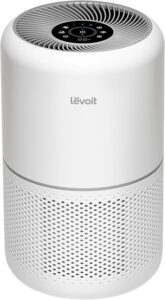
Levoit Core 300S
The Core 300S is well suited to bedrooms up to 219 sq ft that feel stuffy primarily due to particle accumulation. At 24 dB on low it runs without disturbing sleep. The auto-dim sleep mode keeps the indicator light dark once the room darkens. For the SP version, scheduling lets you pre-run the unit on high before bed to clear accumulated particles quickly, then drop to whisper-quiet low automatically for the rest of the night.
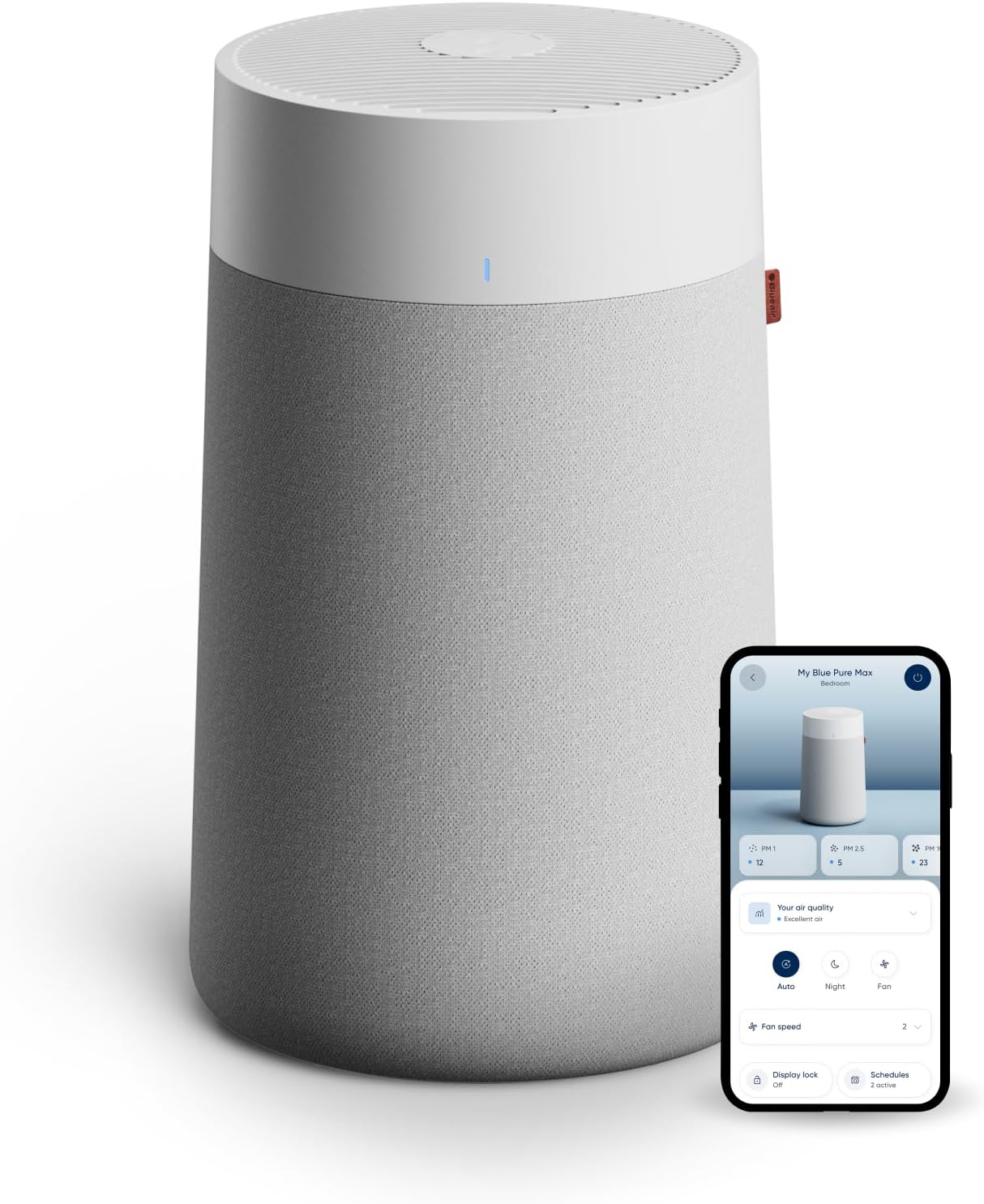
Blueair Blue Pure 311 Auto
The Blue Pure 311 Auto covers up to 388 sq ft and adds an auto mode that responds to air quality changes throughout the night without any manual adjustment. In a bedroom where stuffiness builds gradually, auto mode catches the gradual increases in particle load and adjusts fan speed accordingly. At around 24 dB on its lowest setting it is quiet enough for overnight use, and the fabric pre-filter is washable, which reduces ongoing filter costs in a room running continuously.

Rabbit Air MinusA2
The MinusA2 covers 700 sq ft and operates at 20.8 dB on its lowest setting, making it one of the quietest options available for bedroom use. Running a 700 sq ft unit in a standard bedroom means it operates at a very low fan speed relative to its capacity, which produces thorough air filtration with minimal noise and extends filter life. The wall-mount option keeps the floor clear, which matters in a bedroom where floor space is often limited. For people whose stuffy bedroom problem is a consistent sleep quality issue, the MinusA2 is the most complete solution in this category.
Frequently Asked Questions
Will an air purifier actually make the bedroom feel less stuffy?
For stuffiness caused by particle accumulation, allergens, and airborne debris, yes noticeably. For stuffiness caused by CO2 buildup from breathing in a sealed room, an air purifier alone will not fully solve it, that requires some degree of fresh air exchange. Most people find the combination of a running purifier and a slightly cracked window or door produces a meaningfully fresher room by morning than either approach alone.
Does bedroom size affect how stuffy the room gets overnight?
Yes. A smaller room reaches higher CO2 and humidity concentrations faster from the same number of people sleeping in it, because there is less total air volume to absorb what is exhaled and evaporated. Small bedrooms benefit more from overnight air exchange than larger rooms, and benefit proportionally more from a right-sized purifier that can turn over the smaller air volume more times per hour.
Should the bedroom door be open or closed at night for better air quality?
A slightly open door increases air exchange with the larger home volume, which helps with CO2 dilution. A fully closed door allows a HEPA purifier to filter a smaller, more controlled air volume more efficiently and keeps out allergens from other parts of the home, including pet dander. The practical answer depends on your specific situation: if CO2 stuffiness is the primary complaint, a slightly open door helps. If allergen exposure is the primary concern and pets have access to the hallway, keeping it closed with a running purifier is the better tradeoff.