How Urban Pollution Affects Indoor Air Quality
Living near busy roads, industrial areas, or high-traffic urban corridors exposes you to outdoor pollutants year-round, not just during smoke events. The indoor air quality problem is chronic rather than episodic.
Urban air pollution is a different kind of indoor air quality problem from wildfire smoke. It is not episodic, there is no start and end date, no AQI spike that resolves after a few days. Traffic exhaust, industrial emissions, road dust, and secondary pollutants formed when those primary emissions react with sunlight create a persistent baseline of elevated outdoor particulates and gaseous compounds that infiltrates homes continuously throughout the year.
Research consistently shows that people in urban areas spend the majority of their time indoors, and that indoor air quality in urban environments reflects outdoor pollution levels, typically at somewhat lower concentrations due to dilution and deposition, but meaningfully elevated compared to homes in lower-pollution areas. For residents near major roads, the particulate matter and nitrogen dioxide from vehicle exhaust are the most significant ongoing concerns.
What Urban Pollutants Enter Homes
PM2.5, the fine particulate fraction at 2.5 microns and below, is the primary health-relevant pollutant from urban traffic emissions. These particles penetrate deep into the lungs and at sustained elevated exposure are associated with cardiovascular and respiratory effects. They are small enough to remain airborne for hours and to infiltrate through the same gaps that smoke uses, around windows, under doors, through HVAC systems. HEPA filtration captures PM2.5 effectively, which is why the same purifier approach that works for wildfire smoke also addresses urban particulate pollution.
Gaseous pollutants including nitrogen dioxide from vehicle exhaust and ground-level ozone formed by photochemical reactions require activated carbon or specialized media for capture. Standard HEPA filters do not remove gaseous pollutants. For residents near high-traffic corridors, a purifier with a substantial activated carbon layer is more relevant than for households dealing primarily with dust and allergens.
The difference between chronic low-level and acute high-level exposure
The health effects of urban pollution are primarily driven by chronic exposure over months and years rather than short-term peaks. This changes how to think about air purification strategy. Unlike wildfire events where running a purifier on high for a few days is the approach, urban pollution management is about maintaining a consistently lower baseline year-round. A HEPA purifier running continuously on low or medium speed accomplishes more over time than one that runs on high intermittently. Continuous, consistent filtration is the strategy that addresses the chronic exposure problem.
High-Risk Periods for Urban Pollution
Rush hour traffic, typically 7-9 a.m. and 4-7 p.m. on weekdays, produces peak local traffic emission concentrations. Keeping windows closed during these periods and relying on the air purifier to maintain indoor air quality prevents the worst of the daily peaks from entering the home. This is particularly relevant for apartments and homes on ground floor levels facing busy streets, where the proximity to exhaust sources is most direct.
Hot summer days with high sunlight and stagnant air promote ozone formation from precursor pollutants including traffic exhaust. Urban ozone levels tend to peak on hot afternoon days in summer. During heat waves, the temptation to open windows for ventilation conflicts with air quality, a portable air conditioner running in recirculation mode or central air conditioning keeps the home cool while avoiding the peak ozone window.
Recommended Air Purifiers for Urban Pollution
For full specs and comparisons, see the main smoke and outdoor pollution guide. For urban pollution specifically, activated carbon capacity is as important as HEPA performance.
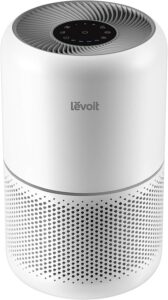
Levoit Core 300P
For a single room in an urban apartment, the Core 300P running continuously provides meaningful PM2.5 reduction at the lowest price point. Its activated carbon layer addresses some gaseous traffic pollutants though not at the capacity of larger units. Best suited to bedrooms and home offices where the goal is reducing the chronic exposure window during the hours spent in one place rather than addressing the whole apartment. A practical starting point for urban residents before committing to higher-capacity units.
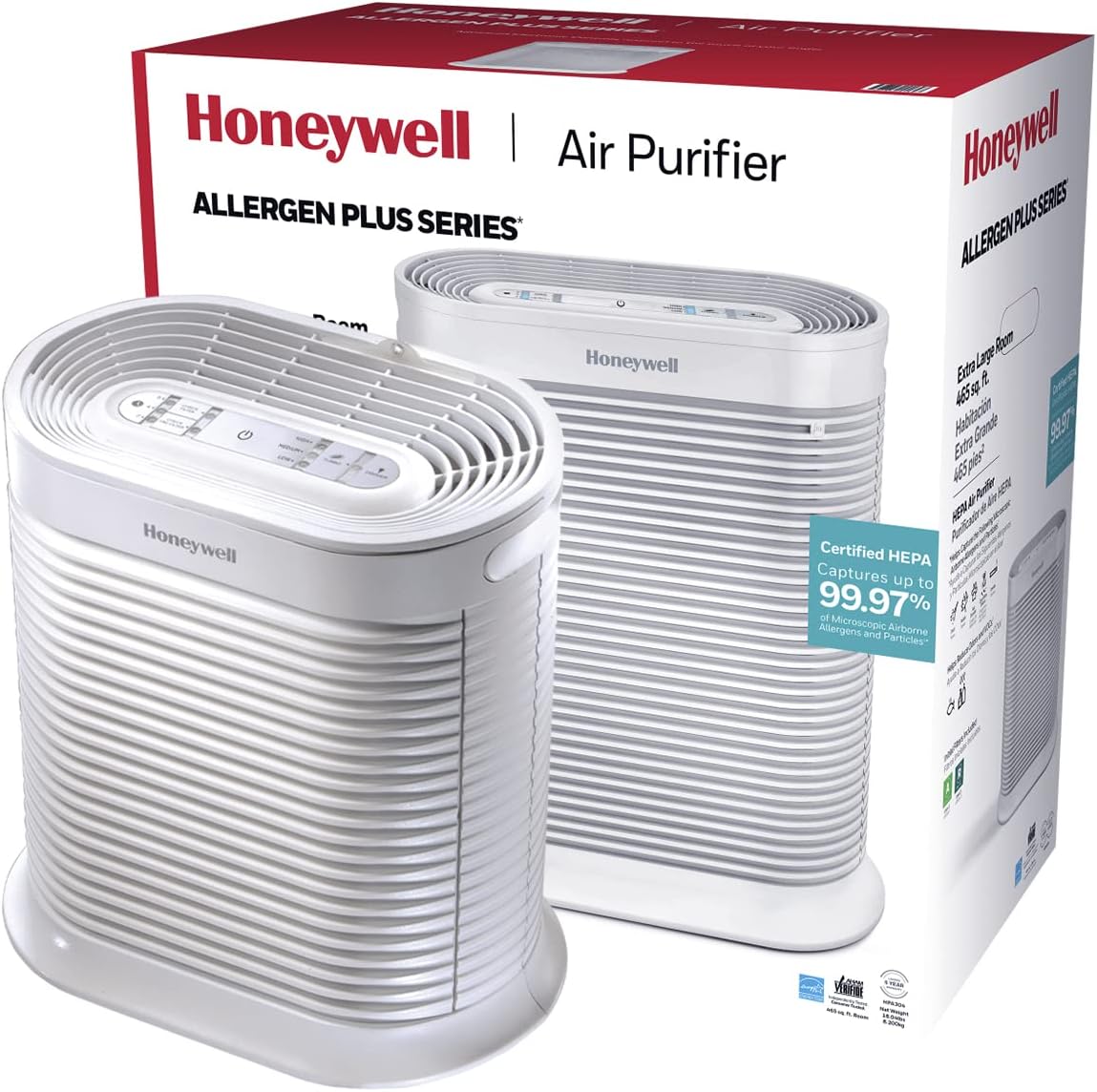
Honeywell HPA300
The HPA300’s 465 sq ft coverage and strong CADR make it an effective choice for the main living area in an urban apartment dealing with chronic traffic pollution. The higher air exchange rate ensures more complete PM2.5 removal per hour compared to smaller units. The carbon pre-filter option adds gaseous pollutant capture on top of HEPA particle filtration, which is particularly relevant for residents near high-traffic corridors where nitrogen dioxide and VOCs from exhaust are ongoing concerns.
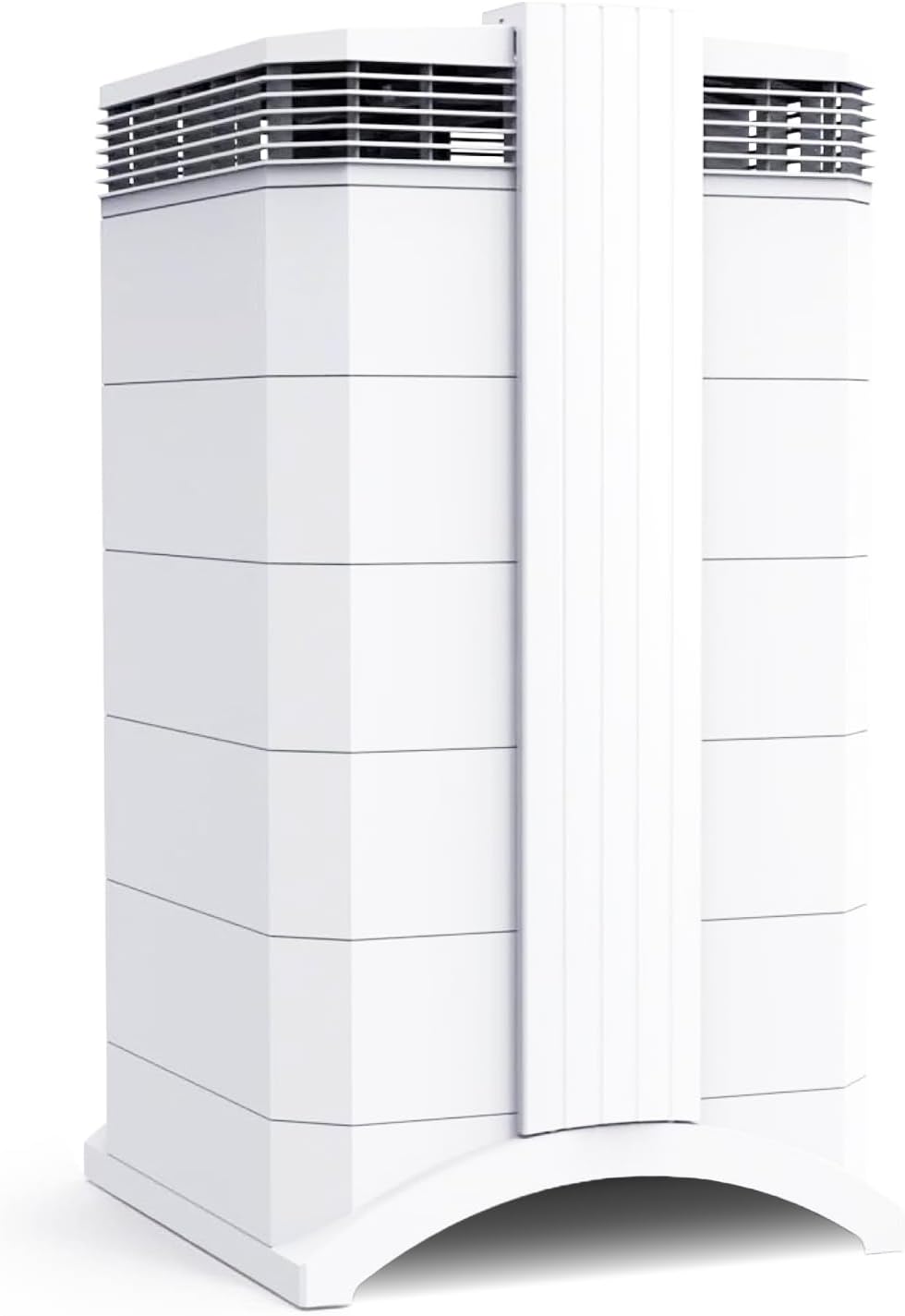
IQAir HealthPro Plus XE
For urban residents with chronic respiratory conditions, cardiovascular disease, or documented sensitivity to air pollution, the IQAir addresses both fine and ultrafine particles from urban sources at a level standard HEPA cannot match. Its GasDefence media handles a wider range of gaseous urban pollutants than standard carbon filters. For someone who will be running an air purifier continuously for years in a high-pollution urban environment, the IQAir’s performance margin and long filter life change the total cost calculation compared to more frequent replacement of cheaper units.
Frequently Asked Questions
Is indoor air quality always better than outdoor air quality in cities?
Not always. Outdoor air quality data reflects conditions at monitoring stations that may not be representative of your specific location. Indoor air quality in urban homes is generally somewhat lower in outdoor-sourced pollutants than outdoor levels due to dilution and deposition. However, indoor sources, cooking, cleaning products, off-gassing from furnishings, and candles, can add to the outdoor-sourced pollution load. In some urban homes, indoor PM2.5 can actually exceed outdoor levels during cooking or cleaning activities, especially in poorly ventilated spaces.
Does proximity to roads make a measurable difference in indoor air quality?
Yes, meaningfully so. Research consistently shows that PM2.5 and nitrogen dioxide concentrations inside homes decline with distance from major roads, with the steepest gradient in the first 150 to 500 meters. Ground floor apartments facing a busy street have higher indoor pollutant levels than upper floors of the same building or apartments on quieter side streets. The physical distance and any natural barriers like trees or buildings between the road and the home also affect how much traffic pollution reaches indoor spaces.
Should I check AQI daily if I live in an urban area?
Checking a local AQI reading on days when you plan to open windows for ventilation is a practical habit, particularly in summer when ozone levels are highest. AirNow.gov provides real-time AQI data by zip code and includes separate readings for PM2.5 and ozone. On days when either reading reaches Orange or above, keeping windows closed and relying on the air purifier for indoor air quality is the lower-exposure choice. On days with good AQI, brief window ventilation for CO2 dilution is fine and does not create significant pollution risk.