The Air Purifier Guide for Wildfire Smoke Season
When AQI climbs past 150, most air purifiers are not built for what comes next. Here are four that are, at every price point.
Wildfire smoke is not ordinary indoor air pollution. It carries fine particulate matter (PM2.5), gases, and volatile organic compounds (VOCs) that standard HEPA-only purifiers were never designed to handle at scale. During a smoke event, you need two things working together: a high smoke CADR to move enough air through filtration quickly, and a real activated carbon layer to absorb gases and odor, not a thin carbon coating on a foam pre-filter.
This guide covers four air purifiers, from a capable budget option to a clinical-grade unit, all tested against wildfire-specific criteria. These are not all-purpose picks that happen to handle smoke. They are chosen specifically because they perform when conditions outside are worst.
What Actually Matters for Smoke Filtration
Most product listings lead with overall CADR. For smoke specifically, look at the smoke CADR number separately. It reflects PM2.5 filtration performance more directly than the dust or pollen scores. Beyond that, the carbon filter is the deciding factor for gas and odor removal. Weight matters: heavier carbon beds absorb more, for longer, before they saturate.
| Spec | What to Look For | Why It Matters for Smoke |
|---|---|---|
| Smoke CADR | 200+ for medium rooms, 300+ for large | Determines how fast PM2.5 is cleared from the air |
| Activated carbon | Dedicated carbon layer, not just coated foam | Absorbs smoke gases and VOCs, not just particles |
| Carbon weight | Heavier = longer effective life | Thin carbon saturates quickly during prolonged events |
| Room coverage | Rated area at 2x or 5x ACH | Manufacturers overstate coverage; use the 5x ACH figure |
| Sealed filter design | No air bypass around the filter | Bypassed air means unfiltered smoke reaching the room |
AQI: When to Act
The Four Best Air Purifiers for Wildfire Smoke
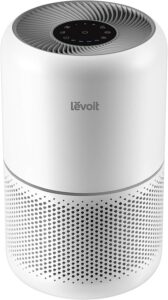
Levoit Core 300P
The Core 300P is the right pick for a single bedroom during smoke season. It is compact, quiet on low and medium settings, and uses a true HEPA filter paired with an activated carbon layer that handles smoke odor better than its price suggests. At 141 smoke CADR, it clears a 200 square foot room meaningfully faster than running nothing.
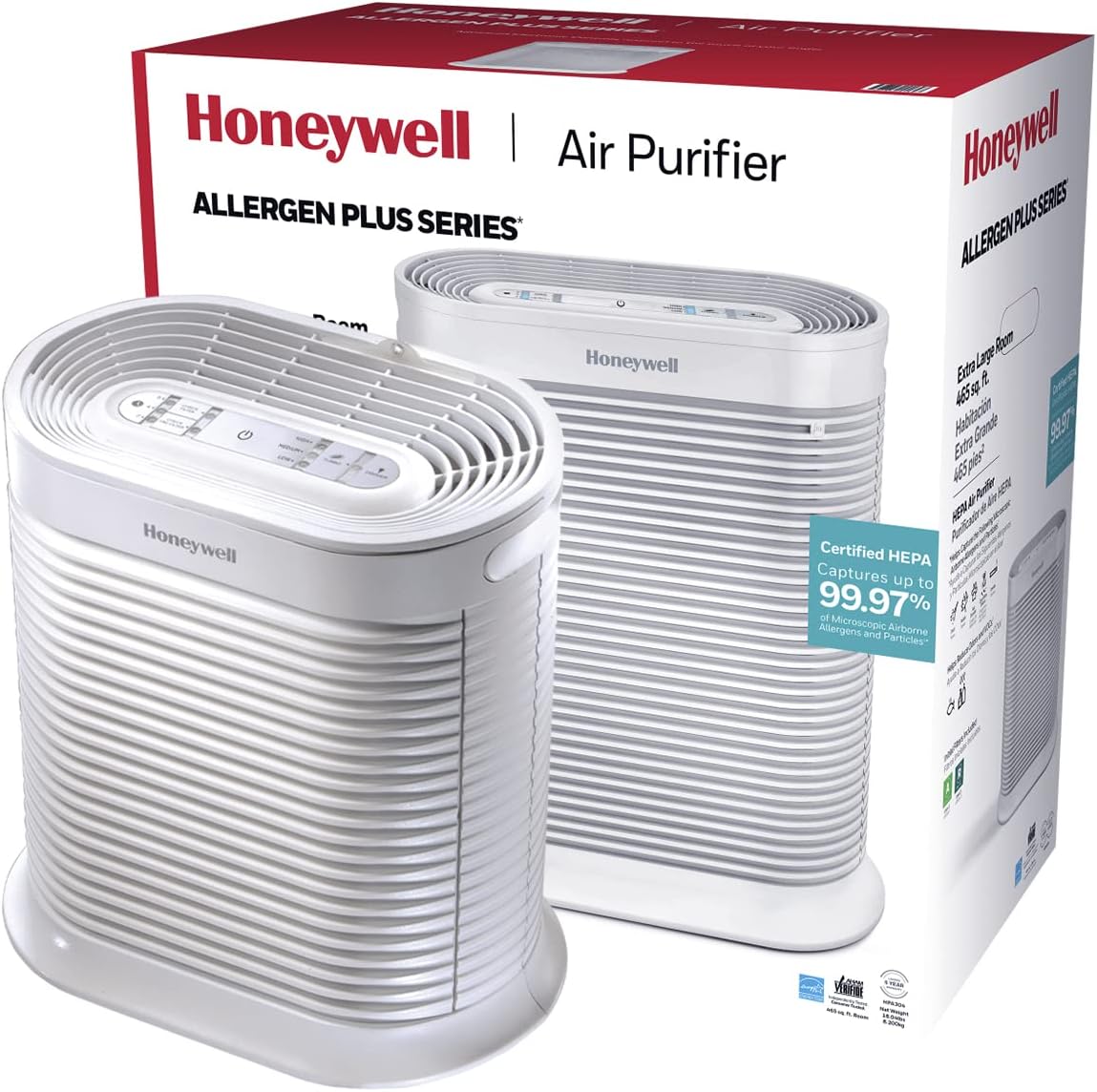
Honeywell HPA300
The HPA300 earns its place in this guide because of its 300 smoke CADR rating, which is genuinely high for the price. It covers large living spaces and handles PM2.5 filtration at a rate that keeps up with extended smoke events. The carbon layer is a pre-filter rather than a dedicated carbon bed, so gas and odor absorption is functional but not as deep as the two higher-tier options. For particle removal in large rooms, it is the best value on this list.
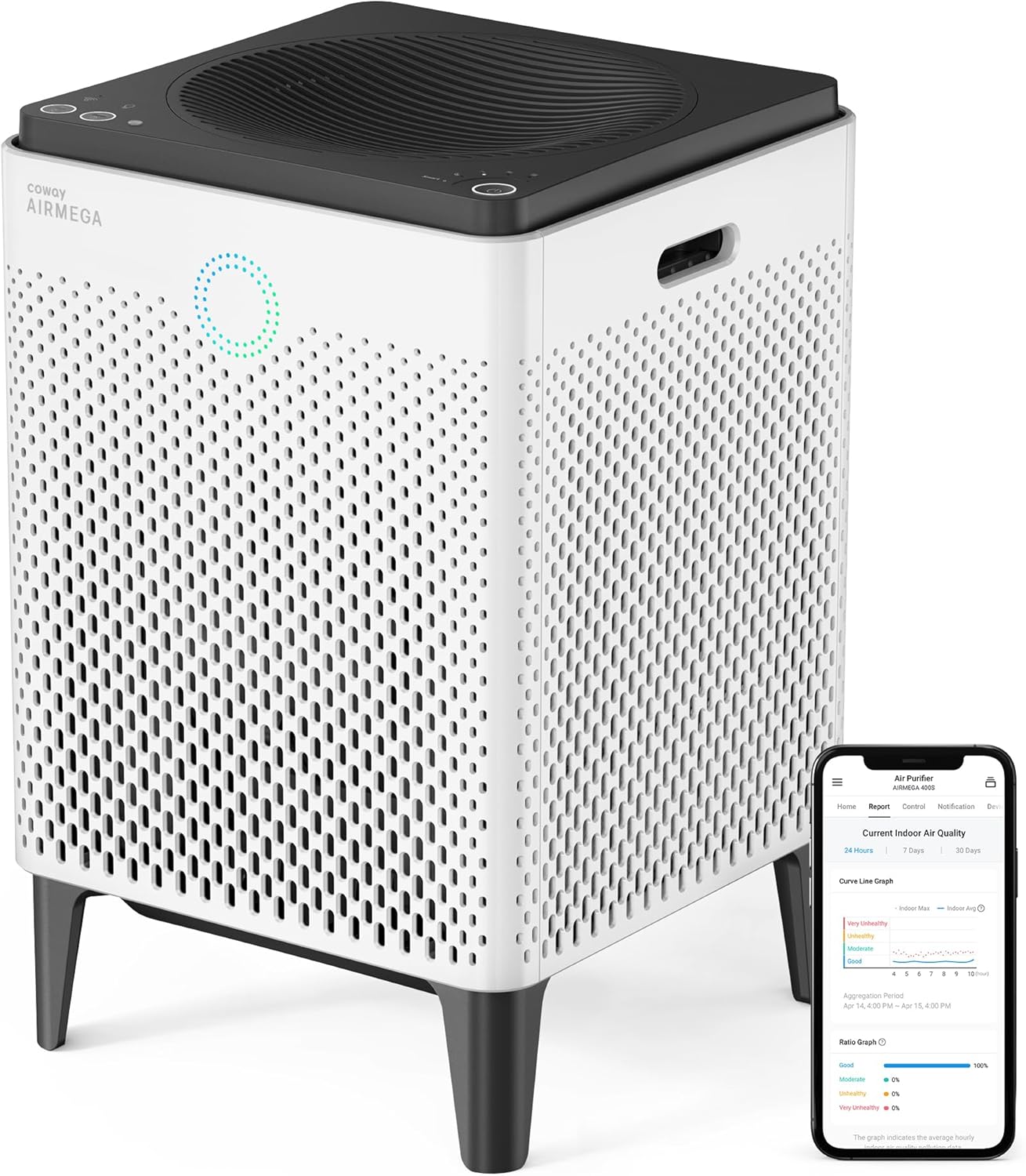
Coway Airmega 400S
The Airmega 400S is the strongest all-around pick for wildfire season because it combines a 350 smoke CADR with a dual-layer activated carbon filter that goes well beyond odor masking. The carbon beds are substantial enough to absorb smoke gases through multi-day events without immediate saturation. The built-in air quality sensor responds to rising PM2.5 automatically, which matters when AQI can climb from 80 to 180 in a few hours during an active fire event. Smart features let you monitor air quality remotely and adjust settings from your phone.
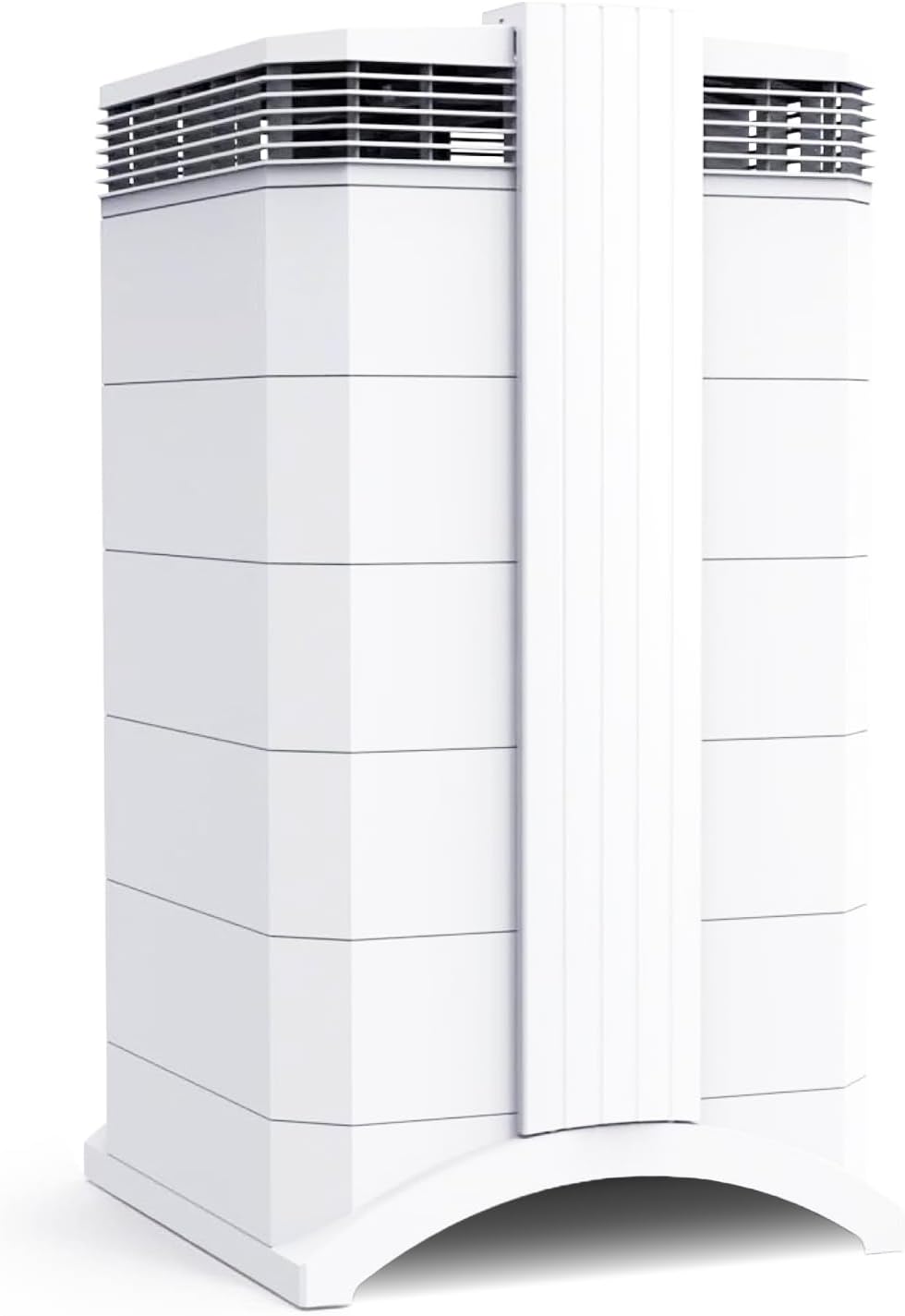
IQAir HealthPro Plus XE
The IQAir XE is the only unit on this list built to medical-grade filtration standards. Its HyperHEPA filter captures particles down to 0.003 microns, roughly 100 times smaller than what standard HEPA captures, which matters for the ultrafine particles that wildfire smoke carries in highest concentration. The activated carbon bed weighs five pounds and handles gases and VOCs at a level no other unit here approaches. This is the right choice for anyone with asthma, COPD, or immune compromise, or for households in regions that see extended fire season lasting weeks.
How to Set Up Your Home for Smoke Season
Choosing the right purifier is step one. How you run it during an event determines whether it actually protects you.
Seal first, filter second
An air purifier cannot keep up with constant smoke infiltration through open windows or gaps. Before AQI climbs, close all windows, seal obvious gaps around doors with draft stoppers, and turn off any ventilation that brings in outside air. Your purifier should be working on a fixed volume of air, not competing with continuous infiltration.
Position matters more than most guides say
Place your purifier in the room where you spend the most time and where you sleep. Central placement in an open room is better than tucking it in a corner. Keep at least 18 inches of clearance around the air intake. In a multi-story home, smoke rises, so upper floors typically need more attention.
Run it before you need it
If you are in a region where wildfire season is predictable, start running filtration when AQI hits 80, not 150. Proactive filtration keeps PM2.5 concentrations low so your purifier is never playing catch-up during a spike. Pre-event operation also helps identify filter issues before you are relying on the unit at maximum capacity.
Change filters after major events
Carbon filters saturate during extended high-AQI periods. After a smoke event lasting more than a few days, inspect your carbon filter. If it smells like smoke even when the purifier is running, the carbon has saturated and needs replacement. HEPA filters last longer but should be checked for discoloration. Running a saturated carbon filter provides false confidence without meaningful gas removal.