
Improving Air Quality in Your Apartment
Apartment air quality is shaped by the building itself, your neighbors, and the limited ventilation options you control. Here is what you can address effectively and what the right purifier looks like for an apartment setting.
Apartments have a specific set of air quality characteristics that distinguish them from single-family homes. The building structure, shared ventilation systems, proximity to neighbors’ cooking and habits, and the limits on modifications renters can make all shape what apartment air quality looks like and what is actually within your control to improve. Understanding the apartment-specific factors helps direct effort toward what will actually make a difference.
The good news is that apartments are also easier to improve than larger homes because the total air volume is smaller. A properly sized HEPA air purifier can turn over the air in a one-bedroom apartment several times per hour, which means the improvement from running it continuously is both faster and more noticeable than in a 2,000 square foot house.
What Drives Poor Apartment Air Quality
Cooking is one of the largest sources of indoor air pollution in apartments and is often underestimated. Gas cooking produces nitrogen dioxide and particulates. Even electric cooking produces VOCs and PM2.5 from the food itself at high heat. Apartments with limited range hood ventilation or range hoods that exhaust into the apartment rather than outside accumulate cooking emissions in the main living space every time the stove is used. Running the range hood on high during and for fifteen minutes after cooking, and opening a window briefly if outdoor air quality is good, helps; so does running an air purifier with activated carbon in the kitchen area.
Shared HVAC systems in apartment buildings circulate air across multiple units. Cooking smells, tobacco smoke from other units, and cleaning product fumes from neighbors can enter your apartment through the shared system. Individual window unit or through-wall air conditioners are somewhat better isolated, though they still draw air from outside. Upgrading the filter in your individual HVAC unit if accessible, or using a portable purifier to filter the air after it enters your space, are the practical options for renters.
Cooking is the biggest air quality event in most apartments
A single session of high-heat cooking, searing, stir-frying, or broiling, can raise PM2.5 concentrations in a small apartment to levels that would qualify as unhealthy by outdoor air quality standards. Unlike wildfire smoke, this spike is controllable: run ventilation during cooking, keep the air purifier running in or near the kitchen, and avoid high-heat cooking with the windows closed on poor outdoor air quality days. An air purifier with auto mode will visibly respond to cooking events, ramping up fan speed and returning to low once the spike clears.
Ventilation Limits in Apartments
Most apartments have limited natural ventilation options. Windows may face a busy street, an alley, or another building, making fresh air ventilation inadvisable during some weather or traffic conditions. Exhaust fans in bathrooms and range hoods in kitchens are the primary mechanical ventilation. Running them during and after activities that generate pollutants, cooking, cleaning, bathing, removes those pollutants at the source more effectively than trying to dilute them after the fact.
For overall CO2 management and a sense of fresh air, brief window ventilation during times when outdoor air quality is good, morning, on low-wind days away from rush hour, provides the air exchange that neither HVAC recirculation nor air purification fully replaces. Checking a local AQI reading before opening windows is a quick habit that prevents bringing in outdoor pollution during the ventilation window.
Recommended Air Purifiers for Apartment Air Quality
For full specs and comparisons, see the main small homes and apartments guide.
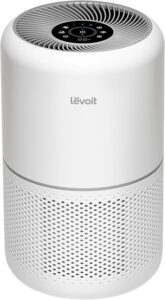
Levoit Core 300S
The Core 300S is the most practical budget starting point for an apartment. Its compact cylindrical design takes up minimal counter or floor space, and at 219 sq ft it handles a bedroom or a small open-plan studio effectively. The SP version’s auto mode is particularly useful in an apartment setting where cooking and other activity-driven pollution spikes occur regularly throughout the day, it responds to the spike and returns to quiet low without manual adjustment.
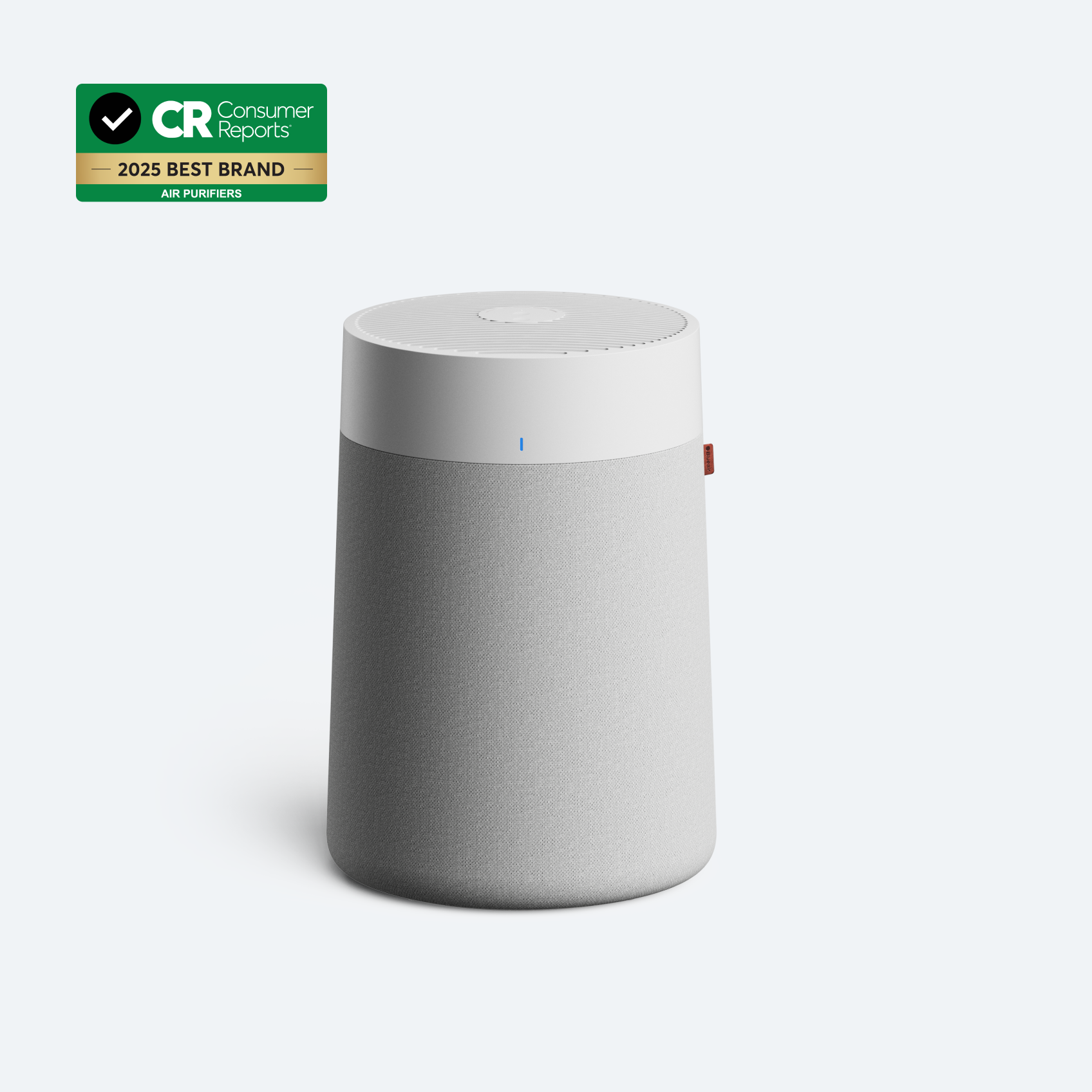
Blueair Blue Pure 311i Max
The Blue Pure 311i Max at 439 sq ft coverage with a built-in auto mode is a strong fit for the main living area of a one-bedroom apartment. The auto mode’s air quality sensor responds to cooking, cleaning, and other daily pollution events automatically. Wi-Fi and app control let you check air quality and adjust settings remotely, and the Blueair design is unobtrusive enough to fit most apartment aesthetics. For apartments where the living area and kitchen are open-plan, this unit handles the combined space more adequately than the Core 300S at its price tier.
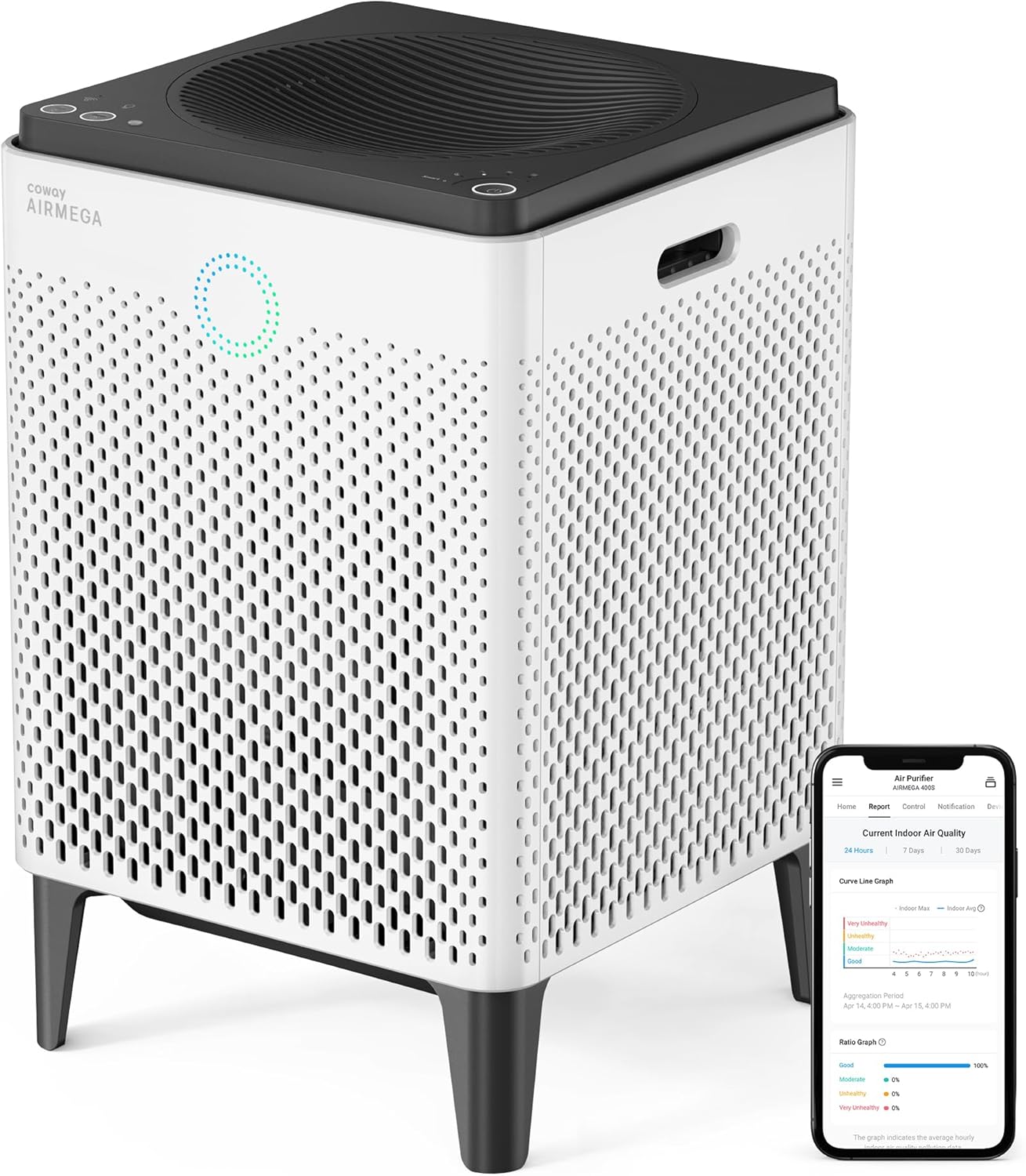
Coway Airmega 400S
The Airmega 400S covers up to 1,560 sq ft, which is significant overkill for most apartments and exactly the point. Running a large-capacity unit in a small apartment means it operates at a very low fan speed relative to its capacity, producing quieter operation, longer filter life, and a large reserve to respond to cooking or other pollution spikes without effort. The smart features including real-time air quality monitoring and app control provide useful visibility into daily air quality patterns. One unit in a central location covers most one and two-bedroom apartments from a single placement point.
Frequently Asked Questions
Can cooking in my apartment really affect air quality that much?
Yes, significantly. Studies measuring PM2.5 inside apartments during cooking consistently find concentrations that would qualify as unhealthy by outdoor air quality standards, particularly during high-heat cooking methods. The effect is most pronounced in smaller apartments where the kitchen is in the same space as the living area, and in apartments with inadequate range hood ventilation. Running ventilation during cooking and an air purifier with auto mode nearby captures the spike quickly and returns concentrations to normal within fifteen to thirty minutes after cooking ends.
Do I need one purifier for the whole apartment or one per room?
For most one-bedroom apartments, a single mid-range unit with adequate coverage placed in the main living area covers the space adequately. If the bedroom door stays closed overnight, a second smaller unit in the bedroom, the Core 300S is the natural complement, provides dedicated overnight filtration where allergen exposure is most important. For open-plan studios, a single unit centrally positioned covers the whole space. Two units are worth considering when the bedroom is consistently closed and you want active filtration in both primary spaces simultaneously.
What is the best placement for an air purifier in a one-bedroom apartment?
For a single unit, central placement in the main living area is the starting point, equidistant from the primary pollution sources like the kitchen and the primary occupancy area like the sofa. Avoid corners and placement directly against walls, which restrict intake airflow. In open-plan apartments, positioning the unit between the kitchen and the seating area means it captures cooking emissions before they disperse through the space. For overnight bedroom use, moving a portable unit like the Core 300S to the bedroom at night and back to the main area during the day is a practical approach with one unit.