Coway Airmega 400S vs Smaller Models for a Bedroom with Pets
Is a purifier rated for about 510 sq ft overkill for a bedroom? Not when pets are involved. Here is why running a large-capacity unit below its limit often makes more sense than a smaller unit working at full speed.
The Airmega 400S wins for bedrooms with pets. Smaller units win on price and simplicity.
Running an oversized unit in a bedroom produces quieter operation, longer filter life, and better dander capture headroom than a smaller unit straining at its rated capacity. For pet owners with allergy concerns, the 400S is the stronger long-term choice. For households without allergy issues or with a single small pet, the Coway Airmega 200M or Levoit Core 300P at a fraction of the price gets the job done.
Side-by-Side Specs
| Spec | Coway Airmega 400S | Coway Airmega 200M | Levoit Core 300P |
|---|---|---|---|
| Price | ~$610 | ~$218 | ~$90 |
| Coverage area | ~510 sq ft at 4.8 ACH by CADR (Coway: 1,560 sq ft at 2 ACH) | 361 sq ft | 222 sq ft |
| In a 200 sq ft bedroom | ~2.5x headroom | ~1.8x headroom | ~1.1x headroom |
| Noise at low speed | 22 dB | 24.4 dB | 24 dB |
| Auto mode | Yes | Yes (built-in) | No |
| Filtration | Washable pre-filter + Max2 (carbon + HEPA) | 4-stage: pre-filter, carbon, True HEPA, ion device | 3-stage with carbon filter |
| Air quality display | Real-time color indicator | Yes | No |
| App control | Yes | No | No |
| Filter life | Max2 set rated about 1 year | Carbon about 6 months, HEPA about 12 months | No interval published by Levoit |
| Footprint | Larger | Medium | Compact |
| Where to buy | Airmega 400S on Amazon (~$610) Airmega 400S at Sylvane (~$650) | Airmega 200M on Amazon (~$218) Airmega 200M at Sylvane (~$220) | Core 300P on Amazon (~$90) |
Why Oversized Units Work Better in Pet Bedrooms
The standard advice for air purifiers is to match the unit’s coverage area to the room size. For most situations that is correct. For bedrooms with pets, a unit rated well above the room’s square footage can stay on a low fan speed all night.
First, noise. A unit rated for about 510 sq ft at the standard 4.8 air changes per hour, cleaning a 200 sq ft bedroom, can hold that room at a low fan speed. The Airmega 400S runs at 22 dB on its lowest setting. A unit rated for 222 sq ft in the same room is running near its limit just to maintain adequate air changes per hour, which requires higher fan speeds and more noise.
Second, dander load. Pets produce dander continuously. In a bedroom where a cat or dog sleeps, the particle load is higher than a pet-free room of the same size. An oversized unit has the filtration capacity to handle that elevated load without working as hard, which means more consistent particle capture throughout the night.
Third, filter life. A unit running at lower fan speeds loads its filters more slowly. Coway rates the 400S’s Max2 filter set at about one year, and heavy pet dander can shorten that, so check the pre-filter monthly.
The headroom principle in practice
When a pet enters the bedroom and settles on the bed, dander concentrations spike. A unit with significant coverage headroom responds to that spike by running at a slightly higher speed while staying quiet. A unit at its capacity limit has to ramp up to a noticeably louder speed to keep pace. If you use auto mode, a larger unit handles those spikes more gracefully and returns to near-silent operation faster.
When Smaller Units Are the Right Call
The Airmega 400S carries a significant price premium over both smaller units, with the 200M sitting in the middle and the Core 300P the most affordable of the three. If you have one small cat, no allergy concerns, and the bedroom is under 200 sq ft, the 200M handles the situation well without paying for the 400S’s extra capacity.
The 200M’s built-in auto mode responds to dander spikes from pet activity effectively. Its 361 sq ft coverage in a standard bedroom gives it meaningful headroom without paying for the 400S’s substantial excess capacity. For households where the pet concern is moderate, the 200M is the better value by a significant margin.
The Core 300P makes sense when budget is the primary constraint and the bedroom is small. Its 222 sq ft coverage works for rooms up to that size, and its 3-stage filter pairs activated carbon for odor with a main filter rated at 99.97 percent down to 0.3 micron for dander. It lacks auto mode and runs at higher speeds relative to its capacity in most bedrooms, but it costs a small fraction of the 400S.
The Products
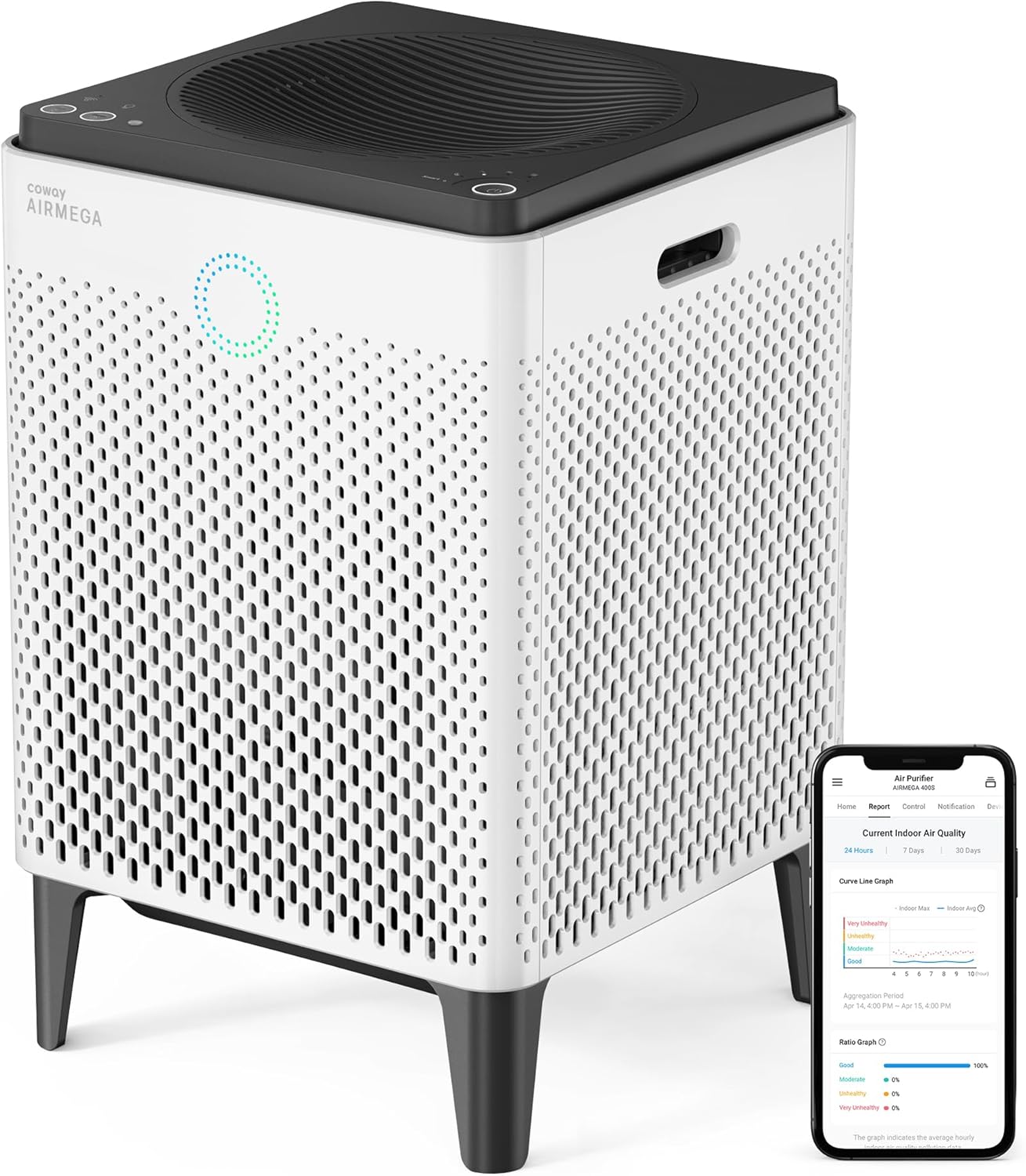
Coway Airmega 400S
Covers about 510 sq ft at 4.8 air changes per hour by its 328 CADR (Coway quotes 1,560 sq ft at 2, which converts to about 650) with a Max2 carbon-and-HEPA filter. Auto Mode and Wi-Fi app control add convenience, and an LED indicator shows air quality at a glance. In a bedroom with pets, runs far below capacity which means quieter operation and easier handling of dander spikes. Best for households with multiple pets, larger dogs, or heavy dander loads where the extra capacity is justified.
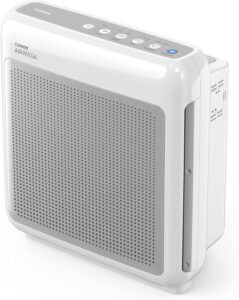
Coway Airmega 200M
Covers 361 sq ft with built-in auto mode and an air quality indicator. The right mid-range choice for one or two small pets in a standard bedroom where allergy concerns are moderate. Meaningful coverage headroom over a 200 sq ft bedroom without the 400S’s price tag. Auto mode handles pet dander spikes without manual adjustment.
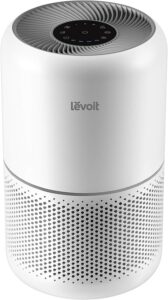
Levoit Core 300P
Budget option for bedrooms under 222 sq ft with one small pet. The 3-stage filter pairs activated carbon for odor with a main filter rated at 99.97 percent down to 0.3 micron for dander, and Levoit sells an optional Pet Allergy replacement filter. No auto mode, and it runs closer to capacity in most bedrooms, but it costs a small fraction of the 400S, so it is the right starting point for households where budget is the primary constraint.
Frequently Asked Questions
Is the Airmega 400S worth its price for a bedroom?
For households with multiple pets or a heavy dander load, yes. The combination of quiet operation on low, a carbon-and-HEPA Max2 filter, and significant headroom to handle high dander loads produces a meaningfully different result than a budget unit at its limit. For a single small cat and no allergy concerns, the Airmega 200M produces strong results without paying the 400S’s premium. The 400S is worth the price when dander loads are high every night.
Does an oversized unit use more electricity?
Power draw follows fan speed. The Airmega 400S is rated at 66 W at maximum and draws less on low, and the Core 300P is rated at 56 W. In a bedroom the 400S can stay on a low setting, so the yearly electricity difference between the two is small next to the purchase price difference.
How often do I need to replace filters in the 400S with pets?
Coway rates the Max2 filter set at about one year. A unit running at lower fan speeds in a bedroom passes less air through its filters, so they may last longer, but heavy pet dander can shorten that. Check the washable pre-filter monthly and clean it when visibly loaded.