Best Air Purifiers for Allergies (2026)
For pollen and dust, size the unit to the room by its rated coverage, then compare pollen CADRs. The Honeywell HPA5200B carries a pollen CADR of 260 for 360 sq ft; the Blueair 311i Max reaches 365 for 439 sq ft at a somewhat higher price.
Our Top Picks at a Glance
Pollen and Dust CADR by Pick
| Model | Pollen CADR | Dust CADR | Rated room size | Filter |
|---|---|---|---|---|
| Levoit Core 300S | 141 (one overall figure) | 219 sq ft | True HEPA | |
| Honeywell HPA5200B | 260 | 250 | 360 sq ft | True HEPA |
| Blueair Blue Pure 311i Max | 365 | 314 | 439 sq ft | HEPASilent |
| Coway Airmega 400S | 400 | 328 | About 510 sq ft | HEPA (Max2) |
| IQAir HealthPro Plus XE | None published (300 CFM top airflow) | Up to 1,125 sq ft | HyperHEPA | |
Pollen grains are larger than smoke particles, and the units here that publish separate pollen and dust figures rate pollen highest. Room sizes are each maker’s figure at 4.8 air changes an hour where one exists; the 400S figure is worked out from its 328 smoke CADR, and IQAir states no air-change basis for its 1,125 sq ft. Pollen and dust mite debris settle into surfaces through the day and go back into the air with every movement, so a purifier sized with room to spare can stay on a quiet speed and still keep up.
What to Look for in an Air Purifier for Allergies
Start with the filter rating. A true HEPA filter captures 99.97% of airborne particles at 0.3 microns, and pollen and most dust mite debris are larger than that 0.3-micron test size. HEPA is a U.S. Department of Energy standard, as the EPA explains (EPA). A label such as “HEPA-type” with no rating behind it does not meet that standard. One pick here, the Blueair 311i Max, uses Blueair’s HEPASilent, which is not True HEPA: Blueair rates it at 99.97% down to 0.1 micron and it charges particles electrostatically inside the unit.
Next, size the CADR to the room. CADR (Clean Air Delivery Rate) measures how much filtered air the unit delivers per minute. AHAM’s sizing rule is a smoke CADR of at least two-thirds of the room’s floor area, so a 300 sq ft bedroom needs at least 200. The room sizes in this guide are each maker’s 4.8 air-change rating, which allows a slightly larger room per CFM than that rule.
Then check the noise on the lowest setting. A purifier only filters while it runs, and a unit that is loud on low tends to get switched off at night.
Comparison at a Glance
| Model | Tier | Coverage | CADR | Filter | Noise (Low) | Price | Link |
|---|---|---|---|---|---|---|---|
| Levoit Core 300S | Budget | 219 sq ft | 141 CFM | True HEPA | 22 dB | ~$150 | Amazon |
| Honeywell HPA5200B | Mid-Range | 360 sq ft | 260 pollen / 250 dust | True HEPA | 28 dB | ~$173 | Amazon |
| IQAir HealthPro Plus XE | Premium | 1,125 sq ft | None published (300 CFM max airflow) | HyperHEPA | 27 dB | ~$1,200 | Amazon |
| Blueair Blue Pure 311i Max | Mid-Range | 439 sq ft | 365 pollen / 314 dust | HEPASilent | 23 dB | ~$230 | Sylvane Amazon |
| Coway Airmega 400S | Premium | About 510 sq ft | 400 pollen / 328 dust | HEPA (Max2) | 22 dB | ~$610 | Amazon Sylvane |
A note on allergy seasons and filter replacement
During peak allergy season, filters accumulate pollen and allergens faster than during the rest of the year. Plan on checking your pre-filter every two to three weeks during spring and fall peak periods, and replacing HEPA filters at the shorter end of the manufacturer’s recommended range.
Our Picks, Reviewed
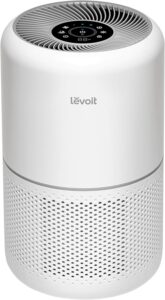
Levoit Core 300S
Best for: Bedroom allergy relief, first-time buyers, renters, and anyone who needs a quiet overnight option in a smaller space.
For symptoms that are worst at night, start here. The Core 300S is rated for 219 sq ft at 4.8 air changes per hour and runs at 22 dB on its lowest setting. Its three-stage filter pairs a pre-filter and a main filter rated 99.97 percent at 0.3 micron with an activated carbon layer for odors.
Levoit sells it as the Core 300S-P, whose VeSync app schedules can run it on high before bedtime and drop it to low overnight. The limit is coverage: 219 sq ft at 4.8 air changes per hour fits a bedroom but not a living room, so if your symptoms are mostly daytime and living-area based, this unit will not cover them on its own.
Strengths
- Very quiet at low settings for overnight use
- VeSync app schedules
- Compact and unobtrusive in a bedroom
- True HEPA at the lowest price here
Limitations
- Coverage too small for living rooms
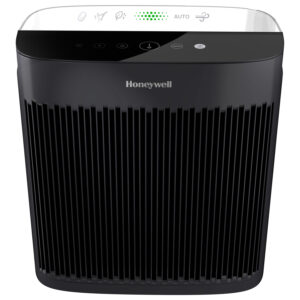
Honeywell HPA5200B
Best for: Medium to large bedrooms, living rooms, households where multiple allergens are the issue, and allergy sufferers who need more coverage than a compact unit provides.
Honeywell rates the HPA5200B for 360 sq ft at 4.8 air changes per hour, with a smoke CADR of 226, a dust CADR of 250 and a pollen CADR of 260 (AHAM Verifide), enough for a larger bedroom or a moderately sized living room. Filtration is a true HEPA filter combined with an activated carbon pre-filter for odors and VOCs, plus an intelligent air quality sensor that drives an auto mode adjusting the cleaning level on its own.
Honeywell publishes no noise rating. An independent measurement by Breathe Quality puts the HPA5200B at about 28 dB on its lowest setting, 6 dB louder than the Core 300S and 5 dB louder than the 311i Max. For overnight use in a bedroom up to about 220 sq ft, the Core 300S is the quieter choice.
A common pairing is the HPA5200B in the living room and the Core 300S in the bedroom, both well below the IQAir’s price.
Strengths
- True HEPA with an activated carbon pre-filter
- Good coverage for living rooms and larger bedrooms
- 5-year limited warranty
- ENERGY STAR certified
- Intelligent air quality sensor with color-coded auto mode
Limitations
- About 6 dB louder than the Core 300S on low
- No app or smart home integration
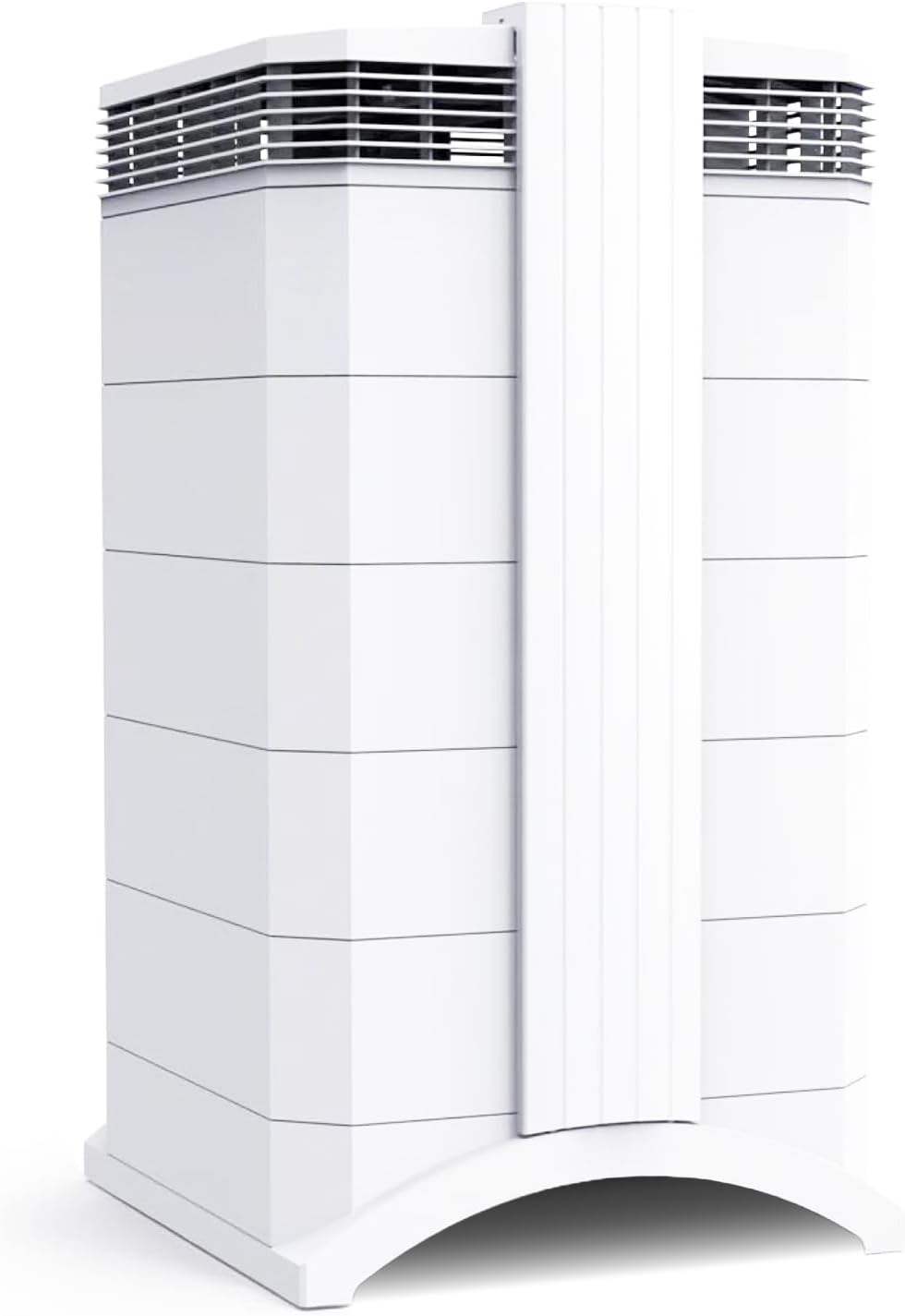
IQAir HealthPro Plus XE
Best for: Large open-plan spaces and buyers who want the finest filtration rating.
The IQAir HealthPro Plus XE carries the filter rating that reaches the smallest particle size in this guide. A True HEPA filter is rated at 99.97% at 0.3 microns, and IQAir rates its HyperHEPA filter at 99.5% efficiency down to 0.003 microns, 100 times smaller.
IQAir rates the unit for up to 1,125 sq ft, enough for a large open floor plan or several connected rooms. The lowest of its six fan speeds runs at 27 dB (IQAir, measured at 3.3 ft), quiet enough for bedroom use overnight despite the unit’s size, though the Core 300S is quieter still on its lowest setting. IQAir does not publish a CADR, so the 1,125 sq ft figure cannot be checked against the two-thirds rule above, and the table shows maximum airflow instead.
Strengths
- HyperHEPA rated to 0.003 microns
- Quiet at low speed for a unit this large
- IQAir rates it for up to 1,125 sq ft (no CADR published)
- Real-time PM2.5 sensor and Wi-Fi app
Limitations
- About eight times the Core 300S’s price
- Replacement filters are expensive
- Large footprint not suited to small bedrooms
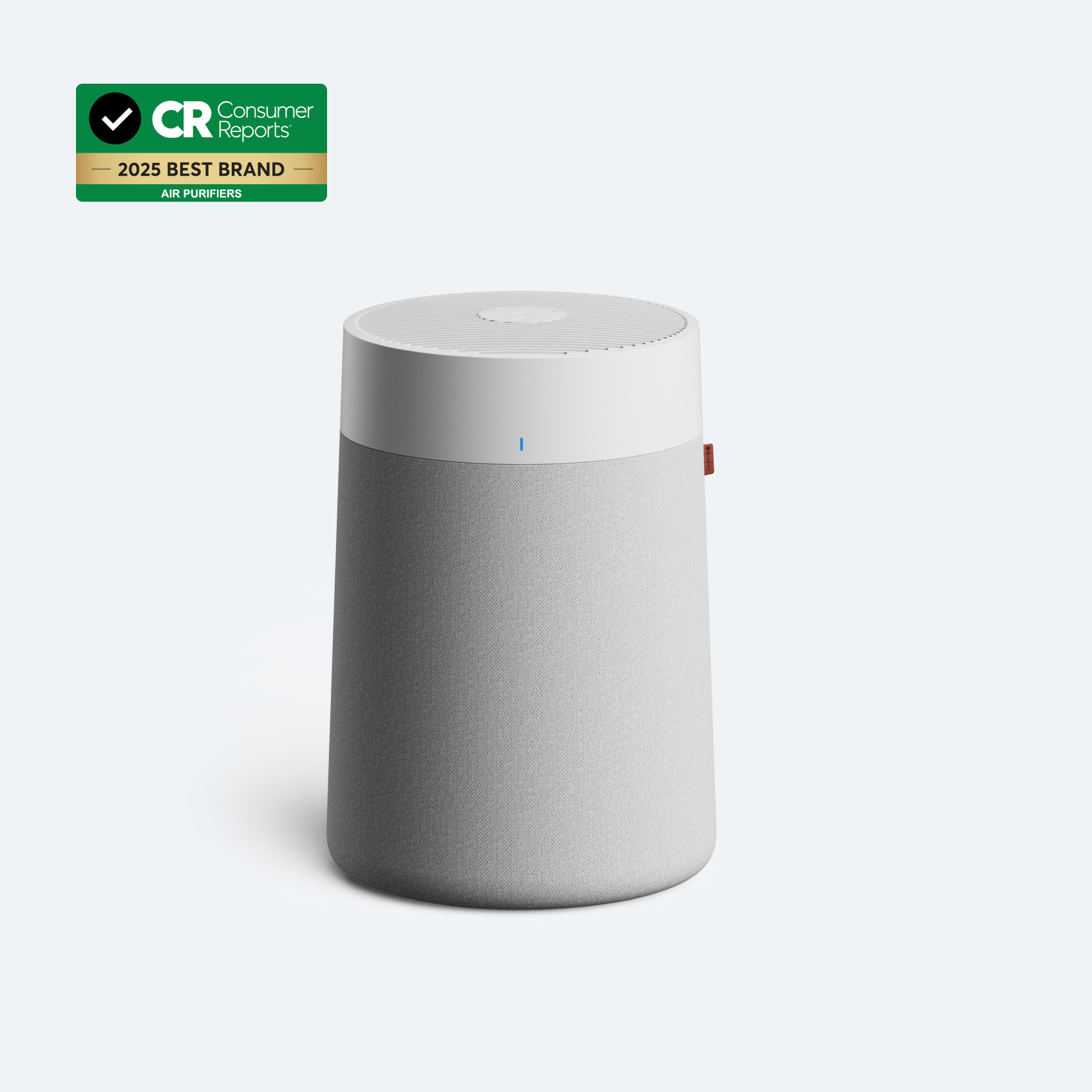
Blueair Blue Pure 311i Max
Best for: Pollen season in a bedroom or living room up to about 440 sq ft, for a buyer who wants an app and a quiet Night setting.
Blueair rates the 311i Max at a pollen CADR of 365 and a dust CADR of 314, higher than the HPA5200B’s for a somewhat higher price, with 439 sq ft at 4.8 air changes an hour and 23 dB on its lowest setting. Its air quality sensor drives an Auto mode, and the Wi-Fi app shows the reading and the filter’s remaining life.
The catch is the filter type. HEPASilent combines electrostatic charging with mechanical filtration and is not True HEPA, so a buyer who wants a strictly mechanical filter should pick the HPA5200B. Blueair rates the Particle and Carbon filter for up to nine months. Blueair says the charging happens inside the unit and that it tests its ozone emissions; if ozone is a concern, check CARB’s certified list.
Strengths
- Pollen CADR of 365 at a mid-range price
- 23 dB on low, with a Night setting
- Auto mode from an air quality sensor
Limitations
- HEPASilent is not True HEPA
- Filter rated for up to 9 months
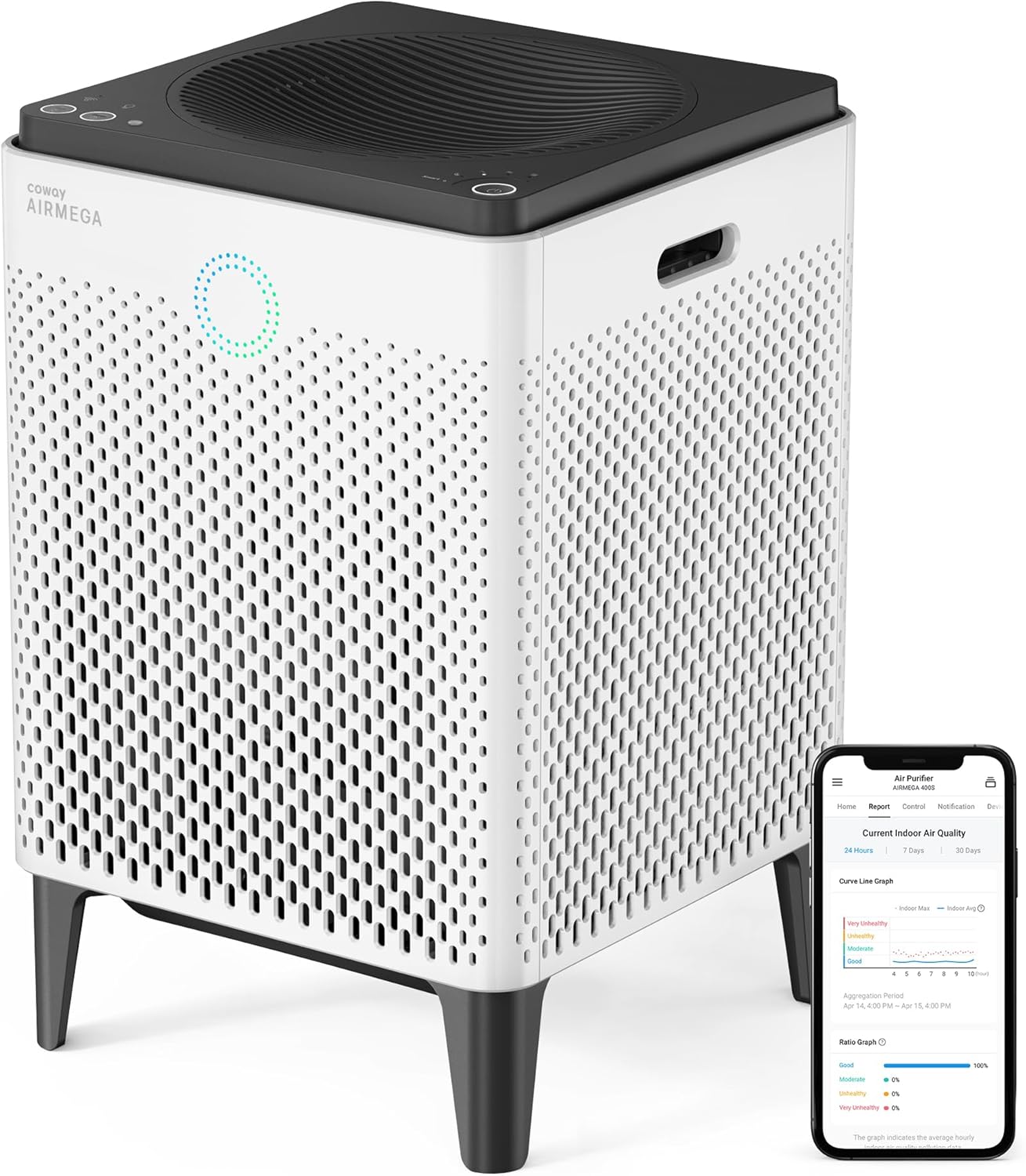
Coway Airmega 400S
Best for: An open kitchen and living area of 440 to 510 sq ft during pollen season, with one unit doing the whole space.
Coway rates the 400S at a pollen CADR of 400, the highest published pollen figure in this guide, with 328 for dust and smoke. By that smoke figure it covers about 510 sq ft at 4.8 air changes an hour; Coway’s own rating of 1,560 sq ft at 2 air changes converts to about 650. It runs at 22 dB on its Sleep speed, and Auto Mode with a Wi-Fi app handles the fan for you.
It costs about three and a half times as much as the HPA5200B. Up to 360 sq ft the Honeywell covers the space for far less, and up to 439 sq ft the 311i Max does. The 400S earns its price past that, when you want a single unit to cover the room.
Strengths
- Highest published pollen CADR here
- Washable pre-filter, Max2 set rated about 1 year
- 22 dB on its Sleep speed
Limitations
- About three and a half times the HPA5200B’s price
- 24.7 lb
How to Get the Most Out of Your Air Purifier During Allergy Season
Run your purifier continuously on a low setting, and choose one rated above your room size so low still keeps up. Short bursts on high leave the hours in between unfiltered.
Keep bedroom doors closed while the purifier is running. An open door lets the rest of the house’s air in.
A loaded pre-filter cuts airflow through the HEPA layer without triggering a replacement indicator, so check it on the schedule in the note above.
Pair the purifier with surface cleaning, since a purifier only reaches what is airborne. Vacuuming with a HEPA-filter vacuum and washing bedding in hot water each week, as AAFA advises, cuts what settles into bedding and carpet in the first place.
Frequently Asked Questions
Can an air purifier really reduce allergy symptoms?
An air purifier lowers the airborne particle load in a room. True HEPA filters capture 99.97% of airborne particles at 0.3 microns, and pollen and dust mite debris are larger than that size. The EPA notes that portable air cleaners with HEPA filters can reduce indoor particulate concentrations when sized correctly for the room and run continuously. A purifier that runs around the clock keeps particle levels lower than one that is turned off at night or run only occasionally.
Should I get one purifier for the whole house or one per room?
One per room, if the budget allows. Otherwise start with the bedroom, since that is where you spend the longest uninterrupted stretch of hours, and add a living room unit second.
Does the IQAir justify its price for allergies?
For most households, the HPA5200B’s 360 sq ft rating covers a living room or large bedroom at a fraction of the IQAir’s price. The IQAir is the option for buyers who want its 0.003-micron filter rating; for a room past 440 sq ft, the Airmega 400S carries a published pollen CADR of 400 at about half the IQAir’s price. IQAir rates the HealthPro Plus XE for up to 1,125 sq ft but publishes no CADR to check that against.
Do air purifiers help with dust mite allergies specifically?
Partially. Dust mite allergens are not the mites themselves but the microscopic debris they shed, which becomes airborne when disturbed. A true HEPA purifier will capture this debris while it is airborne. However, the primary reservoir of dust mite allergens is in bedding, mattresses, and upholstery, where an air purifier has no effect. For dust mite allergies, encasing mattresses and pillows in allergen-barrier covers and washing bedding weekly in hot water addresses the source, while the purifier addresses what gets stirred into the air.
What CADR rating do I need for my room?
Use AHAM’s two-thirds rule from the buying section with the smoke CADR, or the maker’s 4.8 air-change room rating. For pollen season, a pollen CADR well above the minimum lets the unit keep up on a quieter speed.
Quick Buyer Checklist
Four questions to find the right unit
1. Where are your symptoms worst? If the answer is the bedroom at night, start with the Core 300S. If it is the living room during the day, the HPA5200B is the better fit, or the 311i Max if you want the higher pollen CADR and an app. If it is everywhere, start with the bedroom unit and add a living room unit second.
2. How much filtration do you want? The Core 300S, HPA5200B and Airmega 400S use HEPA filters, the first two rated True HEPA at 99.97% at 0.3 microns. The 311i Max uses HEPASilent. The IQAir adds a HyperHEPA rating down to 0.003 microns at a much higher price.
3. Does overnight noise matter? If you are a light sleeper, the Core 300S and the Airmega 400S rate 22 dB on low and the 311i Max 23 dB. The IQAir at 27 dB and the HPA5200B at about 28 dB sit close together.
4. What is your room size? Up to about 220 sq ft, the Core 300S (Levoit rates it for 219 sq ft at 4.8 air changes per hour). Up to 360 sq ft points to the HPA5200B, and up to 440 sq ft to the 311i Max. An open floor plan up to about 510 sq ft points to the Airmega 400S. The IQAir is rated for more, though its 1,125 sq ft has no CADR behind it.