Why Your Bedroom Feels Stuffy at Night
A closed bedroom can feel stuffy by morning. Here is what causes it and what helps.
A bedroom that feels stale by morning usually has more than one cause. Breathing adds carbon dioxide and moisture to a closed room, and moving in bed stirs up particles from the bedding.
Fresh air exchange and air filtration deal with different parts of the problem. Opening a window brings in outdoor noise and any pollen in the air, so a purifier plus a small amount of controlled air exchange is the practical combination.
What Makes a Bedroom Feel Stuffy
People breathe out carbon dioxide, and in a closed bedroom it has little place to go overnight. Carbon dioxide is a gas, so it is the one factor a purifier cannot address: HEPA filters capture particles and do not remove gases.
Breathing and body heat add moisture to a closed bedroom through the night, and higher humidity makes a room feel warmer and heavier. EPA recommends keeping indoor relative humidity below 60 percent, ideally between 30 and 50 percent (EPA guidance), and AAFA says dust mites favor humidity above 50 percent. EPA notes that a humidity meter is inexpensive and sold at many hardware stores.
Moving in bed can stir up particles from the bedding, and AAFA lists bedding among the places dust mites live. A HEPA purifier filters the air that passes through it while you sleep.
The CO2 problem and what helps
A HEPA filter does not remove carbon dioxide, so the fix is fresh air exchange. A slightly cracked window or a bedroom door left slightly open to the rest of the home both add air exchange. A running HEPA purifier alongside either one handles the particles.
How Air Filtration Improves Bedroom Air Quality Overnight
A HEPA purifier running continuously in the bedroom filters airborne particles such as dust mite allergen and pollen as the air passes through the unit. It does not change carbon dioxide or humidity, which are handled separately.
For overnight use, noise at the lowest fan setting matters most, since a unit that is too loud to leave running will not filter while you sleep. The three options below run at 22 to 25.6 dB on their lowest settings.
Recommended Air Purifiers for a Stuffy Bedroom
Full specs and comparisons are in the main sleep and bedroom air guide.
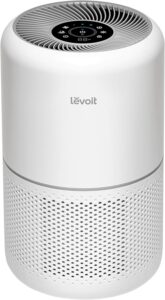
Levoit Core 300S
The Core 300S is well suited to bedrooms up to 219 sq ft that feel stuffy primarily due to particle accumulation. At 22 dB on low it runs without disturbing sleep. Levoit lists a Sleep Mode for overnight use, and the VeSync app adds schedules and a 1 to 24 hour timer, so you can run the unit on high before bed to clear accumulated particles and step it down on a schedule.
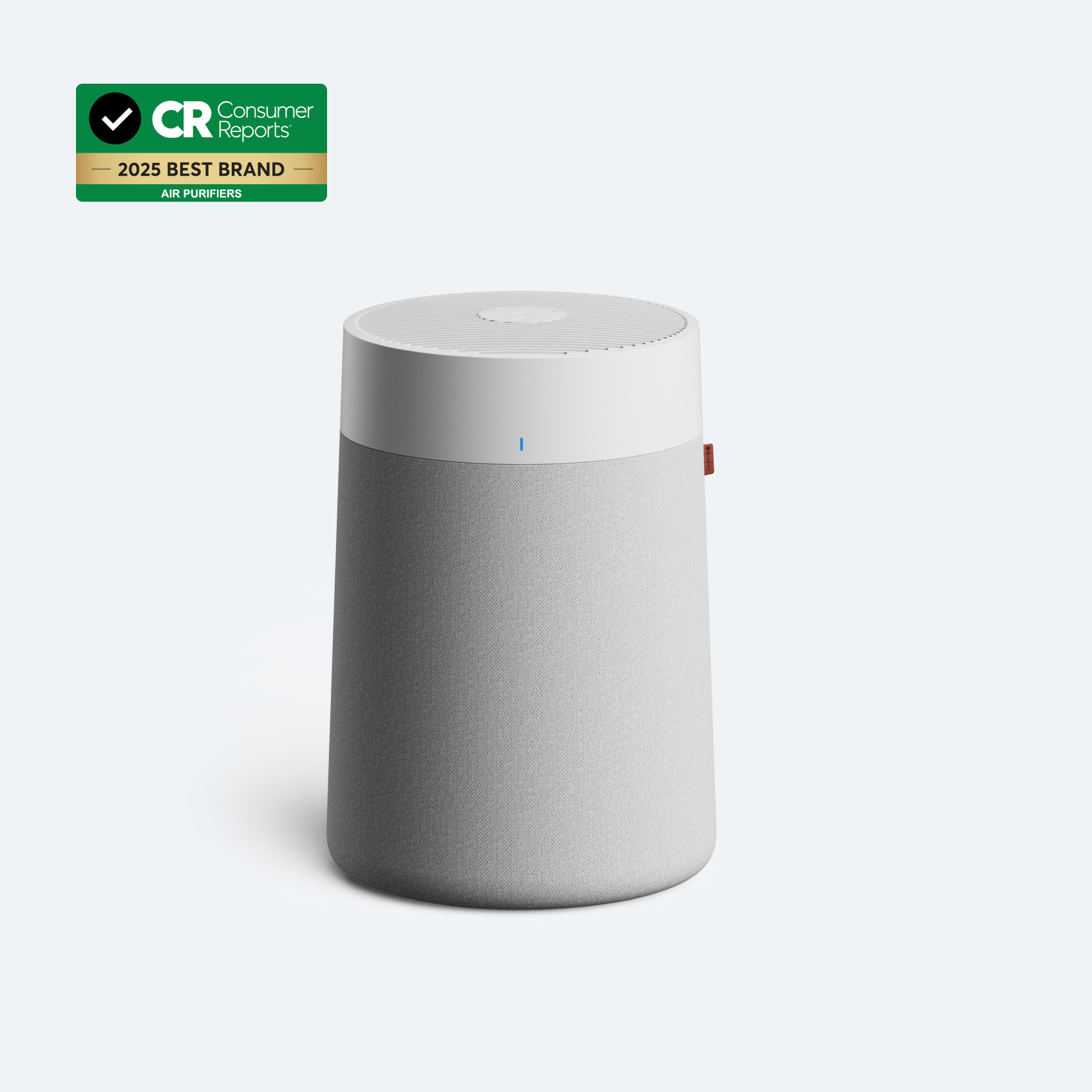
Blueair Blue Pure 311i Max
The Blue Pure 311i Max covers up to 439 sq ft, comfortably enough for a primary bedroom, and pairs that coverage with 5 fan speeds including a dedicated Auto setting. Auto mode uses the unit’s integrated air-quality sensor to raise the fan speed as particle levels rise and lower it again once they settle. At 23 dB on its lowest setting it stays quiet enough for sleep, and Blueair’s HEPASilent filtration combines electrostatic charging with mechanical filtration. It is not a True HEPA filter.
Because Auto mode adjusts on its own, no manual boost before bed is needed. Wi-Fi and app control let you check air quality and adjust fan speed remotely, and the Night setting is there for overnight running.
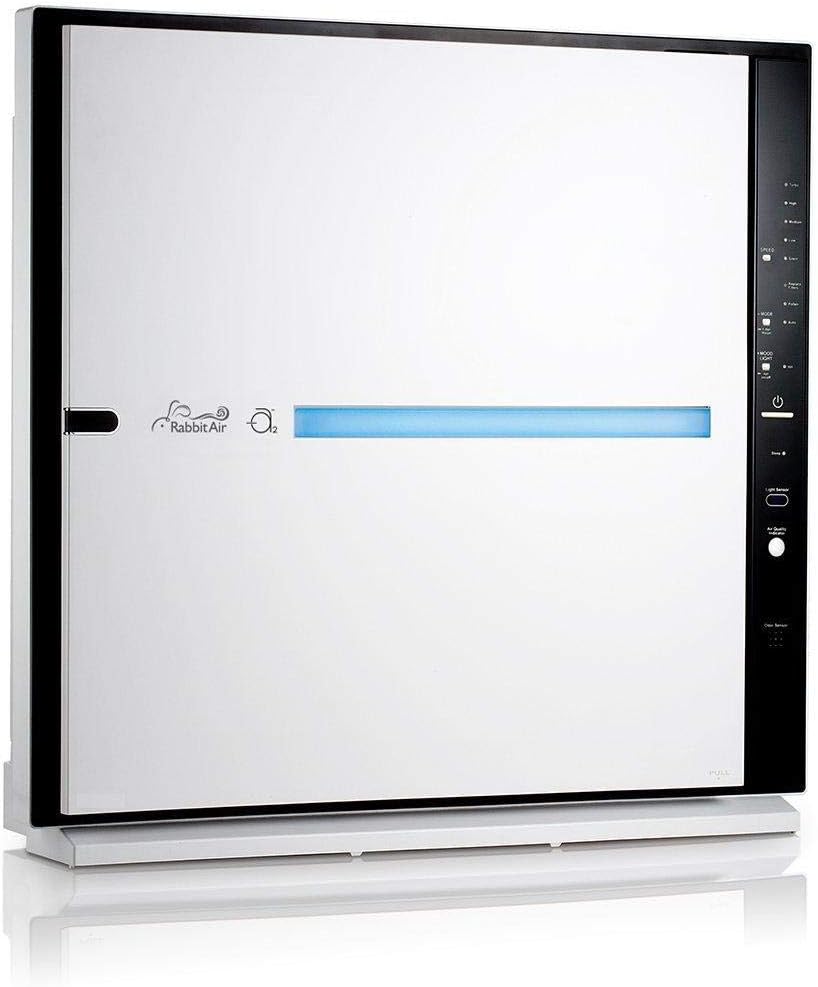
Rabbit Air MinusA2
The MinusA2’s lowest-setting noise is rated at 25.6 dB, a few decibels above this page’s other picks (22 to 23 dB). It is not a dramatic step down. Where it earns its place for a stuffy bedroom is filtration depth: a six-stage system. Rated coverage is 408 sq ft at the 4-changes-per-hour standard used throughout this guide, or up to 815 sq ft if a lighter 2-changes-per-hour turnover is acceptable in a larger bedroom; either way it runs well below its ceiling in a standard-sized room, which keeps fan noise down. The wall-mount option keeps the floor clear, which matters in a bedroom where floor space is often limited.
Frequently Asked Questions
Will an air purifier make the bedroom feel less stuffy?
For stuffiness caused by airborne particles, a purifier can help. For stuffiness caused by carbon dioxide from breathing in a sealed room, a purifier will not solve it, because a HEPA filter does not remove gases. Some fresh air exchange does. A purifier running alongside a slightly cracked window or door covers both.
Does bedroom size affect how stuffy the room gets overnight?
Yes. The same breathing and moisture go into less air in a small room, so concentrations rise faster. Fresh air exchange matters more in a small bedroom, and a purifier rated for the room’s size turns the air over more times per hour.
Should the bedroom door be open or closed at night for better air quality?
A slightly open door increases air exchange with the rest of the home, which dilutes carbon dioxide. A fully closed door leaves the purifier working on a smaller air volume and keeps pet dander and other particles from the hallway out. If stuffiness is the main complaint, a slightly open door helps. If pets have access to the hallway and allergen exposure is the concern, keeping the door closed with a running purifier is the better tradeoff.