Why Allergy Symptoms Get Worse at Night
Waking congested, sneezing through the early morning, or struggling to fall asleep because of itching and drainage are not random. There are specific reasons allergy symptoms intensify at night, and most of them are addressable.
Allergy symptoms that seem manageable during the day often become significantly worse at night and through the early morning hours. This pattern is common enough that there is a clinical term for it: the circadian rhythm of allergic rhinitis. Several overlapping factors drive it, and understanding which ones apply to your situation points directly to the most effective interventions.
The bedroom environment, body position during sleep, hormone cycles, and allergen exposure all interact to produce symptoms that peak between about 2 a.m. and 8 a.m. for most allergy sufferers. Improving nighttime symptoms typically requires addressing more than one of these factors simultaneously, which is why single solutions like antihistamines alone often produce incomplete relief overnight.
The Main Reasons Symptoms Worsen at Night
Allergen concentration in the bedroom is the most directly actionable factor. Dust mite allergen is released from mattresses, pillows, and bedding continuously, and the enclosed bedroom environment allows it to accumulate during the night. Unlike daytime exposure in larger rooms with more air circulation, the bedroom is a small, sealed space where allergen levels can reach their highest point of the day during the hours you are breathing most slowly and deeply in one place.
Body position matters more than most people realize. When lying down, mucus drainage that would flow down the throat during the day pools in the nasal passages instead, causing the congestion and postnasal drip that disrupt sleep. Elevating the head of the bed slightly, or using an extra pillow to keep the head above the chest, reduces this pooling effect and can meaningfully improve nighttime breathing for people whose primary symptom is congestion rather than sneezing.
Cortisol, the hormone that moderates inflammatory response, naturally drops to its lowest point in the early morning hours between about midnight and 4 a.m. Lower cortisol means less natural suppression of the histamine response, which allows allergy symptoms to intensify even at the same allergen exposure level that felt manageable during the day when cortisol was higher.
Pollen and the open window problem
Pollen counts are typically highest in the early morning hours, from roughly 5 a.m. to 10 a.m. for tree and grass pollens. Sleeping with windows open during this period exposes the bedroom directly to peak outdoor pollen levels. For seasonal allergy sufferers, keeping bedroom windows closed overnight and through the morning, and using air conditioning or a fan for circulation instead, is one of the most effective single changes for reducing nighttime and morning symptoms during pollen season.
Allergen Sources Specific to the Sleeping Environment
The mattress is the most significant allergen source in most bedrooms. Dust mites thrive in the warm, humid conditions created by body heat during sleep, and their waste proteins are among the most potent triggers for allergic rhinitis. A pillow without an allergen-proof encasement places a concentrated mite habitat directly at face level for eight hours a night. Encasing both the mattress and pillows in tight-weave allergen-proof covers is the highest single-impact change most people can make to their sleeping environment.
Pollen carried indoors on hair and clothing during the day transfers to pillowcases and bedding when you get into bed. For seasonal allergy sufferers, showering before bed removes the day’s pollen accumulation and prevents it from contaminating the sleeping surface directly. This is particularly relevant during high-pollen periods in spring and early summer when outdoor exposure is highest.
Pet dander in the bedroom deserves attention even in households that do not allow pets in the room. Dander travels on clothing and through air circulation under doors, and it accumulates in bedding and carpet over time regardless of whether the animal is ever present in the room. The concentration may be lower than in rooms where pets sleep, but it is rarely zero, and overnight exposure to even moderate levels matters over the course of weeks and months.
How Air Filtration Addresses Nighttime Symptoms
A HEPA air purifier running continuously in the bedroom captures the airborne fraction of allergens that encasements and surface cleaning cannot address. As dust mite proteins, pollen fragments, and pet dander become airborne during sleep movement, breathing, and air circulation, the purifier removes them from the breathing zone before they are inhaled. The result is a lower baseline allergen concentration throughout the night rather than a gradual accumulation during the hours you are sleeping.
For nighttime use specifically, noise level at the lowest fan speed is the most important specification. A unit that runs quietly enough to be unobtrusive at night will actually run throughout the night, which is the only way continuous filtration works. A unit that is noisy enough to disturb sleep tends to get turned off, which defeats the purpose entirely. All three recommendations below are practical for overnight bedroom use on their lowest settings.
Recommended Air Purifiers for Nighttime Allergy Symptoms
For full comparisons and detailed specs, see the main allergies guide. These three options are selected with overnight bedroom operation as the primary use case.
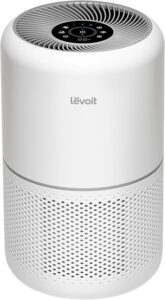
Levoit Core 300S
The Core 300S is the most practical entry point for overnight bedroom use. At 24 dB on its lowest setting it is quiet enough for most sleepers, and the auto-dim sleep mode keeps the indicator light from becoming a distraction in a dark room. True HEPA filtration captures the dust mite proteins, pollen fragments, and pet dander that drive nighttime symptoms. For the SP version, scheduling through the app lets you pre-run the unit on high before bedtime to clear the room quickly, then drop to quiet low automatically once you are asleep.
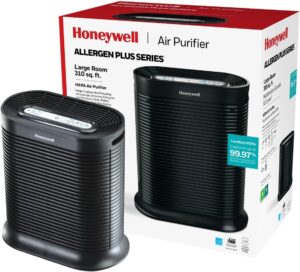
Honeywell HPA200
The HPA200 covers up to 310 sq ft and is the better fit for larger bedrooms where the Core 300S would need to run at a higher, noisier speed to maintain adequate air exchange. At 35 dB on low it is noticeable but not disruptive for people who sleep with background noise like a fan. Its higher CADR means the bedroom air turns over more completely each hour, which helps when allergen sources are multiple or the room is larger. A strong daytime option in any size bedroom where noise during waking hours is not a concern.
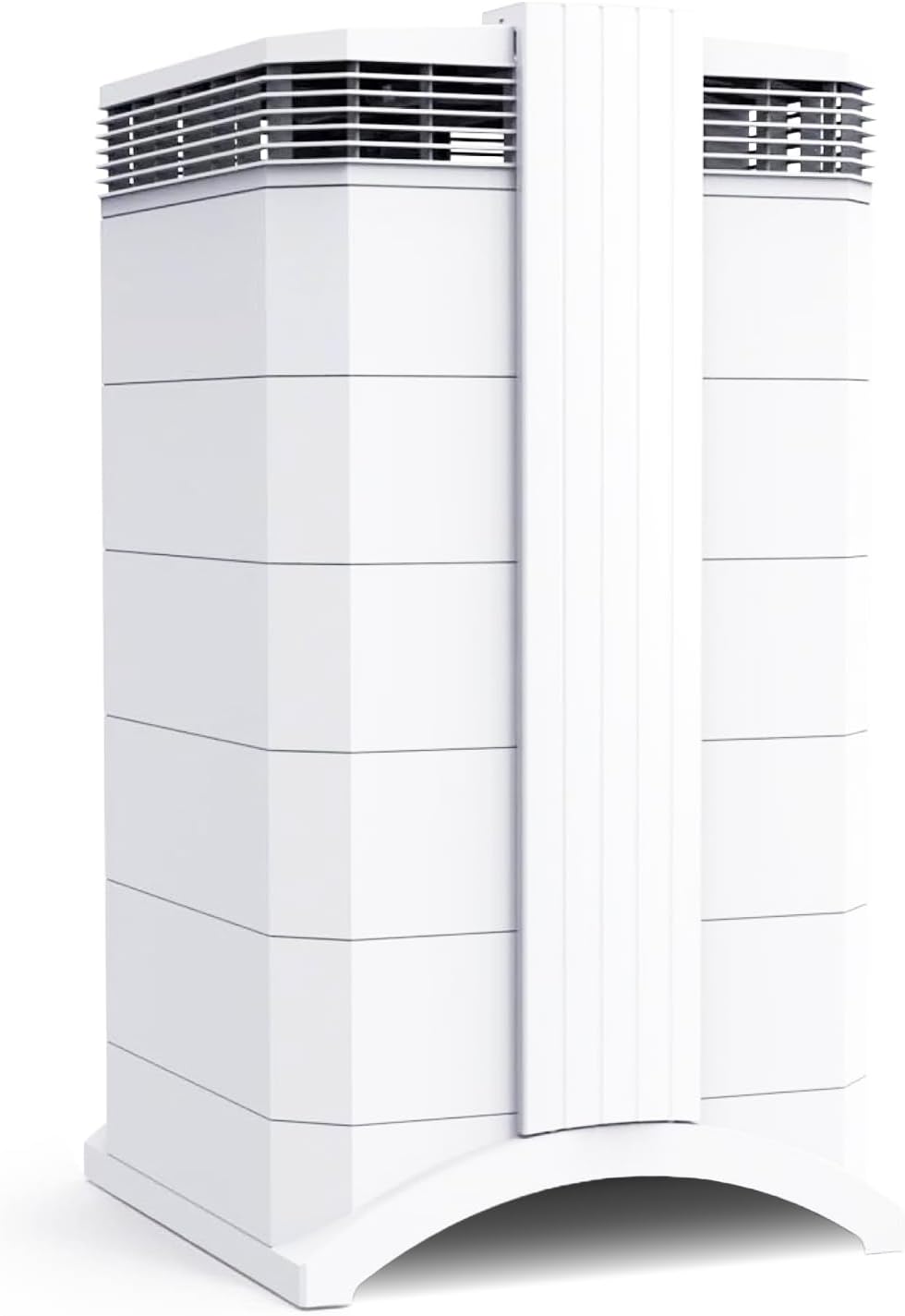
IQAir HealthPro Plus XE
For people whose nighttime allergy symptoms are severe enough to consistently disrupt sleep or affect daytime functioning, the IQAir represents a meaningful step up in filtration performance. Its HyperHEPA filter captures particles down to 0.003 microns, and its 1,125 sq ft coverage rating means it operates at speed 1 in a standard bedroom, producing just 17 dB of noise, quieter than most budget units at their lowest setting. The combination of near-silence and exceptional filtration makes it the strongest option for people who need the cleanest possible bedroom air overnight without any acoustic tradeoff.
Frequently Asked Questions
Why are my allergy symptoms worse in the morning than at bedtime?
Several factors converge in the early morning hours. Cortisol, which naturally suppresses the allergic inflammatory response, drops to its lowest point between midnight and 4 a.m. and has not yet risen to daytime levels by the time you wake. Allergen exposure in the bedroom accumulates throughout the night from dust mite sources in bedding. And for people with seasonal allergies, outdoor pollen counts begin rising from around 5 a.m. onward. The combination of reduced natural suppression and accumulated or incoming allergen exposure produces the characteristic peak of symptoms that many allergy sufferers experience on waking.
Does running the air purifier all night actually help, or is it enough to run it before bed?
Running it through the night is substantially more effective than pre-running before bed. Allergens become airborne continuously from bedding and other bedroom sources throughout the night as you move in your sleep. A purifier that runs only before bed clears the room at the start but allows allergen levels to build again during the hours when cortisol is lowest and you are most susceptible. Continuous low-speed operation throughout the night maintains a consistently lower allergen concentration during the entire sleep period.
Should I also treat daytime allergies differently if my nighttime symptoms are the main problem?
Daytime exposure contributes to nighttime symptoms through a mechanism called the priming effect: sustained allergen exposure throughout the day lowers the threshold at which the immune system reacts during the night. Reducing daytime exposure in the main living areas through a purifier there as well, keeping windows closed during high-pollen periods, and showering before bed to remove pollen from hair and skin all reduce the total allergen load the immune system is managing by bedtime. Nighttime-focused interventions work better when daytime exposure is also reduced.