How Pollen Gets Indoors and How to Reduce It
Staying indoors during pollen season helps, but it does not eliminate exposure. Pollen enters through doors, windows, clothing, and hair and accumulates in soft furnishings throughout the home. Here is how to manage it effectively.
Staying indoors on high-pollen days is commonly recommended for seasonal allergy sufferers, and it helps, but it does not create a pollen-free environment. Pollen enters homes continuously through open windows and doors, on clothing and hair, on pets that go outdoors, and through HVAC systems that draw in outdoor air. Once inside, pollen particles settle onto soft surfaces and become airborne again every time those surfaces are disturbed.
The result is that indoor pollen levels during peak season can be meaningful even in homes where windows stay consistently closed, and the bedroom specifically tends to accumulate pollen brought in on hair and clothing at the end of each day. Reducing indoor pollen exposure requires a combination of entry control, surface management, and air filtration rather than simply staying indoors.
How Pollen Enters the Home
Windows and doors are the most obvious entry points, but they account for less indoor pollen than most people assume in households that keep them closed during peak season. The more significant sources are people and pets. Pollen adheres to hair, skin, and clothing during time outdoors and is carried directly into the living space. A single person returning from an outdoor walk during peak tree pollen season can bring a significant pollen load into the home, which then transfers to upholstered furniture, bedding, and carpet during normal activity.
HVAC systems can draw pollen in through outdoor air intakes, though the extent depends on the system type and filter quality. Standard MERV-8 furnace filters, which are the most common, allow fine pollen particles to pass through and get distributed through the ductwork. Upgrading to a MERV-11 or MERV-13 filter captures a substantially higher proportion of pollen particles before they enter the circulated air, which makes a meaningful difference in homes where the HVAC runs frequently during pollen season.
Pollen counts peak in the early morning
Tree and grass pollen counts are typically highest between 5 a.m. and 10 a.m. Opening windows during this window, even briefly, introduces a disproportionate pollen load compared to other times of day. Keeping windows closed through the morning and opening them in the late afternoon or evening, when counts are lower, reduces indoor pollen significantly for households that want some natural ventilation. Checking a local pollen forecast before opening windows is a practical habit during high-season weeks.
Where Pollen Accumulates Indoors
Soft furnishings accumulate pollen in the same way they accumulate dust mite allergen: by trapping particles in fibers where they are held until disturbed by movement or air circulation. Upholstered sofas and chairs, carpet, curtains, and bedding are the primary indoor pollen reservoirs. The bedroom is particularly significant because pollen carried on hair transfers directly to pillowcases during sleep, creating sustained overnight exposure at close range to the respiratory system.
Hard surfaces collect pollen more visibly but hold it more loosely. A pollen film on a hard floor or countertop is easy to remove with damp cleaning. The same pollen load embedded in carpet or a sofa cushion is much harder to eliminate and releases back into the air with every step or change of position.
Reducing Pollen Entry and Accumulation
Showering before bed is the single most impactful behavioral change for indoor pollen control. It removes the day’s accumulated pollen from hair and skin before it transfers to pillowcases and bedding, which is where overnight respiratory exposure is highest. Changing out of outdoor clothing before sitting on upholstered furniture keeps pollen off the primary soft surface deposit points in the living room.
Keeping pets that go outdoors wiped down near the entry point before they move through the home reduces how much pollen they distribute across living spaces. A damp cloth on paws and coat in a mudroom or entry area is significantly more effective than trying to vacuum it back up from carpet and furniture after it has been distributed throughout the home.
For HVAC management, running the system in recirculation mode rather than fresh air intake mode during peak pollen days reduces how much outdoor air, and the pollen in it, enters the home. This is a setting on many modern thermostats and is worth knowing about if your system supports it.
How Air Filtration Addresses Indoor Pollen
A HEPA air purifier captures airborne pollen particles as they circulate through the room, reducing the concentration that is inhaled directly and slowing the rate at which pollen resettles onto surfaces. Pollen particles range from about 10 to 100 microns in size, which is well within the capture range of true HEPA filtration. For indoor pollen specifically, the purifier is most valuable in the bedroom, where overnight exposure has the most direct impact on morning symptoms, and in the main living area where time spent on upholstered furniture is highest.
Recommended Air Purifiers for Indoor Pollen
For full specs and comparisons, see the main allergies guide. These three options cover the full price range for pollen-focused indoor air filtration.
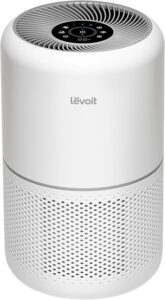
Levoit Core 300S
The Core 300S handles bedrooms and smaller living spaces up to 219 sq ft effectively during pollen season. Pollen particles are large enough that HEPA filtration captures them readily at all fan speeds, so the 24 dB low-speed operation is entirely adequate for overnight bedroom use. The auto-dim sleep mode keeps the indicator light from disturbing sleep. For the SP version, scheduling lets you run the unit at higher speed during peak morning pollen hours and reduce speed overnight automatically.
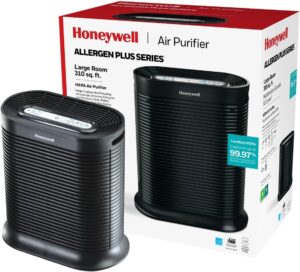
Honeywell HPA200
The HPA200 is well suited to larger living areas where pollen brought in on clothing and hair gets distributed across upholstered furniture and carpet. Its 310 sq ft coverage and higher air exchange rate means it can process the room air more completely each hour during the weeks when indoor pollen accumulation is highest. The Allergen Plus filter is specifically rated for pollen capture. At 35 dB on low it is not ideal for light sleepers, but as a daytime living room unit it is a strong mid-range performer for seasonal allergy management.
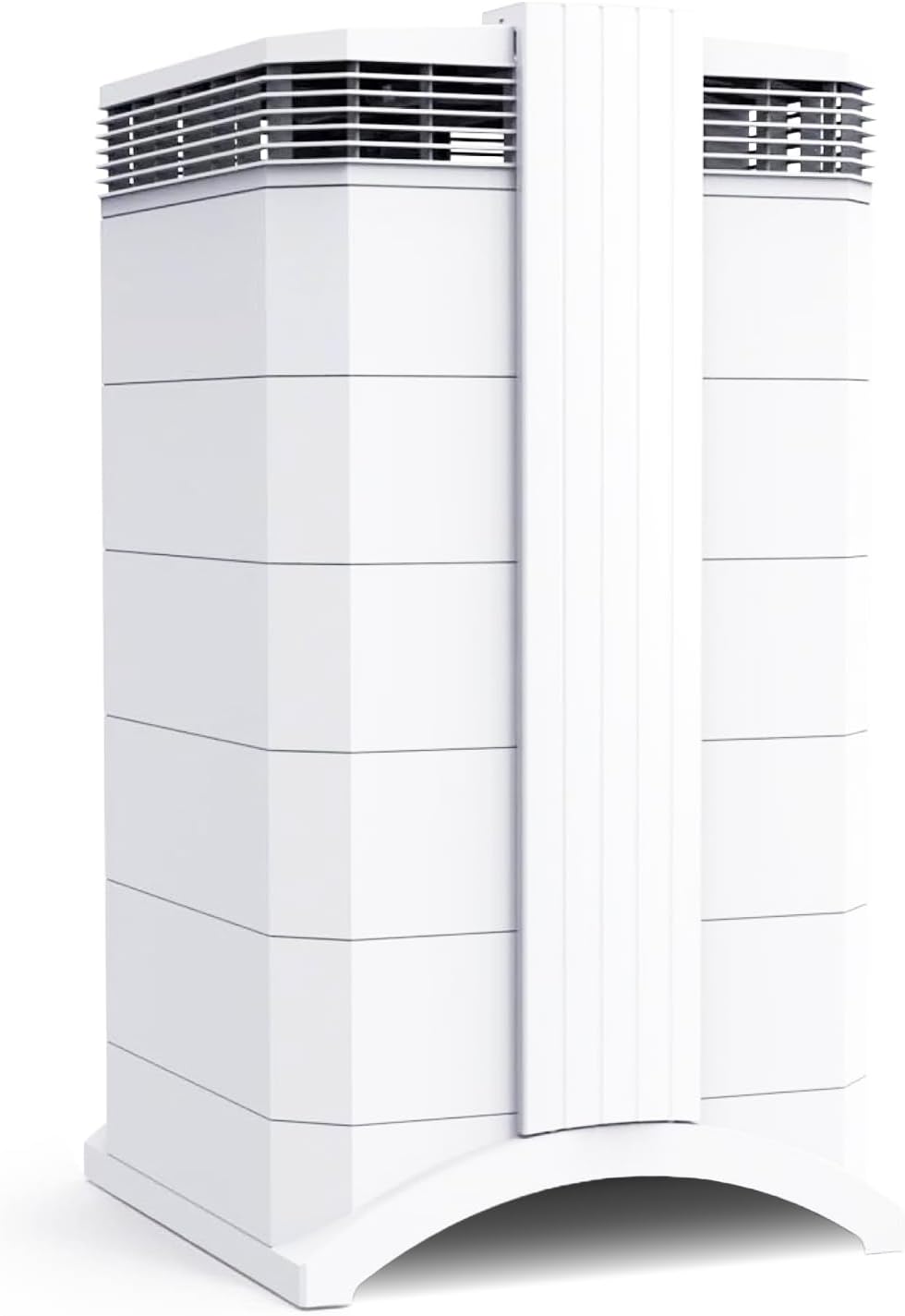
IQAir HealthPro Plus XE
For severe seasonal allergies or asthma triggered by pollen, the IQAir provides the deepest level of particle filtration available in a residential unit. Its 1,125 sq ft coverage rating means it operates at very low fan speed in typical rooms, which keeps noise at 17 dB while processing a large air volume per hour. For households where pollen season reliably produces weeks of significant symptoms, the investment reflects a meaningfully different level of indoor air quality compared to standard HEPA units, particularly for people whose symptoms affect sleep or daily functioning during peak season.
Frequently Asked Questions
Does keeping windows closed actually make a significant difference for indoor pollen?
Yes, particularly during the peak morning hours when outdoor pollen counts are highest. Homes with consistently closed windows during pollen season have measurably lower indoor pollen concentrations than those with windows open, even accounting for entry through people and pets. The difference is most pronounced in bedrooms, where windows that stay closed overnight prevent the early morning pollen surge from entering the space where overnight respiratory exposure is highest.
How long does pollen stay airborne indoors once it enters the home?
Pollen particles are relatively large compared to dust mite allergen or pet dander, which means they settle out of the air faster, typically within minutes to a few hours depending on air movement in the room. However, they are easily re-aerosolized by foot traffic, sitting on upholstered furniture, or air circulation from HVAC or fans. This cycle of settling and re-becoming airborne means that even a single high-entry day can produce elevated airborne pollen levels for several days in a carpeted or heavily upholstered room without active filtration.
Is a HEPA purifier necessary, or will a good HVAC filter handle indoor pollen?
An upgraded HVAC filter helps with pollen that passes through the system, but it does not address pollen that enters through other means and settles directly in living spaces. A HEPA purifier in the primary living area and bedroom filters the local room air continuously, regardless of how the pollen entered. The two approaches are complementary rather than interchangeable: the HVAC filter reduces what the system redistributes, and the room purifier handles everything in the space itself.