Managing Pet Dander Throughout the Home
Pet dander is lightweight, airborne, and present in every room where pets spend time, including rooms they are never allowed in. Here is how it moves and what actually reduces it.
Pet dander is not the same as pet hair. The visible fur that collects on furniture and clothing is easy to track and remove. Dander consists of microscopic flakes of skin that pets shed continuously. It is small enough to remain suspended in air for hours, light enough to travel from room to room on air currents, and persistent enough to cling to upholstery, bedding, and walls long after you have vacuumed the floor.
For people who live with pets and experience allergy symptoms at home, dander is almost always the primary trigger. The Fel d 1 protein in cat dander and Can f 1 in dog dander are among the most common indoor allergens in pet households. Unlike pollen, which arrives seasonally, dander is produced year-round by every animal in the home regardless of breed, grooming routine, or how much the pet sheds visibly.
How Dander Spreads Through a Home
Dander particles are typically between 0.5 and 10 microns in size, small enough that normal household airflow keeps them suspended well after the pet has left the room. When your HVAC system cycles, it pulls air and the dander in it through ducts and redistributes it throughout the house. Even rooms where the pet is never allowed can accumulate meaningful dander levels through this mechanism alone.
High-traffic pet areas produce the highest local concentrations: where the animal sleeps, eats, and spends most of its time. But because dander is airborne, the distinction between pet rooms and pet-free rooms is often less meaningful than it appears. Studies measuring allergen levels in homes have found significant dander concentrations in bedrooms where pets are banned, simply from airflow carrying particles under doors and through ventilation gaps.
Why grooming alone does not solve the dander problem
Regular grooming reduces the amount of loose dander on the animal’s coat but does not stop dander production. Skin cell turnover is a normal biological process that continues regardless of how often the animal is brushed or bathed. Grooming also releases dander into the air during the session itself, temporarily increasing airborne levels nearby. It is a useful habit, but it works best alongside air filtration rather than as a substitute for it.
Where Dander Concentrates Most
Soft surfaces are the primary dander reservoir in most homes. Upholstered furniture, carpeting, rugs, curtains, and bedding all trap dander and release it back into the air when disturbed. A pet that sleeps on the sofa deposits dander into the cushions, and every time someone sits down, a portion of that dander becomes airborne again. This cycle makes soft furnishings in pet areas a persistent source even hours after the animal has moved elsewhere.
The bedroom deserves particular attention. Even in households that enforce a no-pets-in-bedroom rule, dander carried on clothing and through air circulation tends to accumulate in bedding and mattresses over time. Because the bedroom is where you spend six to nine hours breathing in one enclosed space, dander levels there have an outsized effect on how allergy symptoms feel compared to daytime exposure in other rooms.
What Actually Reduces Dander
A combination of source reduction and continuous air filtration is more effective than either approach alone. On the source side, vacuuming with a HEPA-equipped vacuum prevents dander from being redistributed into the air during cleaning. Washing soft furnishings regularly at high temperatures removes accumulated dander and the dust mite allergens that often accompany it. Hard flooring accumulates less dander than carpet and is significantly easier to clean thoroughly.
Air filtration addresses what surface cleaning cannot reach: the airborne fraction that remains suspended between cleaning sessions. A true HEPA filter captures particles down to 0.3 microns, which covers the full size range of pet dander. Running a HEPA air purifier continuously in the rooms where the pet spends the most time, and separately in the bedroom, is the approach that most consistently reduces measured allergen levels. Intermittent use is significantly less effective than continuous low-speed operation because dander accumulates steadily throughout the day.
HVAC filter quality plays a secondary but meaningful role. Upgrading from a standard MERV-8 furnace filter to a MERV-11 or MERV-13 rated filter captures a higher proportion of dander passing through the system. Replacing the furnace filter every one to two months in pet households, rather than the standard three months, keeps the system performing at rated efficiency.
Recommended Air Purifiers for Pet Dander
For a full comparison with specs and detailed reviews, see the main pets and odors guide. The three purifiers below cover budget, mid-range, and premium options evaluated specifically for dander performance.
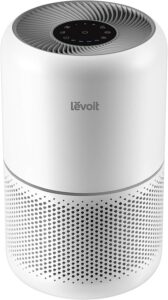
Levoit Core 300P
The Core 300P covers up to 219 sq ft and runs at 24 dB on its lowest setting, making it well suited for a bedroom or small living area. The pet-specific filter configuration includes a slightly thicker activated carbon layer than the standard Core 300, which handles odor alongside dander capture. A practical starting point for single-room dander management without a large upfront cost.
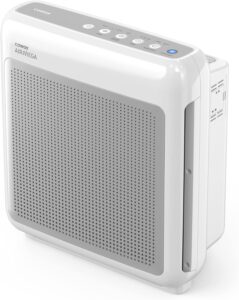
Coway Airmega 200M
The Airmega 200M covers up to 360 sq ft and adds an auto mode that adjusts fan speed based on detected particle levels. In a living room where dander concentrations shift as the pet moves around and settles, auto mode is a practical advantage over manual adjustment. The dual-layer filtration captures both particles and odor-causing gases from the animal.

Rabbit Air MinusA2
The MinusA2 covers up to 700 sq ft with a six-stage filtration system that includes a customizable filter panel. The Pet Allergy filter option adds a layer specifically designed to capture pet-specific proteins alongside standard HEPA filtration. The unit can be wall-mounted to keep floor space clear, and operates at 20.8 dB on its lowest setting, quiet enough for overnight use in the bedroom.
Frequently Asked Questions
Can I reduce dander without getting rid of the pet?
Yes. The combination of regular surface cleaning with a HEPA vacuum, washing soft furnishings frequently, and running a HEPA air purifier continuously in the main living areas and bedroom can meaningfully reduce airborne allergen levels. It will not eliminate dander entirely, but it can reduce it enough to make a noticeable difference in symptom severity for many allergy sufferers.
Does pet breed affect how much dander is produced?
All dogs and cats produce dander regardless of breed. Some breeds are marketed as hypoallergenic because they shed less hair, but dander production is tied to skin cell turnover rather than coat length or shedding frequency. Research has not found consistent differences in allergen levels between so-called hypoallergenic and standard breeds when measured in real household environments.
How long does dander stay in the air after a pet leaves the room?
Dander particles can remain airborne for several hours in undisturbed air, and longer in rooms with active air circulation from HVAC or fans. This is why allergen levels in rooms where pets are excluded can be comparable to rooms where pets spend time regularly. A continuously running HEPA purifier is substantially more effective than one that only runs while the pet is present.