Managing Congestion That Gets Worse at Night
Waking up congested or breathing through your mouth during sleep is often an air quality problem, not just a cold. The bedroom environment accumulates specific triggers that drive nighttime nasal congestion, and most of them are manageable.
Nighttime nasal congestion is one of the most common sleep complaints and one of the most directly linked to bedroom air quality. While illness and chronic sinus conditions are sometimes responsible, persistent congestion that is worse at night and better during the day is typically driven by allergen exposure in the sleeping environment rather than an ongoing infection. The bedroom provides a uniquely concentrated exposure window: eight hours in a small, enclosed space with elevated allergen sources directly in the breathing zone.
Mouth breathing during sleep, snoring that develops or worsens over time, and waking with a blocked nose that clears within an hour of getting up are the clearest indicators that the bedroom environment itself is contributing to the congestion rather than an illness or structural issue. Improving bedroom air quality in these cases produces a directly measurable improvement in sleep breathing.
What Causes Congestion to Worsen at Night
Body position is the first and most immediate factor. When lying flat, nasal congestion that drains during the day pools in the nasal passages rather than flowing down the throat, producing a feeling of fullness and restricted breathing that intensifies through the night. Elevating the head of the bed by a few inches, or using an extra pillow to raise the head slightly above the chest, reduces this pooling effect and can produce noticeable improvement for people whose primary symptom is position-related congestion.
Allergen exposure compounds the position problem. Dust mite proteins released from pillows and mattresses during sleep provoke nasal inflammation in sensitive people, narrowing nasal passages and increasing mucus production. This allergic response adds an inflammatory component to the mechanical pooling effect, producing congestion that is significantly worse than either factor alone. For allergy sufferers, addressing both the position and the allergen source typically produces better results than treating either in isolation.
Dry indoor air, particularly in heated homes during winter, irritates nasal membranes and reduces their natural mucociliary clearance function. Nasal passages work best in humidity between about 40 and 60 percent, and indoor humidity in heated homes frequently drops below 30 percent in winter. A bedroom humidifier paired with an air purifier addresses both the dryness and the particle load simultaneously, which is why these two devices are often recommended together for people with chronic nighttime congestion.
When to distinguish allergy-driven congestion from structural causes
Congestion that responds to antihistamines, improves significantly when you sleep away from home, or worsens during specific seasons or around pets is almost certainly allergen-driven and will respond to bedroom air quality improvements. Congestion that is consistent regardless of environment, accompanied by facial pain or pressure, or present year-round without seasonal or situational variation may have structural or chronic sinusitis components that require evaluation by a physician. Air quality improvements can still reduce symptom burden in these cases, but they address a contributory factor rather than the primary cause.
Reducing Allergen-Driven Nighttime Congestion
Allergen-proof encasements for mattresses and pillows are the highest-impact single intervention for dust mite driven congestion. They place a barrier between the mite population in the filling and the breathing zone of the sleeper without requiring replacement of the bedding itself. Paired with weekly washing of the outer bedding layers in hot water, they reduce the allergen load at the most direct exposure point significantly.
Keeping bedroom humidity at 40 to 50 percent prevents the dry air irritation that amplifies congestion from allergen exposure. A small ultrasonic humidifier on a hygrometer-controlled outlet keeps the room in the optimal range overnight without overshooting into the high-humidity range that encourages mite and mold growth.
A continuously running HEPA air purifier captures airborne allergen particles before they are inhaled, reducing the inflammatory stimulus that drives nasal swelling. The effect is not instantaneous, the immune response takes time to settle once allergen exposure is reduced, but people who start running a HEPA purifier continuously in the bedroom typically notice improvement in nighttime congestion within several days to a week of consistent use.
Recommended Air Purifiers for Nighttime Congestion
For full comparisons, see the main sleep and bedroom air guide. These three options are selected for quiet continuous overnight operation, which is the use case that most directly addresses allergen-driven congestion.
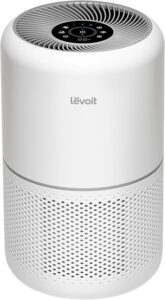
Levoit Core 300S
For bedrooms up to 219 sq ft, the Core 300S provides effective overnight allergen filtration at 24 dB on its lowest setting. Its auto-dim sleep mode removes the indicator light disruption in a dark room. For people whose nighttime congestion is driven by dust mite allergen in the immediate sleeping environment, a continuously running Core 300S combined with mattress and pillow encasements is the most cost-effective starting point before investing in higher-priced options.
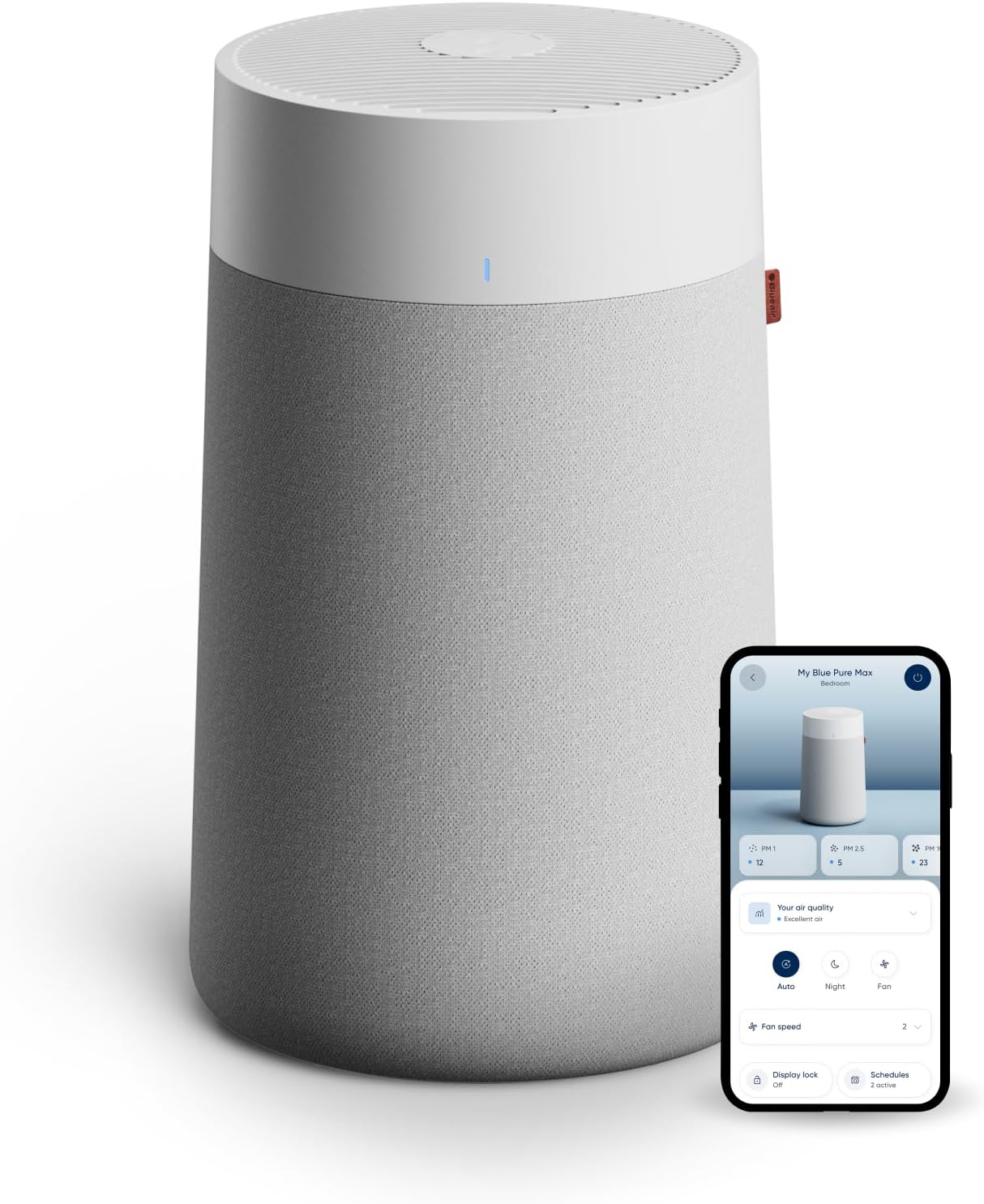
Blueair Blue Pure 311 Auto
The Blue Pure 311 Auto covers larger bedrooms up to 388 sq ft at around 24 dB on low and adds an auto mode that responds to allergen spikes during the night. For people with multiple allergen sensitivities or pets that deposit dander throughout the home, the higher coverage area ensures the unit can turn over the bedroom air more completely per hour, reducing the overall allergen concentration more effectively than a smaller unit working at its limit.

Rabbit Air MinusA2
For people with chronic allergen-driven nighttime congestion that significantly affects sleep quality, the MinusA2 at 20.8 dB on its lowest setting provides the quietest operation in its class alongside 700 sq ft coverage that allows genuinely low-speed overnight running in a standard bedroom. The six-stage filtration including the customizable panel can be configured with the Germ Defense or Allergen Remover filter option depending on whether the primary driver is allergens or airborne irritants. Wall mounting keeps airflow directed along the room rather than toward the sleeper.
Frequently Asked Questions
Will an air purifier help with snoring caused by congestion?
If the snoring is driven by nasal congestion that forces mouth breathing, reducing allergen-driven nasal inflammation through HEPA filtration can reduce the congestion and in turn the snoring. This works specifically for allergen-driven congestion, the mechanism is that lower allergen exposure reduces nasal swelling and allows nasal breathing, which reduces the turbulent airflow that produces snoring. Structural snoring from airway anatomy or sleep apnea has different causes and requires different interventions. An air purifier is worth trying as a first step if the snoring correlates with seasonal changes, pet exposure, or worsening in the bedroom specifically.
How quickly does HEPA filtration improve nighttime congestion?
Most people notice a change within a few days to a week of continuous overnight operation. The nasal immune response takes time to settle after allergen exposure is reduced, so the improvement is gradual rather than immediate. People with more severe allergen sensitivity sometimes take two to three weeks of consistent improvement in the bedroom environment before noticing a significant change in nighttime symptoms. Pairing the purifier with mattress and pillow encasements accelerates the improvement by addressing the primary allergen source at the same time.
Is dry air or allergens more likely to be causing my nighttime congestion?
A useful test: if your congestion is accompanied by a dry, scratchy feeling in the nose and throat and improves when you are in a humid environment, dry air is likely a significant contributor. If your congestion feels more inflammatory, swollen, runny, or itchy, allergens are more likely the primary driver. Many people have both factors operating simultaneously, in which case a HEPA purifier for allergens and a humidifier for dryness address different aspects of the same problem. A hygrometer in the bedroom tells you whether your indoor humidity is actually low enough to be contributing to the problem.