Air Quality Solutions for Studio Apartments
In a studio, there is no separate bedroom to retreat to and no door to close between the kitchen and the sleeping area. Every air quality event affects the whole space, including where you sleep. Here is how to manage that effectively.
Studio apartments present the most concentrated version of small-space air quality challenges. The kitchen, living area, and sleeping space occupy one undivided volume of air. Cooking emissions, cleaning product fumes, and any other indoor pollution source affect the breathing zone directly, including the pillow and mattress where you spend eight hours a night. There is no buffer room, no closed door, no distance between the pollution source and the sleeping surface.
This makes studio air quality a 24-hour problem rather than a room-by-room one. The strategies that work in a one-bedroom apartment, designating a clean bedroom, closing the door, are not available. The substitute is a single well-chosen purifier positioned centrally, running continuously, with auto mode to respond to activity-driven spikes without manual intervention.
The Studio Air Quality Challenge
Cooking is the single most impactful daily air quality event in a studio. Because there is no separation between the cooking and sleeping area, the PM2.5 from high-heat cooking distributes through the entire living space and settles onto bedding and soft furnishings. Studies measuring indoor air quality in studio apartments during cooking find concentrations that would be alarming if encountered outdoors. Running ventilation during cooking and an auto-mode purifier that responds to the spike prevents the cooking PM2.5 from persisting through the evening and into the sleeping period.
Off-gassing from new furnishings, carpet, and building materials is a concern in all small spaces but particularly acute in studios where the total air volume is small. Moving into a newly renovated studio or furnishing one with new upholstered pieces, carpet, or composite wood furniture introduces VOCs that dissipate over weeks to months. During this period, ventilating more aggressively when outdoor air quality permits and running a purifier with activated carbon continuously reduces the concentration of these compounds in the breathing zone.
The noise constraint in studio sleeping areas
In a studio, the air purifier is always in earshot of the sleeping area because there is no other room to put it. Noise level on the lowest fan setting is therefore the single most important specification for studio use, more so than in a one-bedroom where the purifier can be positioned at a greater distance from the bed. The Core 300S at 24 dB and the Blue Pure 311 Auto at approximately 24 dB are quiet enough for most studios. The Coway Airmega 400S at low speed, running well below its capacity in a small studio, is effectively inaudible and provides the coverage headroom to absorb cooking spikes without ramping up to a noticeable speed.
Placement Strategy in a Studio
Central placement between the kitchen area and the sleeping area is the starting point for studio placement. This position allows the purifier to capture cooking emissions before they fully distribute through the space, while also filtering the air in the breathing zone during sleep. If the studio is narrow and long, a position closer to the kitchen end during cooking hours and a shift toward the bed at night is practical for a portable unit like the Core 300S.
Avoid placement in the kitchen directly, where grease and food particles can load the pre-filter faster than normal and require more frequent replacement. A position two to four feet from the cooking area captures most of the airborne fraction without being directly in the grease deposit zone.
Recommended Air Purifiers for Studio Apartments
For full specs and comparisons, see the main small homes and apartments guide.
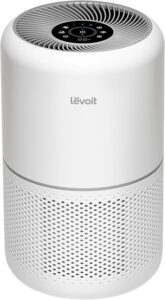
Levoit Core 300S
The Core 300S is the most practical budget option for a small studio under 220 sq ft. Its compact footprint takes up minimal space in an already small room, and the auto-dim sleep mode turns off the indicator light automatically when the room darkens, important in a studio where the light is always near the sleeping area. The SP version’s auto mode and scheduling are particularly useful in a studio: pre-run on high before bed to clear cooking residue, then drop to 24 dB low for overnight filtration automatically.
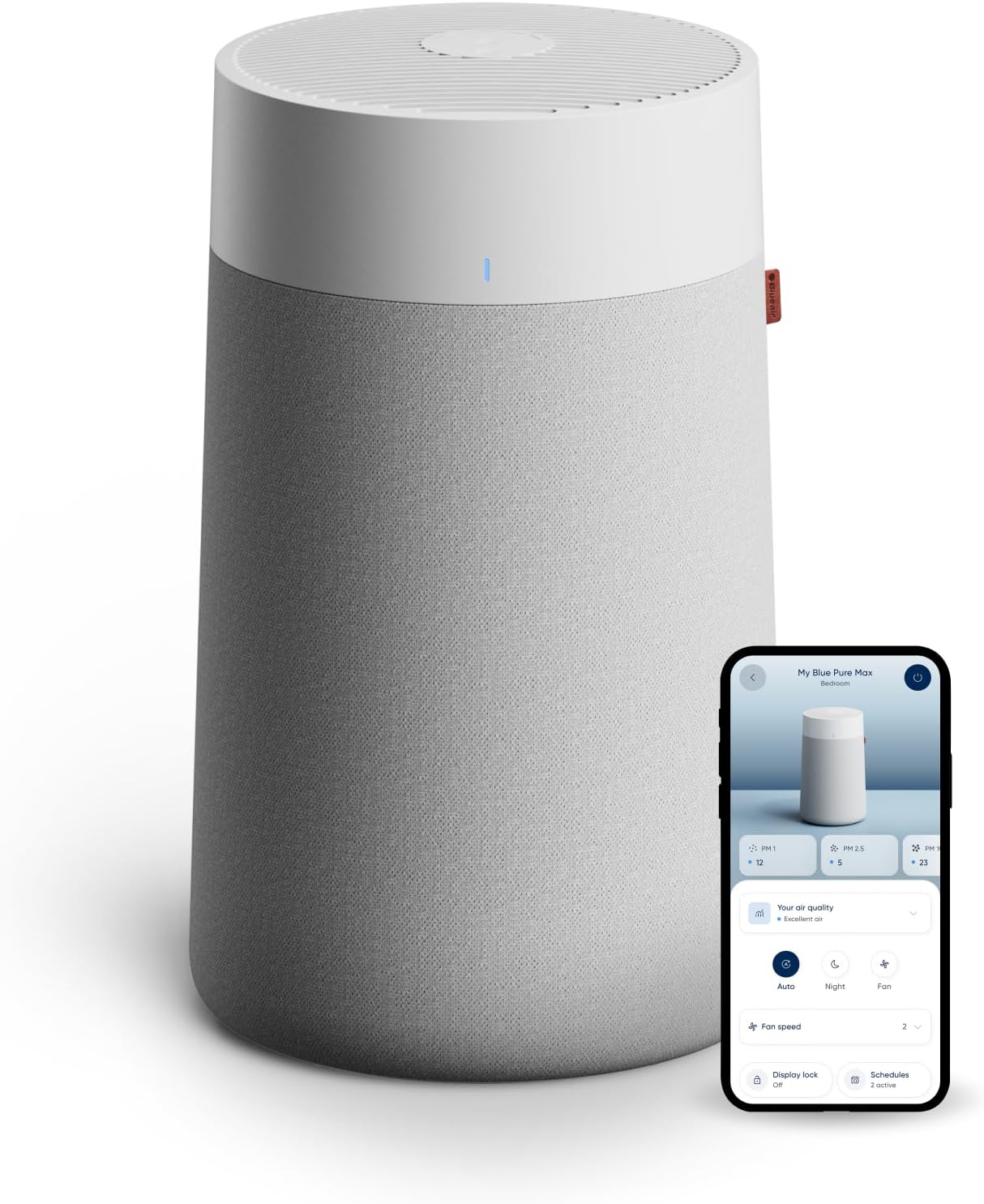
Blueair Blue Pure 311 Auto
The Blue Pure 311 Auto covers 388 sq ft at around 24 dB on low, making it quiet enough for overnight studio use while covering a larger studio adequately without running at maximum speed. The auto mode responds to cooking and other daily pollution events without manual adjustment, which is the key feature for studio living where the cooking and sleeping zones are in the same space. The washable fabric pre-filter extends main filter life in an environment where the unit runs continuously and captures cooking particulates regularly.
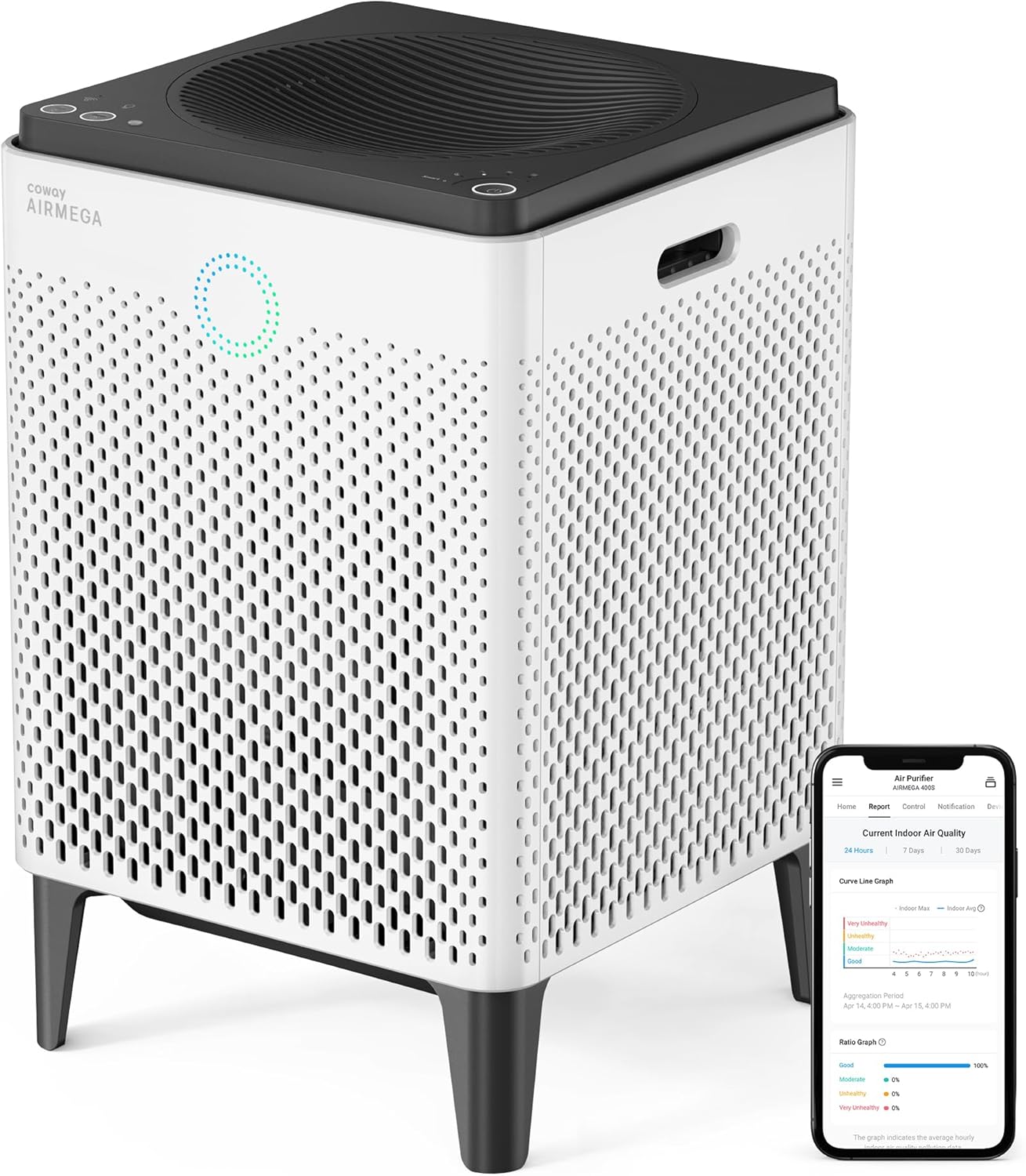
Coway Airmega 400S
Running a 1,560 sq ft unit in a studio apartment means the Airmega 400S operates at a tiny fraction of its capacity in normal use, which translates to genuinely inaudible low-speed operation and the ability to absorb significant cooking spikes on auto mode without ramping to a noticeable noise level. The real-time air quality display gives useful feedback on how cooking and other daily activities affect the space, a practical benefit for anyone who wants to understand their studio’s air quality patterns. One unit handles the whole studio from any central position.
Frequently Asked Questions
Is one air purifier really enough for a studio apartment?
Yes, for most studios. A single unit with adequate coverage for the studio’s square footage placed centrally filters the whole space from one position because there are no closed doors creating separate air volumes. The Core 300S is sufficient for studios under 220 sq ft. For studios in the 300-500 sq ft range, the Blue Pure 311 Auto or the Airmega 400S on its lowest setting covers the space thoroughly from a single central position.
How do I reduce cooking smells in a studio where the kitchen is right next to the bed?
The most effective approach is layered: run the range hood on high during and for at least fifteen minutes after cooking, run the air purifier on high or let auto mode respond during cooking, and if outdoor air quality permits, open a window briefly to exhaust the cooking air. An auto-mode purifier positioned between the kitchen and the sleeping area captures the airborne fraction before it fully distributes and settles onto bedding. The combination of source ventilation and filtration works substantially better than either alone.
Does the purifier indicator light bother people in a dark studio?
It can, and it is one of the most common reasons people turn off bedroom and studio purifiers at night. The Core 300S specifically addresses this with an auto-dim sleep mode that turns off the indicator light when ambient light drops. For units without this feature, a small piece of electrical tape over the LED is a practical solution. The Coway Airmega 400S’s display can be dimmed through the app. This is worth checking on any unit you are considering for studio use before purchasing.