Managing Construction Dust in the Home
Whether the work is inside your home or at a nearby site, construction dust is a distinct air quality problem. The particles are coarser than wildfire smoke but can be far more concentrated and contain materials that are harmful at sustained exposure.
Construction dust presents a different profile from the other air quality problems this site addresses. The particles tend to be larger than wildfire smoke or traffic pollution, which means they settle faster and are somewhat easier to capture. But construction dust can contain specific materials of concern depending on what is being disturbed, concrete dust, drywall compound, older paint that may contain lead, and in older buildings, materials that may contain asbestos. Understanding what type of construction is occurring and what materials are involved matters more for construction dust than for general particulate management.
Indoor renovation generates the highest concentrations by far, followed by construction immediately adjacent to the home. Nearby road or building construction at a distance of more than 50 to 100 meters is typically a lower concern unless the site is very active and wind conditions are favorable to dust transport toward the home. The strategies below are most relevant for people living through a home renovation or with active construction immediately next door.
Types of Construction Dust and Why They Differ
Silica dust from cutting concrete, masonry, tile, and stone is the most serious health concern in construction dust. Crystalline silica particles in the respirable size range, below 4 microns, reach deep into the lungs and at sustained occupational exposure levels are associated with silicosis, a serious lung disease. Consumer exposure during home renovation is far below occupational levels, but the basic precaution of running HEPA filtration during and after any concrete or masonry work in the home is worthwhile.
Drywall dust from sanding joint compound is extremely fine and produces very high airborne concentrations during active sanding. It is not acutely toxic at renovation exposure levels, but the concentrations generated during drywall finishing can overwhelm an air purifier that is not running on its highest speed setting during the work itself. Drywall dust also settles deeply into soft furnishings and is difficult to fully remove from upholstery and carpet afterward.
When to be concerned about lead and asbestos
Homes built before 1978 may contain lead-based paint. Disturbing painted surfaces through sanding, cutting, or demolition during renovation can release lead dust, which is a serious health hazard particularly for children. Homes built before 1980 may also contain asbestos in insulation, floor tiles, textured ceilings, or pipe wrap. If you are renovating a home of this age, professional testing of suspect materials before disturbing them is the appropriate precaution. HEPA air purifiers reduce airborne particulates but are not a substitute for proper lead or asbestos abatement procedures when those materials are present.
Containing Dust During Indoor Renovation
Source containment during work is more effective than filtration after the fact. Sealing the work area with plastic sheeting and painter’s tape, running an exhaust fan in the work area window to create negative pressure relative to the rest of the home, and keeping doors to other rooms closed during active work limits how much dust migrates into living spaces. A HEPA air purifier running in the work area during sanding and cutting captures the airborne fraction in the immediate space.
Protect the HVAC system during renovation by closing supply and return vents in the work area and replacing the furnace filter immediately after work is complete. Construction dust that enters the ductwork distributes throughout the home every time the system runs. A temporary MERV-13 filter in the return air duct in the work area, if one is accessible, reduces how much dust the system draws in.
After the work is done, running the air purifier in affected rooms on high speed for several hours, then vacuuming with a HEPA vacuum, then damp-wiping all hard surfaces in order removes the settled dust most thoroughly. Doing these steps in this sequence prevents re-aerosolizing settled dust during cleaning.
Recommended Air Purifiers for Construction Dust
For full specs and comparisons, see the main smoke and outdoor pollution guide. For construction dust, pre-filter capacity matters as much as HEPA performance, coarser dust loads pre-filters faster than fine smoke particles.
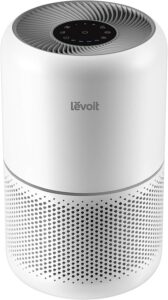
Levoit Core 300P
For dust from nearby outdoor construction infiltrating a single room, the Core 300P running continuously handles the particle load at the budget price point. For indoor renovation work, it is better deployed in adjacent rooms to keep the clean living areas clean rather than in the work area itself, where dust concentrations will quickly load the filter. Check the pre-filter weekly during active renovation periods and be prepared to replace the main filter sooner than the standard interval.
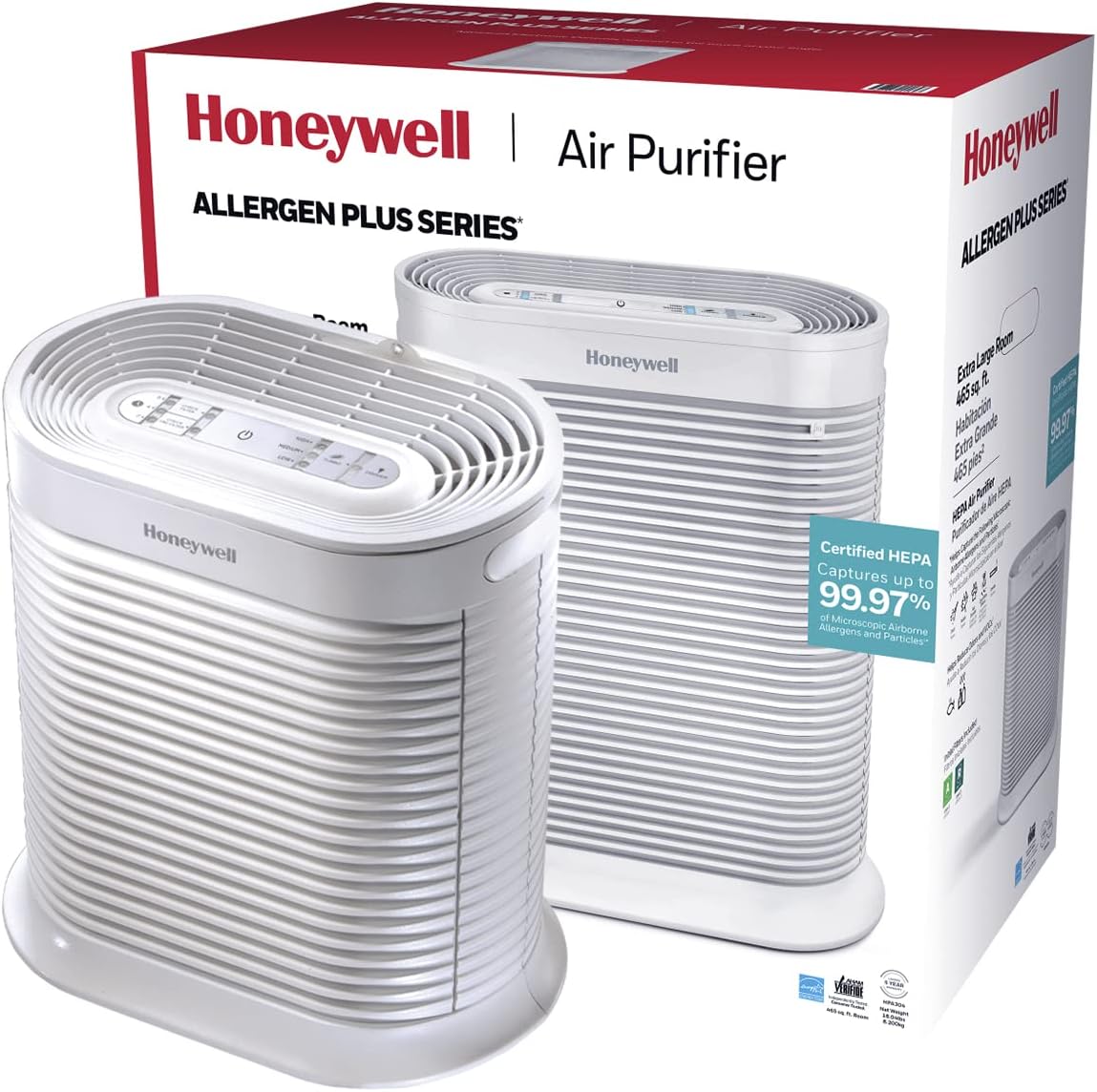
Honeywell HPA300
The HPA300 is the most practical option for running in or adjacent to an active renovation space. Its higher airflow rate keeps pace with the elevated dust concentrations during active work, and its pre-filter design captures larger construction dust particles before they reach the main HEPA filter, extending the main filter’s life during high-load renovation periods. At 465 sq ft coverage it is appropriate for most open-plan living areas where keeping adjacent spaces clean during renovation is the goal.
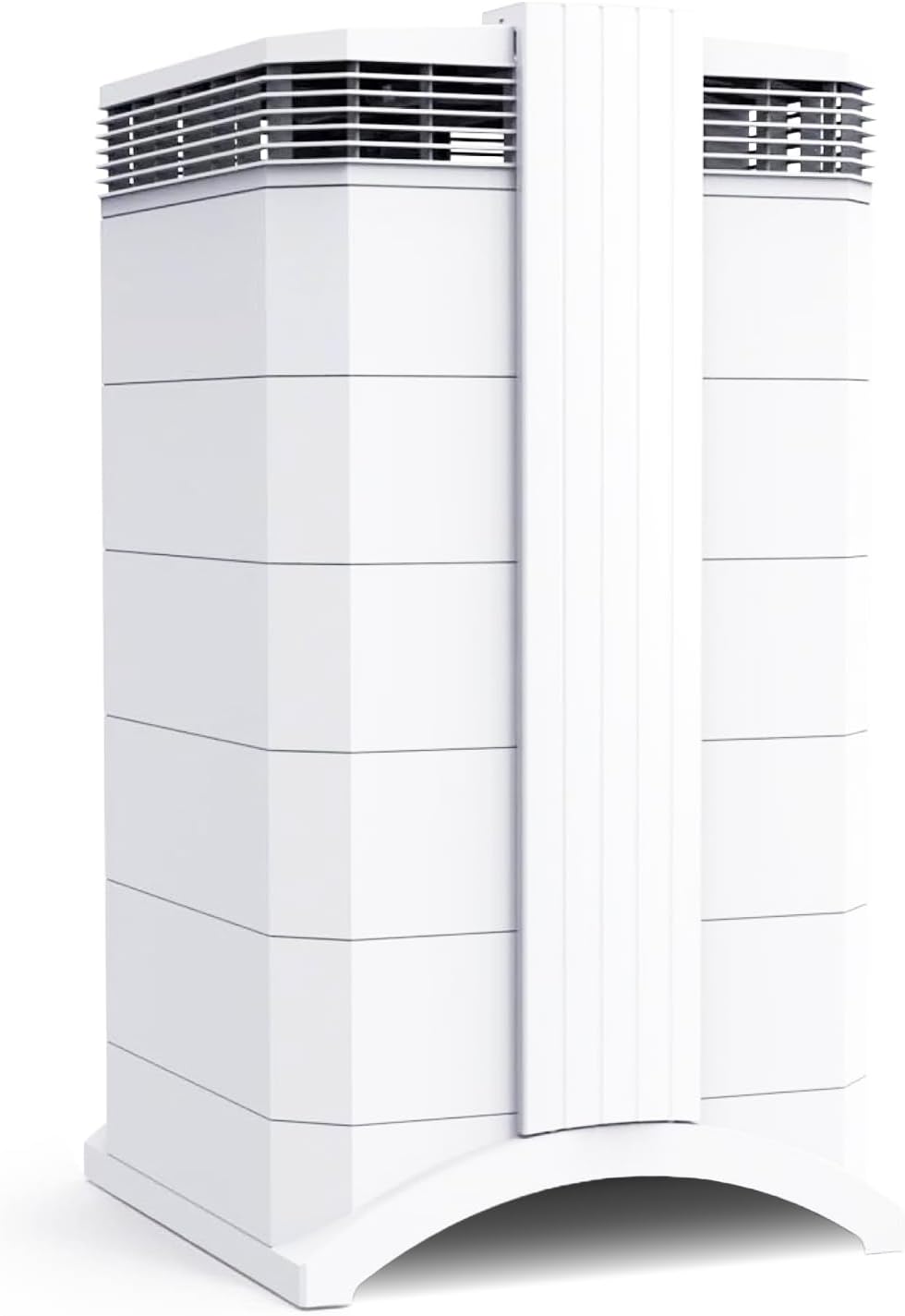
IQAir HealthPro Plus XE
For renovation projects in older homes where silica dust, lead dust, or other specific construction hazards may be present, the IQAir’s HyperHEPA filtration provides the deepest level of particle capture available in a residential unit. Its 1,125 sq ft coverage running at high speed in a renovation space produces the maximum air exchanges per hour from a single residential unit. For anyone with asthma or respiratory conditions who needs to continue living in the home during significant renovation work, the IQAir’s performance margin is most justified here.
Frequently Asked Questions
How long does construction dust stay airborne after work stops?
Coarser construction dust particles settle relatively quickly, within minutes to an hour in undisturbed air. Fine particles from drywall sanding or concrete cutting can remain airborne for several hours. The practical answer is to run the air purifier on high for at least two to four hours after active work stops before considering the air cleared. Any subsequent foot traffic or air movement through the space will re-aerosolize settled dust, so a second cleaning pass with the purifier running after surface cleaning is worthwhile.
Should I run the air purifier in the work area or in adjacent rooms?
Both if possible, with different priorities. In the work area, the purifier captures airborne dust during active work and reduces concentrations at the source. In adjacent rooms, the purifier prevents dust that migrates through containment gaps from accumulating in clean living areas. If you have one unit, the adjacent living area is typically the higher priority because the work area will remain dusty during active renovation regardless, while keeping the bedroom and main living space cleaner during the project protects the areas where people spend the most time.
Will construction dust damage my air purifier?
Not if the pre-filter is checked and replaced regularly during active renovation. The pre-filter captures the coarser particles that would otherwise load the HEPA filter prematurely. During active renovation, checking the pre-filter every few days and replacing it when visibly loaded rather than on a standard schedule prevents the main HEPA filter from being overwhelmed. Most air purifiers designed for residential use can handle renovation dust loads with appropriate pre-filter maintenance. Running a unit without a functioning pre-filter during heavy dust generation shortens main filter life significantly.