Managing Wildfire Smoke in Apartments
Apartments present specific challenges during smoke events, shared HVAC systems, limited window control, and neighbors who may keep doors or windows open. Here is how to manage what you can control.
Apartment dwellers face a set of wildfire smoke challenges that are distinct from those in single-family homes. The ability to seal the space is partially outside your control, shared hallways, shared HVAC systems, and neighbors whose habits affect your indoor air quality all play a role. The good news is that portable air purifiers are renter-friendly, require no installation, and can produce meaningful improvements in indoor air quality even when the building envelope is imperfect.
Understanding which smoke entry points you can control versus which you cannot helps focus effort where it matters most. You can seal gaps under your apartment door and around your windows. You cannot prevent smoke from entering through a shared HVAC system that draws outdoor air, though you may be able to request that building management switch to recirculation mode during smoke events. Focusing on what is within your control and compensating with adequate filtration capacity is the practical approach for most renters.
Apartment-Specific Smoke Entry Points
The gap under the apartment door to the hallway is a frequently overlooked smoke entry point. Hallways in apartment buildings are not sealed from the outside, and smoke that infiltrates the building through exterior doors, elevator shafts, or stairwells can enter individual apartments through this gap. A simple door draft excluder, which can be placed and removed without permanent modification, meaningfully reduces smoke infiltration from the hallway during a smoke event.
Shared HVAC systems in apartment buildings typically serve multiple units from a central air handling unit. If the system draws outdoor air, it distributes smoke throughout the building during an event. Individual window unit air conditioners and through-wall units may have an outdoor air setting that should be switched to recirculation during smoke events. Check the controls on your specific unit, many have a vent or fresh air damper that can be manually closed.
Creating a clean air room in a small apartment
If you cannot effectively seal the entire apartment during a heavy smoke event, a single well-sealed room with a capable air purifier running on high is more effective than trying to cover the whole apartment inadequately. The bedroom is the natural choice because it is where you spend the most consecutive hours. Sealing the gap under the bedroom door with a towel or draft excluder, closing the closet, and running the purifier on high creates a meaningful refuge even when the rest of the apartment has elevated smoke concentrations.
Choosing the Right Purifier for Apartment Smoke Protection
For smoke specifically, CADR matters more than it does for everyday allergen filtration. During a smoke event, the rate at which the purifier cleans the air in the room needs to outpace the rate at which smoke is infiltrating. A purifier rated well below the room’s square footage will fall behind during heavy smoke events even on its highest setting. Choosing a unit rated for at least the actual square footage of the room where it will be deployed, and ideally somewhat above it, provides the headroom needed to keep indoor concentrations manageable.
Compact footprint is a practical advantage in apartments where floor space is limited. The Levoit Core 300P’s cylindrical design takes minimal footprint. The Honeywell HPA300 is larger but covers significantly more square footage per dollar for smoke performance. For renters in fire-prone regions, the HPA300’s performance-to-cost ratio for smoke specifically makes it worth the larger size in the main living area.
Recommended Air Purifiers for Apartment Smoke
For full specs and comparisons, see the main smoke and wildfire pollution guide.
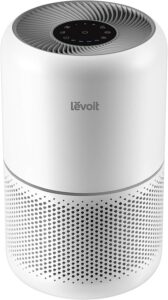
Levoit Core 300P
The Core 300P is the most practical budget option for apartment smoke protection in a single room. Its compact footprint takes up minimal floor space, and its 219 sq ft coverage handles a standard bedroom or small living area adequately. Best used as the purifier for your designated clean air room during a smoke event, close the bedroom door, seal the gap underneath, and run the Core 300P on high. The pet-specific filter includes a thicker carbon layer than the standard Core 300, which improves gaseous smoke compound capture.
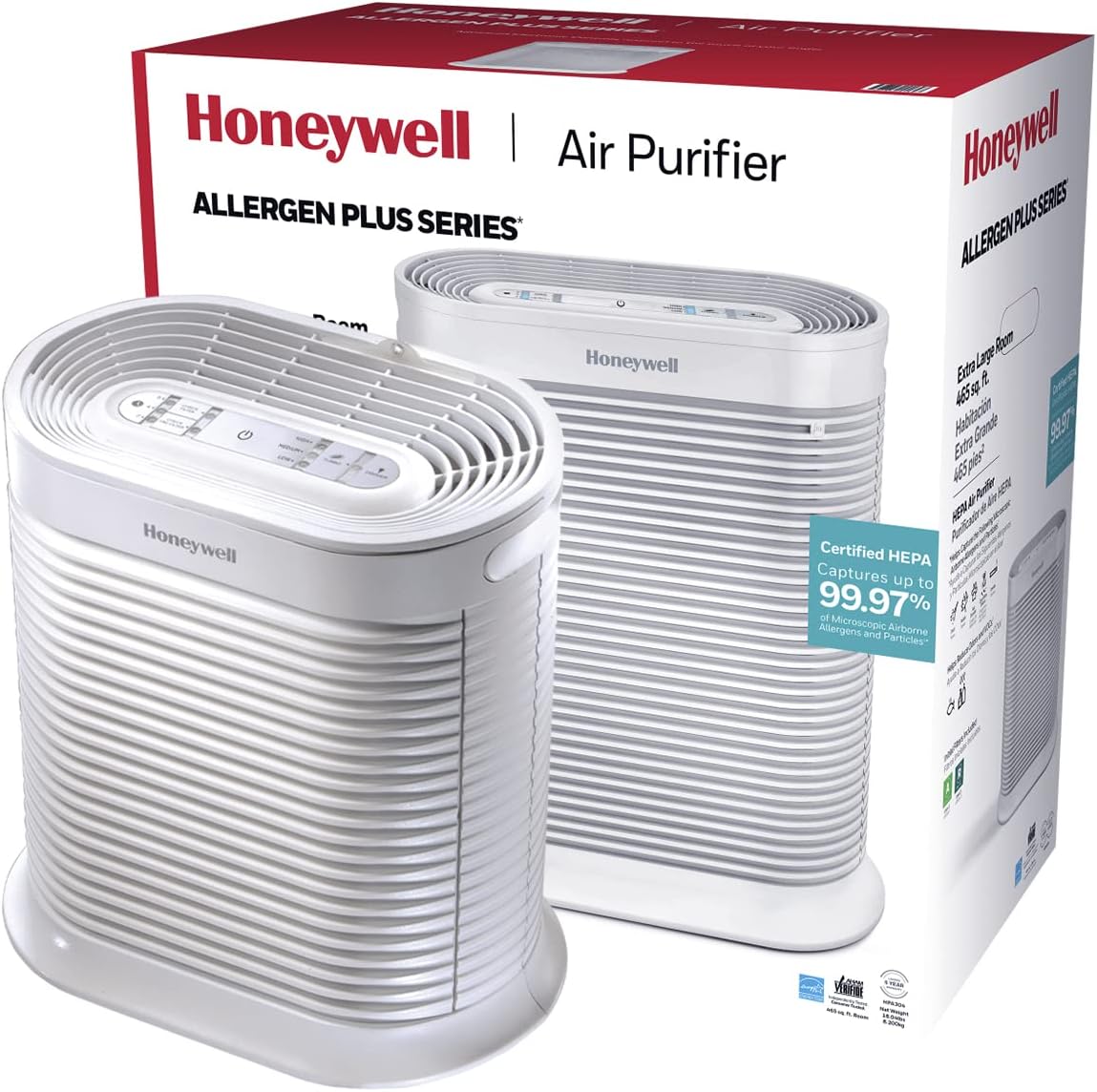
Honeywell HPA300
The HPA300 is the mid-range workhorse for smoke events, with a smoke CADR of 300 and 465 sq ft coverage that handles most apartment living rooms and open-plan spaces effectively. For renters in smoke-prone regions, having a unit with this level of smoke CADR in the main living area means you can maintain meaningful indoor air quality during smoke events without designating a single refuge room. The HPA304 white version is identical in performance if the black HPA300 is out of stock.
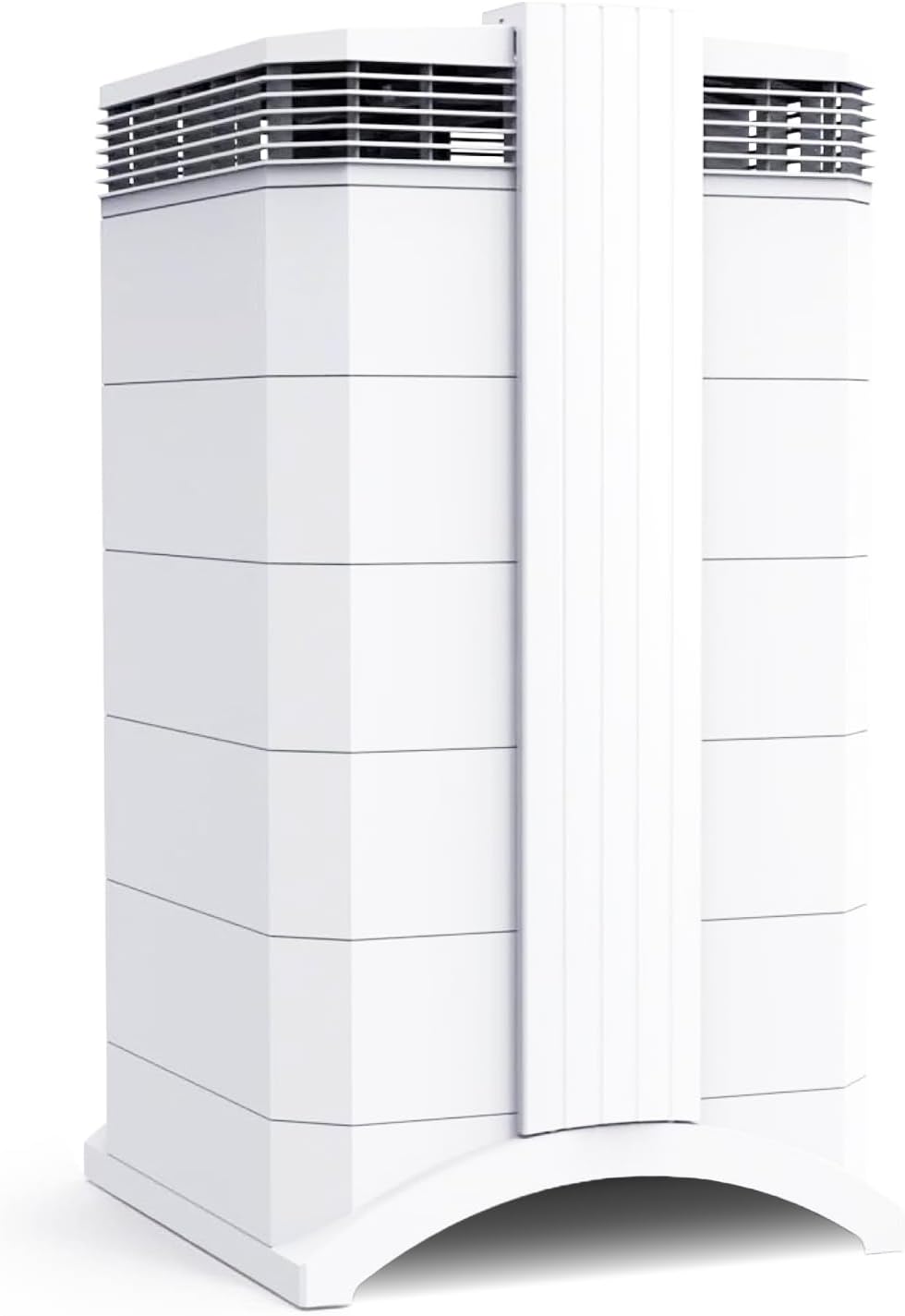
IQAir HealthPro Plus XE
For renters with asthma, cardiovascular conditions, or other health factors that make smoke exposure particularly risky, the IQAir provides the most thorough residential smoke filtration available. Its HyperHEPA captures ultrafine smoke particles that standard HEPA filters reduce but do not eliminate, and its GasDefence media handles a broader range of gaseous smoke compounds. In an apartment where smoke infiltration cannot be fully controlled, the IQAir’s performance margin is meaningful for people who need the cleanest possible indoor air during an event.
Frequently Asked Questions
Can I ask my building to switch HVAC to recirculation during smoke events?
Yes, and it is worth doing. Many building managers are not aware of the option or do not think to make the switch during smoke events. A direct request explaining that outdoor AQI is elevated and asking if the system can be switched to recirculation mode is a reasonable ask. In buildings with modern HVAC systems this is often straightforward. Older systems may not have a clean recirculation option. If the building cannot accommodate the request, portable purifiers in your unit are the practical alternative.
Is it safe to open windows briefly to cool down during a smoke event?
Opening windows during a smoke event increases indoor smoke concentrations quickly and is not recommended when outdoor AQI is in the Unhealthy range or above. If the apartment becomes uncomfortably warm, a portable air conditioner running in recirculation mode is the better option, it cools the space without drawing in outdoor air. If cooling is not available and the indoor temperature becomes a genuine health concern, that tradeoff may require weighing heat stress against smoke exposure based on individual health circumstances.
How do I know if my air purifier is keeping up during a heavy smoke event?
A portable air quality monitor that measures PM2.5 is the most direct way to verify indoor air quality during a smoke event. Many units in the $50-150 range provide real-time PM2.5 readings that let you see whether indoor concentrations are staying below concerning levels. If indoor PM2.5 is rising toward outdoor levels despite the purifier running on high, the unit is either undersized for the space, the filter needs replacement, or the infiltration rate is too high for the purifier to overcome, which is the signal to move to a smaller, more sealed room.