Air Quality with Pets in Small Homes and Apartments
Smaller spaces concentrate pet dander and odor faster, with fewer rooms to dilute either one. Here is how to size, place, and run a purifier when the pet and the bedroom share a few hundred square feet.
Living with pets in a small home or apartment presents a more concentrated version of the air quality challenges that pet owners in larger houses face. In a 600 square foot apartment, dander and odor from the living room reach the bedroom within the same air volume, with no extra rooms or long hallways in between.
A smaller air volume is also quicker to clean. A purifier rated for the room at 4.8 air changes per hour cycles all of that air once every 12.5 minutes, so matching the unit’s rated coverage to the apartment’s square footage matters more than the price tier.
Why Small Spaces Amplify Pet Air Quality Problems
In a house with multiple rooms, dander shed by a pet in the living room has the opportunity to disperse across a larger total air volume before reaching the bedroom. In a one-bedroom apartment, the living room and bedroom are often connected by a short hallway or a single open doorway, and dander moves between them freely during normal household air circulation. The bedroom effectively gets the same air as the room where the pet spends most of its time, regardless of whether the pet is allowed in the bedroom.
Odor concentration follows the same pattern. A larger home gives cooking smells, pet odor, and other airborne compounds more total air to dissipate into. In a studio or one-bedroom apartment, those compounds reach noticeable concentrations faster and stay detectable longer. Visitors often notice the smell of a pet in an apartment more acutely than they would in a larger house, simply because the ratio of pet-generated odor compounds to total air volume is higher.
One properly sized unit versus two small ones
In an open-plan studio or one-bedroom, a single unit rated for the whole space and run continuously means one filter schedule and one outlet instead of two. The Coway Airmega 200M is rated for 361 sq ft at 4.8 air changes per hour, which covers the main living area of most one-bedroom layouts from one central spot. If the bedroom door stays shut overnight, a second small unit in the bedroom is the exception worth making (see the FAQ below).
Placement Strategy for Small Spaces
In an open-plan apartment or studio, central placement in the main living area is the most effective starting point. A unit positioned near the pet’s primary resting area, typically the sofa or a pet bed, draws in the highest concentration of dander and odor at the source before it has a chance to disperse further. Avoid placement in corners or against walls, where reduced airflow on the intake side limits how much of the room the unit can draw from.
For apartments with a separate bedroom and a concern about overnight allergen exposure, placing the purifier in the bedroom at night and the main living area during the day is a reasonable strategy if you only have one unit. The Core 300P is light enough to move between rooms easily. The Coway and Rabbit Air units are better suited to staying in one position and handling a larger zone from there.
Renters should note that wall mounting, which the Rabbit Air MinusA2 supports, typically requires landlord approval. In most cases a floor-standing unit is the practical default. The compact footprint of the Core 300P is a real advantage in apartments where floor space is already limited.
Cleaning Habits That Matter More in Small Spaces
Because particles accumulate faster in a smaller air volume, the cleaning frequency that keeps a larger home manageable may not be sufficient in an apartment with pets. Vacuuming with a HEPA-equipped vacuum two to three times per week keeps the surface dander load from building to the point where everyday movement and air circulation keeps it continuously suspended. Wash pet bedding and any throws or blankets the pet uses weekly.
Groom the pet in the bathroom with the door closed and the exhaust fan running. The dander released during grooming stays in a room with hard surfaces you can wipe down afterward.
Recommended Air Purifiers for Pets in Small Homes
Full specs and comparisons are in the main pets and odors guide. These three options are particularly well suited to apartment-scale pet households.
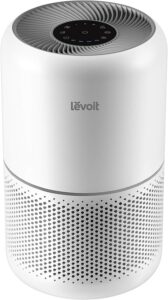
Levoit Core 300P
The Core 300P is rated for 222 sq ft at 4.8 air changes per hour, which fits a small studio or a bedroom, and at 7.9 lb it is easy to move between the bedroom and the living area. Its compact cylinder takes little floor space, and it runs at 24 dB on low, which matters when the purifier is always within earshot. The three-stage filter pairs True HEPA with a high-efficiency activated carbon layer for dander and odor.
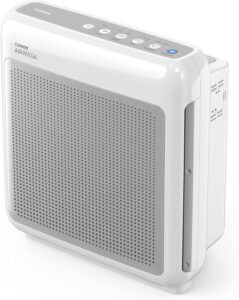
Coway Airmega 200M
The Airmega 200M is the most practical single-unit solution for a one-bedroom apartment with one or two pets. It is rated for 361 sq ft at 4.8 air changes per hour, and its auto mode raises the fan speed when the air-quality sensor detects more particles, such as after the pet has been active. The indicator light shows the current air-quality reading at a glance. It runs at 24.4 dB on its lowest setting.
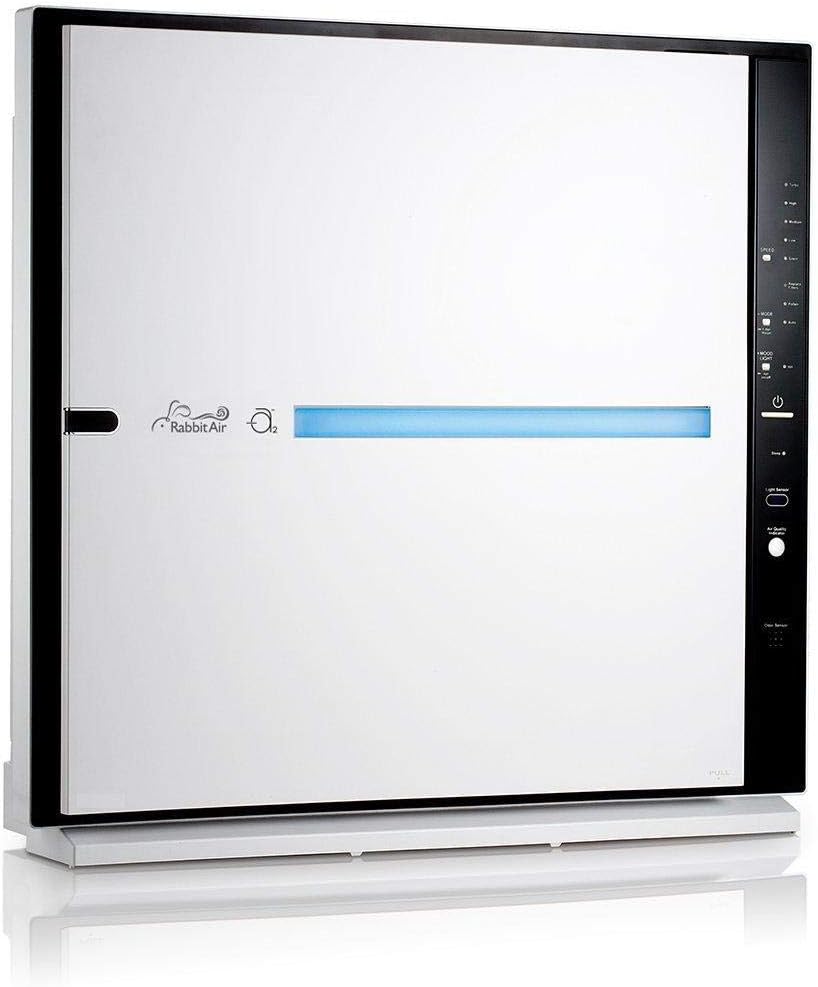
Rabbit Air MinusA2
The MinusA2 is rated for 408 sq ft at 4 air changes per hour, or 815 sq ft at 2. That is more than a small studio needs, and it fits a larger one-bedroom with an open layout where one unit handles the whole space. Sized with room to spare, it can run on a lower, quieter setting, starting at 25.6 dB, and its particle sensor raises the speed when pet activity stirs up dander. One of its six stages is a customizable filter slot, and Rabbit Air sells a Pet Allergy panel for it. It can be wall-mounted with landlord approval.
Frequently Asked Questions
Can an air purifier really make a difference in a small apartment with pets?
Yes, and the effect tends to be more noticeable in a smaller space than a larger one precisely because there is less air volume for dander and odor to disperse into. A HEPA purifier rated for the space and running continuously turns over the air in a small apartment several times per hour, which keeps airborne dander concentrations low between cleanings.
Is one air purifier enough for a one-bedroom apartment with a pet?
For most one-bedroom apartments, a single mid-range unit like the Coway Airmega 200M placed in the main living area covers the space adequately. If the bedroom door stays closed overnight and you want active filtration in both rooms simultaneously, a second smaller unit in the bedroom is worth considering. The Core 300P as a bedroom-only unit paired with the Coway in the living room is a practical two-unit setup that covers both primary spaces without a large total investment.
How do I deal with pet odor in an apartment I am renting?
The most effective renter-friendly approach combines a portable HEPA purifier with activated carbon running continuously, regular vacuuming with a HEPA vacuum, and weekly washing of any fabric the pet contacts. Avoid any permanent modifications. Enzyme-based cleaners break down the organic residue behind odor in carpet and upholstery; spot-test on a hidden area first. Running filtration throughout the tenancy keeps odor from building up in fabrics before move-out cleaning.